Dinner · Part 2 of 3: Instructions
Creamy Garlic Butter Beef Linguine for a Quick Dinner Step-by-step instructions
- Prep
- Cook
- Total
- Serves
- 4
Before you start
Before starting, ensure all ingredients are measured and ready, especially the grated parmesan and shredded mozzarella, as the sauce comes together quite rapidly. Minced garlic should be prepared in advance to avoid burning during the sauté process.
Have a colander ready in the sink to drain the pasta efficiently, and ensure a large skillet or wide pan is available to accommodate both the pasta and the final sauce mixture. Having everything organized beforehand ensures a smooth cooking flow and prevents the sauce from over-reducing while you handle other tasks.
Ingredients at a glance (7)
- 1 lb linguine
- 1 lb ground beef
- 3 tbsp butter
- 3 cloves garlic, minced
- 1 cup heavy cream
- 1/2 cup parmesan cheese, grated
- 1 cup mozzarella cheese, shredded
Instructions
Brown the beef and cook pasta
- Prepare the pasta and beefBring a large pot of salted water to a boil and cook the linguine according to package directions until al dente. While the pasta cooks, heat a large skillet over medium-high heat and brown the ground beef, breaking it into small pieces with a wooden spoon. Cook until the meat reaches 160°F (71°C), then drain any excess fat if necessary.Look for The beef should be browned and cooked through with no pink remaining.Safe temperature 160°F (71°C) internal temperature (ground meat)Tip Save a splash of pasta water before draining to help emulsify the sauce later.
At the end of this phase, the ground beef should be deeply browned and fragrant, having reached a safe internal temperature of 160°F (71°C). The linguine should be cooked until al dente, meaning it retains a slight bite. Check that the beef is broken into small, uniform pieces to ensure even distribution throughout the final dish, and drain any excess fat to keep the sauce clean and flavorful.
Develop the garlic cream sauce
- Create the creamy sauceIn the same skillet with the cooked beef, melt the butter over medium heat. Add the minced garlic and sauté for one minute until fragrant. Pour in the heavy cream and bring to a gentle simmer. Gradually stir in the grated parmesan cheese until the sauce is smooth and slightly thickened.Look for The sauce should be smooth and coats the back of a spoon.Tip Keep the heat low when adding cheese to prevent the sauce from breaking.
The sauce is ready when the heavy cream has simmered and thickened slightly, and the parmesan has melted into a cohesive, creamy mixture. The garlic should be fragrant and soft, having released its oils into the butter base. Check the consistency; it should be thick enough to coat a spoon without running off instantly. If it is too thick, add a tablespoon of pasta water to loosen it up.
Toss and serve
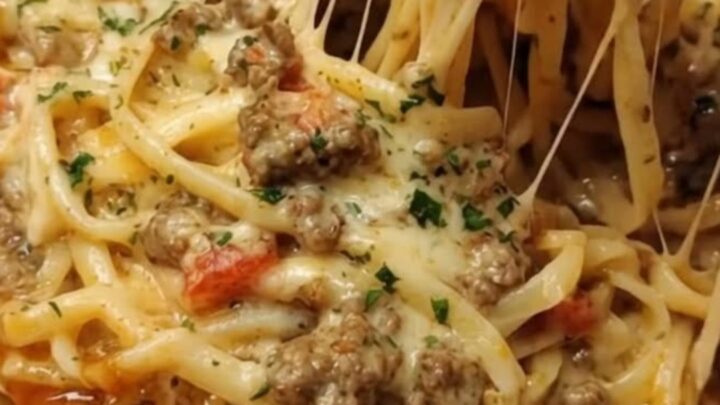
- Combine and serveAdd the cooked linguine and the shredded mozzarella cheese to the skillet. Toss everything together using tongs until the mozzarella is melted and creates a beautiful cheese pull. Serve immediately while hot and creamy on a warm plate.Look for The pasta should be fully coated in the glossy, cheesy sauce.Tip Twirl the pasta with a fork to ensure each bite has plenty of sauce and beef.
The final phase is complete when the pasta is fully integrated with the sauce and the mozzarella has melted into an elastic, stretchy consistency. The entire dish should be glossy and hot, with the beef bits distributed evenly among the linguine strands.
Check that the pasta is thoroughly coated and that the mozzarella has reached the desired level of stretchiness before plating the dish immediately for the best texture.
Common mistakes
A common mistake is overcooking the pasta; it should be drained while still al dente, as it will continue to cook slightly when tossed in the hot sauce. Another error is adding the cheese when the heat is too high, which can cause the sauce to split or become grainy.
Ensure the heat is kept at a gentle simmer during the emulsification process to maintain a smooth, velvety texture. Finally, avoid using pre-shredded cheese if possible, as it often contains additives that prevent it from melting into a smooth sauce.
How to tell it’s done
The dish is considered done when the pasta is tender yet firm to the bite, and the sauce is thick, glossy, and uniformly melted with the mozzarella. The ground beef must reach a safe internal temperature of 160°F (71°C) to ensure it is thoroughly cooked.
When the pasta is correctly finished, the sauce will cling to the noodles rather than pooling at the bottom of the plate, and the cheese should provide a visible, elastic pull when lifted with tongs or a fork.
- Ground meat: 160°F (71°C) in the thickest part
Up next · Part 3 of 3
2 variations · storage & make-ahead · 3 answers · printable card
Tips, FAQ & printable recipe (Part 3)← Back to the ingredients (Part 1)