Dinner · Part 2 of 3: Instructions
Creamy Dill Pickle Potato Soup for the Slow Cooker Step-by-step instructions
- Prep
- Cook
- Total
- Serves
- 6
Before you start
Before starting, ensure all vegetables are thoroughly washed. Peel the gold potatoes if you prefer a smoother texture, or leave the skins on for a rustic appearance. Chop the pickles into uniform, bite-sized pieces to ensure they distribute their flavor evenly throughout the soup.
Measure out your broth and seasonings in advance to ensure a smooth assembly process. Confirm that your slow cooker insert is clean and dry before you begin placing the ingredients inside, and have your ladle ready for serving.
Ingredients at a glance (5)
- 2 lbs gold potatoes, scrubbed and cubed
- 1 cup dill pickles, chopped
- 1 cup shredded carrots
- 1 tbsp dried dill
- 4 cups creamy vegetable broth
Instructions
Assembly Phase
- Prep and AssemblePlace the cubed gold potatoes into the base of the slow cooker. Scatter the chopped dill pickles and shredded carrots evenly over the potatoes.Look for ensure potatoes are distributed evenlyTip Cut potatoes into uniform sizes for consistent cooking.
At the end of this phase, your slow cooker should be filled with the base layers of potatoes, pickles, and carrots. Ensure that the ingredients are arranged in an even layer to promote consistent heat penetration.
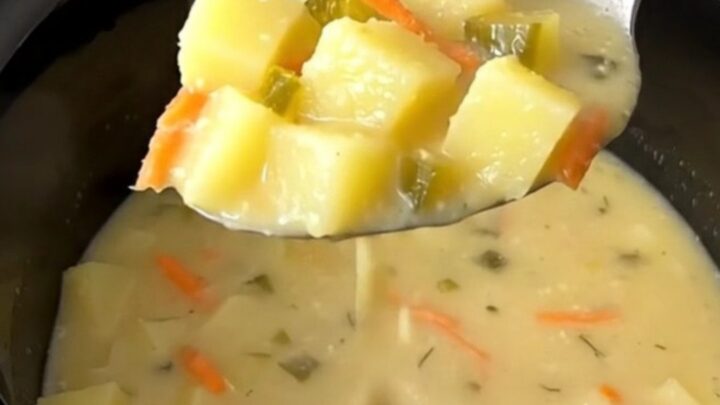
The colors should be vibrant, with the white of the potatoes contrasting against the orange carrots and green pickles, setting the foundation for a visually appealing and flavorful soup once the cooking process is complete.
Seasoning Phase
- Season and Add LiquidSprinkle the dried dill over the vegetable mixture. Pour the creamy broth over the top of the ingredients, ensuring everything is well combined.Look for ensure ingredients are submerged in brothTip Use a gentle hand when stirring to keep the vegetables intact.
Once the dried dill is sprinkled and the creamy broth is poured, the soup should look well-integrated. The broth should just cover the vegetables, allowing them to steam effectively. Check that the dill is evenly spread and that the broth has settled into the crevices between the potatoes and carrots. This is the final step before the long, slow simmer begins, so ensure everything is properly positioned for optimal flavor infusion.
Cooking Phase
- Slow Cook and ServeCover the slow cooker and cook on low for 4 hours until the potatoes are fork-tender. Ladle into bowls and serve while hot.Look for potatoes should be tender when pierced with a forkTip Allow the soup to rest for 10 minutes to thicken slightly before serving.
After four hours of cooking, the kitchen should be filled with the savory, tangy aroma of the soup. The potatoes should be tender and the broth should have thickened into a creamy consistency. The pickles and carrots should be soft and fully infused with the broth. Before serving, give the soup a gentle stir to combine any separated liquids, and verify that the potatoes are cooked through to your preferred level of tenderness.
Common mistakes
A common mistake is cutting the potatoes into pieces that are too large, which can result in uneven cooking where the exterior is soft but the center remains firm. Conversely, cutting them too small can cause them to disintegrate during the long cooking time.
Another error is failing to combine the broth well; ensure the liquid reaches all ingredients to prevent uneven flavoring. Finally, avoid opening the slow cooker lid too frequently, as this releases heat and moisture, which can significantly increase the required cooking time.
How to tell it’s done
The soup is ready when the gold potatoes are completely tender and can be easily pierced with a fork with no resistance. The broth should be thickened and fragrant, with the pickles softened but still maintaining their characteristic texture.
Because there are no raw proteins involved, the primary focus is on the texture of the vegetables. Ensure the soup has reached a consistent, piping hot temperature throughout before turning off the heat and serving to allow the flavors to meld perfectly.
Up next · Part 3 of 3
2 variations · storage & make-ahead · 3 answers · printable card
Tips, FAQ & printable recipe (Part 3)← Back to the ingredients (Part 1)