Dinner · Part 2 of 3: Instructions
Creamy Dijon Chicken Breasts in One Pan Step-by-step instructions
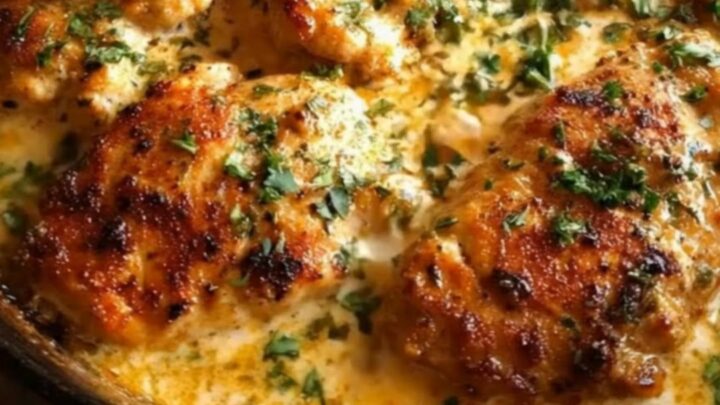
- Prep
- Cook
- Total
- Serves
- 4
Before you start
Before beginning the cooking process, pat the chicken breasts completely dry with paper towels to ensure a proper sear. Measure out the heavy cream and Dijon mustard, and chop the fresh herbs.
Having all ingredients prepped and ready by the stovetop prevents the pan from burning. Ensure the cast-iron skillet is clean and preheated over medium-high heat. Keep a meat thermometer nearby to check the internal temperature of the poultry accurately.
Ingredients at a glance (4)
- 4 boneless skinless chicken breasts
- 1 cup heavy cream
- 3 tbsp Dijon mustard
- 1 tbsp chopped fresh herbs
Instructions
Searing the Chicken
- Preparing the ChickenPat the chicken breasts dry with paper towels. Ensuring the surface of the meat is completely dry is essential for achieving a rich, golden-brown crust during the searing process.Look for The chicken breasts are dry to the touch.Tip Removing surface moisture prevents the chicken from steaming in the pan.
- Searing the ChickenHeat a cast-iron skillet over medium-high heat. Carefully add the chicken breasts to the hot skillet and sear for 5 to 6 minutes on each side without moving them, allowing a rich golden-brown crust to form. Transfer the chicken to a plate and set aside.Look for A deep golden crust forms on both sides.Tip Do not crowd the pan to ensure proper browning.
At the end of this phase, the chicken breasts should have a deeply caramelized, golden-brown crust on both sides. The skillet will sizzle loudly, and a rich, savory aroma will fill the kitchen. The bottom of the pan should be coated with browned bits, but not burned. The chicken will not be fully cooked through yet, which is expected as it will finish cooking in the simmering sauce later.
Creating the Dijon Cream Sauce
- Deglazing the SkilletReduce the heat to medium. Pour the heavy cream and Dijon mustard directly into the hot skillet with the remaining pan juices. Whisk the ingredients together, scraping up any browned bits stuck to the bottom of the skillet to incorporate them into the sauce.Look for The sauce turns a uniform golden-ivory color.Tip Those browned bits hold intense flavor.
- Simmering the SauceBring the cream mixture to a gentle simmer. Cook for 2 to 3 minutes, stirring occasionally, until the sauce begins to thicken slightly and becomes smooth, glossy, and cohesive.Look for The sauce coats the back of a spoon.Tip Keep the heat moderate to prevent splitting.
The sauce should be bubbling gently, turning a warm, golden-ivory color as the Dijon mustard fully blends into the heavy cream. The steam rising from the pan will carry a sharp, tangy mustard scent tempered by the rich sweetness of the dairy. The sauce will begin to thicken slightly, coating the back of a spoon in a smooth, glossy, and cohesive layer with no separation.
Finishing and Garnishing
- Finishing the ChickenReturn the chicken breasts and any accumulated juices to the skillet, nesting them into the sauce. Spoon the warm cream sauce over the chicken breasts. Simmer for 3 to 4 minutes until the chicken is cooked through and reaches an internal temperature of 165°F (74°C).Look for The sauce bubbles gently around the chicken.Safe temperature 165°F (74°C) internal temperature (poultry)Tip Use a thermometer to avoid overcooking.
- Garnishing and ServingSprinkle the chopped fresh herbs over the simmering chicken and sauce just before removing the skillet from the heat. Serve the chicken hot, spooning extra sauce over the top of each portion.Look for The herbs release a fresh aroma.Tip Serve immediately while the sauce is velvety.
The complete dish is now bubbling softly in the skillet, with the golden chicken breasts nestled into the rich, herb-speckled cream sauce. The sauce is thick and glossy, clinging beautifully to the chicken.
The herbs have softened slightly, releasing their fresh fragrance. A meat thermometer inserted into the thickest part of the chicken must read 165°F (74°C), indicating the poultry is safely and fully cooked.
Common mistakes
One common mistake is overcrowding the skillet during the searing process. If the chicken breasts are packed too tightly, they will steam in their own moisture rather than sear, resulting in a pale texture and lost flavor. Cook in batches if necessary.
Another pitfall is using milk or half-and-half instead of heavy cream, which easily splits or curdles when heated with acidic mustard. Always opt for heavy cream to guarantee a silky, stable sauce that emulsifies beautifully with the pan juices.
How to tell it’s done
Determining doneness solely by color can lead to dry, overcooked chicken or undercooked meat. The only reliable method is using a digital meat thermometer. Insert the probe into the thickest part of the chicken breast.
The poultry is perfectly cooked and safe to consume when the thermometer registers exactly 165°F (74°C). At this point, the meat remains tender and juicy, having absorbed the rich flavors of the simmering Dijon cream sauce.
- Poultry: 165°F (74°C) in the thickest part
Up next · Part 3 of 3
2 variations · storage & make-ahead · 3 answers · printable card
Tips, FAQ & printable recipe (Part 3)← Back to the ingredients (Part 1)