Dinner · Part 2 of 3: Instructions
Creamy Crockpot Tuscan Garlic Butter Salmon Pasta Step-by-step instructions
- Prep
- Cook
- Total
- Serves
- 4
Before you start
Before beginning, ensure all ingredients are measured and ready. Mince the garlic finely to distribute its flavor evenly throughout the sauce. If your salmon fillet is large, you may choose to cut it into smaller portions for easier handling, though keeping it whole allows for a beautiful presentation when flaking it into the pasta at the end.
Prepare your pasta pot with water and have a colander ready for draining. Ensure your slow cooker is placed on a heat-resistant surface and that you have a clean workspace for assembling the sauce components.
Ingredients at a glance (10)
- 2 cups vegetable stock
- 1/2 cup dry white wine
- 8 oz mascarpone cheese
- 1/2 cup sun-dried tomatoes
- 4 cloves minced garlic
- 2 tbsp fresh dill
- 1.5 lb skinless Atlantic salmon fillet
- 3 cups baby spinach
- 16 oz farfalle pasta
- 1 tsp lemon zest
Instructions
Building the sauce base
- Prepare the slow cooker baseCombine the vegetable stock, dry white wine, mascarpone cheese, sun-dried tomatoes, minced garlic, and fresh dill in the ceramic slow cooker. Stir the mixture thoroughly to ensure the mascarpone is well integrated with the liquid base. Cover with the lid and set the slow cooker to cook on the LOW setting for two hours until the sauce is velvety and fragrant.Look for The sauce should be uniform, smooth, and aromatic, with the sun-dried tomatoes softened.Tip Ensure the mascarpone is at room temperature for easier mixing.
The base is ready when the mascarpone has fully melted and combined with the vegetable stock and wine, creating a smooth, pale, and fragrant liquid. The sun-dried tomatoes should look slightly softened, and the aroma of garlic and fresh dill should be prominent. Ensure the mixture is well-stirred and uniform before proceeding to the next stage to prevent any clumps of cheese from remaining.
Poaching the salmon
- Cook the salmon and spinachAfter two hours, nestle the skinless Atlantic salmon fillet into the center of the warm sauce. Scatter the baby spinach leaves around the salmon. Replace the lid and continue to cook for 25 minutes. Ensure the fish is cooked through and reaches an internal temperature of 145°F (63°C).Look for The salmon should flake easily with a fork and be opaque throughout.Safe temperature 145°F (63°C) internal temperature (fish)Tip Do not stir the salmon too early to prevent it from breaking apart prematurely.
At the end of this phase, the salmon fillet should be opaque and tender, easily yielding to a fork. The baby spinach will have wilted into the sauce, contributing a vibrant green color and subtle earthy note. The sauce should have thickened slightly as the juices from the fish integrate. Verify the internal temperature of the salmon reaches 145°F (63°C) before moving on to the final assembly.
Combining and finishing
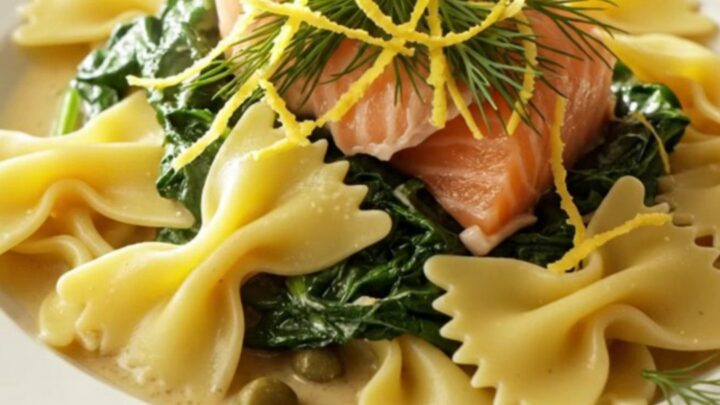
- Combine with pasta and serveWhile the salmon finishes, boil the farfalle pasta in a separate pot of salted water according to package instructions until al dente. Drain the pasta, then add it to the slow cooker. Gently flake the cooked salmon into the sauce using a fork. Toss everything together until the pasta is coated in the cream sauce. Serve immediately topped with fresh lemon zest and additional dill.Look for The sauce should cling to the bowtie pasta and the salmon should be perfectly incorporated.Tip Reserve a small amount of pasta water to adjust the sauce consistency if it appears too thick.
The dish is complete when the drained farfalle is thoroughly coated in the creamy, salmon-flecked sauce. The pasta should be warm and perfectly al dente, with the flaky salmon distributed evenly throughout the bowl.
The final garnish of fresh lemon zest and dill should provide a bright, aromatic finish that ties all the rich flavors together. Check that the consistency of the sauce is silky and coats the pasta without being overly runny.
Common mistakes
A common mistake is adding the salmon too early, which can cause it to overcook and break apart into the sauce before serving. Always wait for the two-hour simmer period to conclude before adding the fish and spinach.
Another error is failing to cook the pasta separately; the pasta should never be added raw to the slow cooker, as it will absorb too much liquid and lose its structural integrity. Finally, avoid using high heat settings, as this can cause the mascarpone sauce to separate or curdle during the long cooking time.
How to tell it’s done
The salmon is fully cooked when it reaches an internal temperature of 145°F (63°C) and flakes easily when pressed with a fork. The texture of the fish should be tender and moist, not dry or rubbery.
The sauce should be thick enough to coat the back of a spoon, and the farfalle should be al dente, providing a slight resistance to the bite. Check the seasoning of the sauce, adding salt or pepper if needed, before serving the dish warm to ensure the best possible flavor and consistency.
- Fish: 145°F (63°C) in the thickest part
Up next · Part 3 of 3
2 variations · storage & make-ahead · 3 answers · printable card
Tips, FAQ & printable recipe (Part 3)← Back to the ingredients (Part 1)