Dinner · Part 2 of 3: Instructions
Creamy Crockpot Turkey and Green Beans Step-by-step instructions
- Prep
- Cook
- Total
- Serves
- 4
Before you start
Before you start, pat the turkey breast cutlets dry with paper towels and trim any excess fat. If using fresh green beans, rinse and trim the stem ends.
Grate the cheddar cheese from a block for the best melting, and cut the butter into small pieces. Have your slow cooker ready and plugged in. You can also measure out the soup and cheese ahead of time to make assembly even faster.
Ingredients at a glance (5)
- 1 1/2 lb boneless, skinless turkey breast cutlets
- 1 lb fresh French green beans, trimmed
- 1 can (10.5 oz) condensed cream of onion soup
- 1 1/2 cups shredded sharp cheddar cheese
- 2 tbsp butter, cut into small pieces
Instructions
Layer and Set
- Layer the IngredientsPlace the turkey breast cutlets in the bottom of a 6-quart slow cooker in a single layer. Scatter the trimmed green beans around and over the turkey. Dollop the condensed cream of onion soup over the top, spreading it slightly. Sprinkle the shredded cheddar cheese evenly over the soup, then dot with the butter pieces.Look for The ingredients are layered in the slow cooker, with the turkey covered by beans, soup, cheese, and butter.Tip No need to stir—the layers will meld as they cook.
The raw ingredients are assembled in the slow cooker in a neat layer. The turkey is at the bottom, covered with green beans, soup, cheese, and butter. The soup and cheese are not yet mixed, but that's fine—they will melt together during cooking. The slow cooker is covered and set to cook.
Slow Cook to Perfection
- Slow Cook Until TenderCover the slow cooker and cook on LOW for 4 to 5 hours, or on HIGH for 2 to 3 hours, until the turkey is cooked through and tender. The internal temperature of the turkey should reach 165°F (74°C) in the thickest part.Look for The sauce is bubbling gently and the turkey shreds easily with a fork.Safe temperature 165°F (74°C) internal temperature (poultry)Tip Avoid lifting the lid during cooking to keep the heat steady.
After several hours, the kitchen fills with the aroma of melted cheese and savory turkey. The sauce is bubbling gently around the edges, and the turkey is cooked through and beginning to shred.
The green beans are tender but still hold their shape. The internal temperature of the turkey reads 165°F (74°C).
Shred and Serve
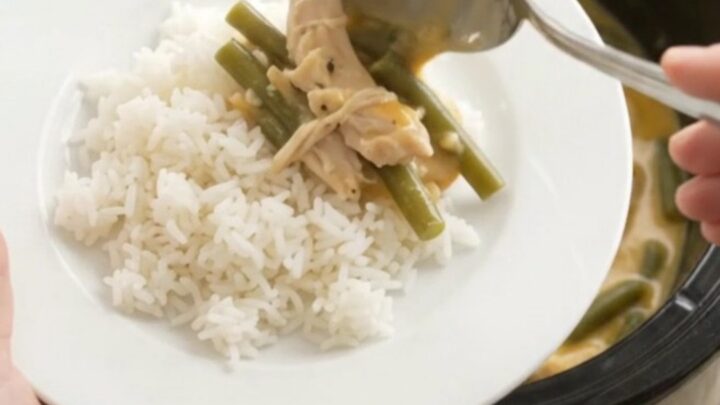
- Shred and ServeOnce the turkey is cooked, use two forks to shred the turkey breast directly in the slow cooker. Stir gently to coat the turkey and green beans with the sauce. Serve hot over steamed rice, if desired.Look for The turkey is shredded and mixed into a rich, creamy sauce.Tip Taste and season with salt and pepper before serving, if needed.
The turkey is shredded directly in the slow cooker and stirred into the sauce. The dish is creamy and cohesive, with every piece of turkey and green bean coated in the rich cheddar sauce. It's ready to be served over rice or your favorite side.
Common mistakes
One common mistake is lifting the lid too often to check on the food, which lets heat escape and extends cooking time. Another is overcooking the green beans, which turns them mushy—stick to the recommended cooking times and check for doneness near the end.
Also, avoid using pre-shredded cheese, as it contains anti-caking agents that can make the sauce grainy. Finally, don't skip the butter—it adds richness and helps the sauce come together.
How to tell it’s done
The turkey is done when it reaches an internal temperature of 165°F (74°C) in the thickest part, and it shreds easily with a fork. The green beans should be tender but still have a slight crunch—not mushy.
The sauce will be bubbly and thickened, with the cheese fully melted and smooth. If the sauce seems too thin, you can remove the lid and cook on HIGH for an additional 15-20 minutes to reduce it slightly.
- Poultry: 165°F (74°C) in the thickest part
Up next · Part 3 of 3
4 variations · storage & make-ahead · 5 answers · printable card
Tips, FAQ & printable recipe (Part 3)← Back to the ingredients (Part 1)