Dinner · Part 2 of 3: Instructions
Creamy Crockpot Chicken Pot Pie Noodles with Biscuit Crumbles Step-by-step instructions
- Prep
- Cook
- Total
- Serves
- 6
Before you start
Before starting, dice the carrots, celery, and onion so they are ready to go. Measure the poultry seasoning, butter, and chicken broth. If using frozen peas, keep them in the freezer until needed. Have the heavy cream and egg noodles measured and within reach.
A 6-quart slow cooker is ideal; if using a smaller one, ensure the ingredients fit comfortably and the chicken is submerged in the broth. No need to pre-cook anything—everything goes into the slow cooker raw and transforms over the hours.
Ingredients at a glance (12)
- 2 lb boneless, skinless chicken breasts
- 3 carrots, diced
- 3 celery stalks, diced
- 1 onion, diced
- 4 tbsp butter
- 1 tbsp poultry seasoning
- 3 cups chicken bone broth
- 1 cup heavy cream
- 1 cup frozen peas
- 16 oz wide Amish egg noodles
- Buttermilk biscuits, crumbled, for serving
- Fresh parsley, chopped, for serving
Instructions
Slow-Cook the Chicken and Vegetables
- Layer the CrockpotPlace the chicken breasts in the bottom of a 6-quart slow cooker. Scatter the diced carrots, celery, and onion over the chicken. Dot the butter on top, then sprinkle with poultry seasoning. Pour the chicken bone broth around the chicken and vegetables, making sure the chicken is mostly submerged. Cover and set the slow cooker to LOW.Look for The ingredients should fill the crockpot about halfway, with the broth just covering the chicken.Tip For even cooking, try to arrange the chicken in a single layer and tuck the vegetables around it.
- Slow-Cook the ChickenCook on LOW for 4 hours, until the chicken is tender and reaches an internal temperature of 165°F (74°C). The vegetables should be soft and the broth fragrant with poultry seasoning.Look for The chicken should shred easily with a fork, and the broth will be golden and aromatic.Safe temperature 165°F (74°C) internal temperature (poultry)Tip If the slow cooker runs hot, check the chicken at 3 1/2 hours to avoid overcooking.
After the 4-hour cook, the chicken should be fork-tender and the broth aromatic with poultry seasoning and vegetables. The carrots and celery should be soft but not falling apart. The liquid will look like a rich, golden broth.
Before moving on, check the chicken's internal temperature with an instant-read thermometer—it must read 165°F (74°C) to be safe. If not, continue cooking for 20 more minutes and check again.
Shred, Add Cream, and Cook Noodles
- Shred the ChickenCarefully remove the chicken breasts to a cutting board. Using two forks, shred the chicken into bite-size pieces. Return the shredded chicken to the slow cooker, stirring it into the broth and vegetables.Look for The chicken should pull apart easily and look moist, not dry.Tip For chunkier pieces, shred less; for finer shreds, pull more. Either works.
- Add Cream and PeasStir in the heavy cream and frozen peas, mixing well to combine. The sauce will look thin at this point but will thicken as the noodles cook and release starch.Look for The cream will turn the broth a pale golden color, and the peas will be bright green.Tip Frozen peas don't need to thaw; they'll warm through in the sauce.
- Cook the Egg NoodlesAdd the wide egg noodles to the slow cooker, pressing them down gently so they are mostly submerged in the liquid. Cover and cook on LOW for 25 minutes, stirring once halfway through, until the noodles are tender and have absorbed much of the sauce.Look for The noodles should be al dente and the sauce should cling to them, not be soupy.Tip Stir gently to avoid breaking the noodles. If the sauce seems too thick, add a splash of broth.
Once the cream and peas are stirred in, the sauce will look thin and pale. After the noodles cook for 25 minutes, they should be tender and the sauce should have thickened noticeably, clinging to the noodles and chicken. The peas will be bright green and plump. Stir gently to ensure nothing sticks to the bottom. The mixture should look creamy and cohesive, not soupy.
Top and Serve
- Finish and ServeOnce the noodles are cooked, taste the mixture and adjust seasoning if needed. Serve hot, each bowl topped with crumbled buttermilk biscuits and a sprinkle of fresh parsley.Look for The sauce should be thick and creamy, coating the noodles and chicken.Tip Crush the biscuits just before serving to keep them crisp.
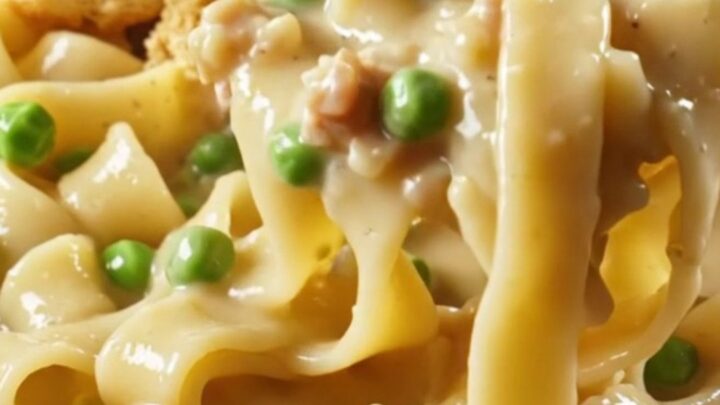
The final dish should be a thick, creamy pot pie–like filling with tender noodles and chicken, and the sauce should coat every piece. The biscuit crumbles add a crisp, buttery contrast, and the parsley provides a fresh, herbal note. Serve piping hot in deep bowls so the sauce doesn't spill. The aroma should be rich and savory, inviting everyone to the table.
Common mistakes
Avoid overcooking the noodles—25 minutes is enough; after that they can turn mushy. Don't skip the low-and-slow chicken cooking; rushing on HIGH can make the chicken tough. When shredding, don't overwork the meat; it should be in nice bite-size pieces.
Finally, don't forget to stir the noodles halfway through cooking to prevent sticking. If the sauce is too thin, it's tempting to add flour, but the noodles will continue to thicken as they rest.
How to tell it’s done
The dish is done when the chicken reaches an internal temperature of 165°F (74°C) and shreds easily, and the noodles are tender but not mushy. The sauce should be thick enough to coat the back of a spoon, and the peas should be heated through and bright green.
Taste and adjust salt, if needed. If the sauce is too thin, let it sit covered for 5 minutes after turning off the heat; it will continue to thicken. Serve immediately while hot and creamy.
- Poultry: 165°F (74°C) in the thickest part
Up next · Part 3 of 3
4 variations · storage & make-ahead · 5 answers · printable card
Tips, FAQ & printable recipe (Part 3)← Back to the ingredients (Part 1)