Dinner · Part 2 of 3: Instructions
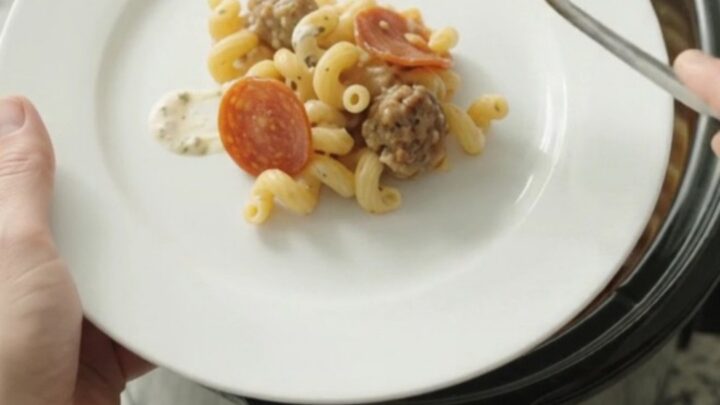
Creamy Crockpot Cavatappi with Pepperoni and Sausage Step-by-step instructions
- Prep
- Cook
- Total
- Serves
- 6
Before you start
Before you start, make sure you have a 7-quart slow cooker. If you're using a smaller one, adjust the quantities accordingly. Brown the Italian sausage and slice the pepperoni ahead of time.
Measure out the cream sauce and have the cheeses ready. This recipe is all about convenience, so having everything prepped and ready to go will make the process even smoother.
Ingredients at a glance (6)
- 4 oz thick-cut cup-and-char pepperoni
- 1 lb Italian sausage, casings removed
- 1 lb cavatappi pasta
- 2 cups roasted garlic Parmesan cream sauce
- 1 wheel (5.2 oz) garlic-and-fine-herbs Boursin cheese
- 1 1/2 cups shredded Italian fontina cheese
Instructions
Prep and Layer
- Prep the Meats and PastaIn a large skillet over medium-high heat, cook the Italian sausage, breaking it up with a wooden spoon, until browned and cooked through, about 8-10 minutes. Drain excess fat if needed. Meanwhile, slice the pepperoni into strips if not already. Add the sausage and pepperoni to the slow cooker.Look for The sausage is browned and crumbled, and the pepperoni is sliced.Safe temperature 160°F (71°C) internal temperature (ground meat)Tip Use a slotted spoon to transfer the sausage to the slow cooker, leaving behind excess grease.
- Add Pasta and SauceAdd the cavatappi pasta directly into the slow cooker with the meats. Pour the roasted garlic Parmesan cream sauce over the pasta and stir gently to combine, ensuring the pasta is coated in sauce.Look for The pasta is evenly coated with the sauce.Tip If the sauce seems too thick, add 1/2 cup of water or chicken broth.
At the end of this phase, the slow cooker contains browned sausage, pepperoni, raw pasta, and sauce. The ingredients are mixed gently, and the pasta is coated with sauce. The sausage is fully cooked and browned, and the pepperoni is slightly crisp. The slow cooker is ready for the cheese topping.
Cheese and Slow Cook
- Top with CheesesPlace the wheel of Boursin cheese in the center of the slow cooker. Sprinkle the shredded fontina cheese over the top, covering the Boursin and the pasta mixture.Look for The top is covered with fontina and the Boursin is nestled in the middle.Tip Do not stir after adding the cheeses; they will melt and create a creamy sauce.
- Slow CookCover the slow cooker and cook on LOW for 3-4 hours, or until the pasta is tender and the sauce is bubbly and creamy. Stir gently once halfway through cooking, if possible, to redistribute the sauce.Look for The sauce is bubbling around the edges and the cheese is melted and golden.Tip Check the pasta at 3 hours; slow cookers vary, and you want the pasta al dente, not mushy.
After adding the cheeses, the slow cooker is covered and set to LOW. The Boursin sits in the center, and the fontina covers the top. As it cooks, the cheeses melt and create a creamy sauce. The aroma is rich and savory, with hints of garlic and herbs. The sauce begins to bubble around the edges, signaling that the pasta is cooking.
Serve and Enjoy
- Serve the PastaOnce the pasta is cooked and the sauce is creamy, stir everything together gently to combine the melted Boursin and fontina into the sauce. Serve hot, directly from the slow cooker or on a platter.Look for The sauce is smooth and coats the pasta and meats.Tip For a nice presentation, garnish with fresh parsley or basil, if desired.
At the end of cooking, the pasta is tender and the sauce is creamy and bubbling. The Boursin and fontina have melted into a smooth, velvety sauce that coats everything.
The dish is hot and ready to serve. Stir gently to combine, then scoop into bowls or onto plates. The cheese pulls and stretches, and the flavors are perfectly balanced.
Common mistakes
One common mistake is overcooking the pasta, which can make it mushy. Check it at the 3-hour mark and add extra liquid if the sauce looks dry.
Another mistake is not browning the sausage before adding it to the slow cooker—this step adds flavor and helps render fat. Also, avoid stirring too often; this can break up the pasta. Let it cook undisturbed to allow the flavors to meld.
How to tell it’s done
The pasta is done when it's tender but still has a slight bite (al dente). The sauce should be bubbly and creamy, and the cheeses should be fully melted and incorporated.
The internal temperature of the sausage should reach 160°F (71°C) to ensure it's fully cooked. If you're using a meat thermometer, check the center of the sausage pieces. Once everything is hot and bubbling, it's ready to serve.
- Ground meat: 160°F (71°C) in the thickest part
Up next · Part 3 of 3
4 variations · storage & make-ahead · 5 answers · printable card
Tips, FAQ & printable recipe (Part 3)← Back to the ingredients (Part 1)