Dinner · Part 2 of 3: Instructions
Crockpot Bacon Carbonara with Silky Egg-Pecorino Sauce Step-by-step instructions
- Prep
- Cook
- Total
- Serves
- 6
Before you start
Before you start, dice the pancetta if not already diced, mince the garlic, and soften the cream cheese by leaving it at room temperature for 15–20 minutes. Set out all ingredients so they’re ready to go.
Have a large pot of salted water ready for the spaghetti, and a colander for draining. Keep a whisk and a small bowl nearby for tempering the eggs. The slow cooker should be clean and ready to use. This prep ensures smooth, uninterrupted cooking.
Ingredients at a glance (9)
- 12 oz diced pancetta
- 4 cloves garlic, minced
- 2 cups chicken stock
- 8 oz cream cheese, softened
- 1 cup heavy cream
- 1 tsp cracked black pepper
- 16 oz spaghetti
- 3 large egg yolks, lightly beaten
- 1 1/2 cups grated Pecorino Romano, plus more for serving
Instructions
Build the Creamy Base
- Crisp the Pancetta and Combine the Sauce BaseIn a large skillet over medium heat, cook the diced pancetta until crisp and golden, about 8 minutes. Transfer with a slotted spoon to a paper-towel-lined plate. Add the pancetta, minced garlic, chicken stock, cream cheese, heavy cream, and cracked black pepper to the slow cooker. Stir to combine, breaking up the cream cheese as much as possible.Look for The sauce mixture should look creamy and well combined, with small bits of cream cheese still visible.Tip Crisping the pancetta first adds depth; do not skip this step—it develops the flavor.
- Slow-Cook the Creamy BaseCover the slow cooker and cook on LOW for 2 hours. The sauce will thicken and the flavors will meld. Stir once halfway through if possible. The mixture should be hot and bubbly around the edges.Look for After 2 hours, the sauce should be glossy and slightly thickened, with the cream cheese fully melted.Tip Do not cook on HIGH—low heat prevents the dairy from curdling.
The slow cooker should contain a fragrant, creamy mixture with visible bits of pancetta and garlic. The cream cheese should be mostly melted, and the sauce should be smooth and slightly thickened. Give it a stir—it should smell rich and savory, with the pancetta fat lending a deep, meaty aroma. The sauce will bubble gently around the edges, indicating that the flavors are melding. This is the foundation for the carbonara.
Combine Pasta and Egg Sauce
- Cook the SpaghettiAbout 10 minutes before the sauce is ready, bring a large pot of salted water to a boil. Cook the spaghetti according to package directions until al dente. Reserve 1 cup of pasta water, then drain the spaghetti.Look for The spaghetti should be tender but still firm to the bite.Tip Reserve pasta water—it helps loosen the sauce if needed.
- Temper the Egg YolksIn a small bowl, whisk the egg yolks and 1/2 cup of the grated Pecorino Romano. Gradually whisk in about 1/2 cup of the hot sauce from the slow cooker, a few tablespoons at a time, to temper the eggs without scrambling them.Look for The egg mixture should be warm and smooth, with no visible cooked egg bits.Tip Tempering slowly is the key to a silky sauce—add the hot liquid gradually while whisking constantly.
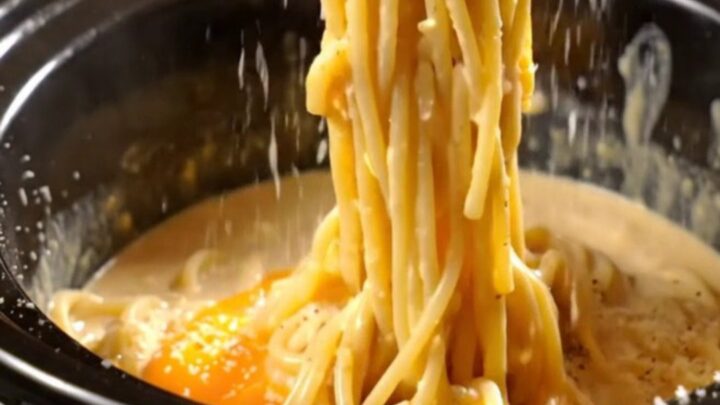
- Combine Spaghetti with SauceAdd the drained spaghetti to the slow cooker. Pour the tempered egg mixture over the top. Using tongs, toss everything together until the spaghetti is evenly coated with the creamy sauce. If the sauce seems too thick, add reserved pasta water a few tablespoons at a time until it reaches a silky consistency.Look for The spaghetti should be glossy and coated, with the sauce clinging to every strand.Safe temperature 160°F (71°C) internal temperature (egg dishes)Tip Toss vigorously to emulsify the sauce—this creates the creamy texture.
The spaghetti should be evenly coated with the sauce, which should have a glossy, silky appearance. The egg-pecorino mixture should be fully incorporated, with no visible streaks of raw egg.
The sauce should cling to the pasta, and the texture should be creamy and luxurious. The aroma is intensely cheesy and peppery. The pasta should be tender but not mushy, and the sauce should not be watery—if it is, add a little pasta water to loosen it.
Finish and Serve
- Finish with Pecorino and PepperSprinkle the remaining 1 cup of grated Pecorino Romano over the pasta. Toss again to combine. The cheese will melt into the sauce, adding richness and saltiness. Taste and adjust with more black pepper if desired.Look for The sauce should be thick and creamy, with the cheese fully melted and the pasta well coated.Tip Add the cheese off the heat to avoid clumping.
- Serve ImmediatelyLift a glossy golden nest of carbonara spaghetti with tongs and twirl it onto plates. Shower with extra Pecorino Romano and a generous crack of black pepper. Serve hot, straight from the slow cooker for maximum creaminess.Look for The pasta should be glistening with sauce, and the cheese should be slightly melted on top.Tip Carbonara is best eaten right away—the sauce sets as it cools.
The final dish should be a glossy, golden nest of spaghetti, with the sauce clinging to every strand. The extra pecorino and black pepper on top add a sharp, peppery hit. The texture should be creamy and coating, not runny. The aroma is rich and savory, with the pancetta and cheese forward. Serve immediately, as the sauce will thicken as it cools. The pasta should twirl easily on a fork, and each bite should be indulgent and satisfying.
Common mistakes
The most common mistake is scrambling the eggs. Always temper them by gradually adding hot sauce while whisking constantly. Another pitfall is overcooking the pasta—cook it just to al dente, as it will continue to cook slightly in the slow cooker.
Using cold cream cheese can result in lumps; soften it first. Also, do not cook on HIGH; the gentle heat of LOW is essential for a smooth sauce. Finally, resist the urge to add too much pasta water—add it gradually until the sauce reaches the desired consistency.
How to tell it’s done
The sauce is done when it has thickened and the flavors have melded—after 2 hours on LOW. The spaghetti should be al dente when added, and after tossing with the egg mixture, the sauce should be glossy and coat the pasta evenly.
To ensure food safety, the internal temperature of the sauce with eggs must reach 160°F (71°C). Use an instant-read thermometer to check; insert it into the thickest part of the sauce. The pasta should be tender but with a slight bite, and the cheese should be melted and creamy.
- Egg dishes: 160°F (71°C) in the thickest part
Up next · Part 3 of 3
4 variations · storage & make-ahead · 5 answers · printable card
Tips, FAQ & printable recipe (Part 3)← Back to the ingredients (Part 1)