Desserts · Part 2 of 3: Instructions
Creamy Coconut Milk Custard Cake Step-by-step instructions
- Prep
- Cook
- Total
- Serves
- 8
Before you start
Before beginning, ensure all ingredients are at room temperature, which helps the batter emulsify more effectively in the blender. Preheat your oven to 350 degrees Fahrenheit and grease your baking pan thoroughly with butter or non-stick spray to prevent the custard from sticking.
Have your blender jar clean and ready, and clear adequate space on your counter for the cooling rack. Double-check that you have a thermometer available to verify the internal temperature of the custard once it is finished baking.
Ingredients at a glance (3)
- 4 large eggs
- 1/2 cup unsalted butter, melted
- 1 can (13.5 oz) full-fat coconut milk
Instructions
Emulsifying the Batter
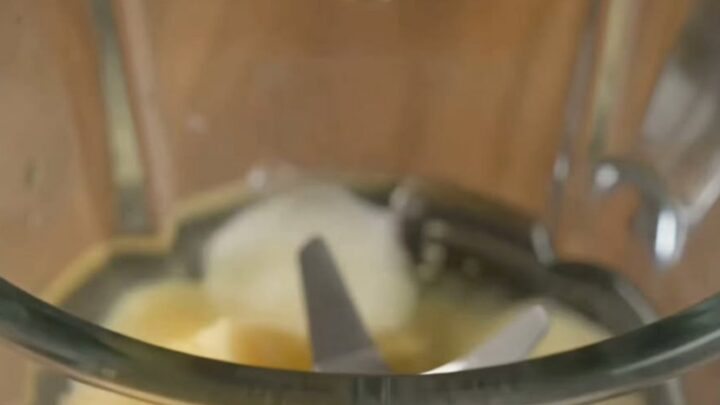
- Prepare the BatterCombine the eggs, melted butter, and coconut milk in a blender jar. Blend on high speed for thirty seconds until the mixture is completely smooth and uniform in texture.Look for The batter should be thin and perfectly uniform in color.Tip Ensure the butter is cooled slightly before adding to the eggs to prevent premature cooking.
The batter should look completely uniform, with no visible patches of separated butter. It should have a light, pourable consistency similar to heavy cream. If you see any clumps, continue blending for an additional ten seconds. The color should be consistent throughout the mixture, indicating that the coconut milk base is fully integrated with the eggs and butter.
Baking the Custard
- Bake the CustardPour the batter into a greased 8-inch square baking pan. Place the pan in a preheated oven at 350 degrees Fahrenheit. Bake for 45 minutes or until the center is set and the top is golden brown. To ensure the eggs are fully cooked, the internal temperature of the custard must reach 160 degrees Fahrenheit (71 degrees Celsius).Look for The top will be lightly browned and the center should jiggle slightly but feel set to the touch.Safe temperature 160°F (71°C) internal temperature (egg dishes)Tip Use a toothpick to test the center; it should come out mostly clean.
The cake is ready to come out of the oven when it has puffed up slightly and developed a beautiful golden-brown color on the surface. The center should feel firm when gently pressed with the back of a spoon.
If the top is browning too quickly but the center still feels liquid, loosely tent the pan with aluminum foil to protect the surface while the interior finishes cooking through to the required temperature.
Cooling and Setting
- Cool and ServeRemove the cake from the oven and place it on a wire rack. Allow it to rest at room temperature for at least 20 minutes before slicing. This resting period is crucial for the custard structure to firm up properly for clean slices.Look for The cake will settle and become easier to cut once it has cooled down.Tip Cover loosely with foil if the top browns too quickly during the baking process.
During the cooling phase, the cake will lose some of its volume as it settles. The texture should transition from a soft, delicate state to a firmer, sliceable custard. Before slicing, ensure the cake has cooled for at least 20 minutes on a wire rack. This is the moment to check that the edges are crisp and the center has held its shape, indicating it is ready to be portioned and served.
Common mistakes
A common mistake is failing to blend the batter enough, which leads to a lumpy texture rather than a smooth custard. Ensure the blender runs for the full duration specified.
Another error is removing the cake from the oven before it reaches the required internal temperature, resulting in a runny, unstable center. Avoid the temptation to slice the cake while it is piping hot; the structure needs the cooling time to set properly, or it will fall apart on the plate.
How to tell it’s done
The custard cake is done when the top is a deep golden brown and the edges have pulled slightly away from the sides of the pan. The center should appear set and firm to the touch, with minimal jiggling.
Most importantly, verify the internal temperature with a digital probe thermometer inserted into the center of the cake; it must reach 160 degrees Fahrenheit (71 degrees Celsius) to ensure the eggs are fully cooked and the custard is safe to serve.
- Egg dishes: 160°F (71°C) in the thickest part
Up next · Part 3 of 3
2 variations · storage & make-ahead · 3 answers · printable card
Tips, FAQ & printable recipe (Part 3)← Back to the ingredients (Part 1)