Dinner · Part 2 of 3: Instructions
Creamy Coconut Curry Laksa Ramen with Crispy Tofu Puffs Step-by-step instructions
- Prep
- Cook
- Total
- Serves
- 2
Before you start
Before you start, gather all your ingredients. Peel and devein the shrimp if not already done. Measure the coconut milk, chicken stock, and laksa paste. Have the tofu puffs, ramen noodles, bean sprouts, cilantro, and lime ready.
The entire dish comes together quickly, so having everything within reach makes the process smooth. If using dried ramen, you may want to cook it separately in boiling water to keep the broth from becoming too starchy.
Ingredients at a glance (10)
- 90 g laksa curry paste (about 1/3 cup)
- 2 tbsp coconut oil
- 400 ml coconut milk (about 1 2/3 cups)
- 400 ml chicken stock (about 1 2/3 cups)
- 100 g tofu puffs (about 2 cups)
- 200 g shrimp, peeled and deveined (about 1/2 lb)
- 2 packages ramen noodles (fresh or dried)
- 1 cup bean sprouts
- 1/4 cup fresh cilantro leaves
- 1 lime, cut into wedges
Instructions
Bloom the Aromatics
- Bloom the Laksa PasteHeat the coconut oil in a large pot over medium heat. Add the laksa curry paste and cook, stirring constantly, until fragrant and sizzling, about 1 to 2 minutes. The paste will darken slightly and release its aroma.Look for The paste becomes deeply fragrant and starts to stick slightly to the bottom of the pot.Tip Stir constantly to prevent the paste from burning; adjust heat if needed.
- Add Coconut Milk and StockPour in the coconut milk and chicken stock. Stir well to combine with the bloomed paste. Bring the mixture to a gentle simmer over medium-high heat, then reduce heat to maintain a steady simmer at about 92°C (198°F).Look for The liquid is smooth and creamy, with small bubbles breaking the surface.Tip Do not let it boil vigorously; a gentle simmer keeps the coconut milk from separating.
The laksa paste sizzles in the coconut oil, releasing a heady aroma of lemongrass and chili. The paste darkens slightly and becomes fragrant.
The coconut milk and stock are added, and the broth comes to a gentle simmer, looking smooth and creamy with a hint of red oil beginning to form.
Simmer and Cook Proteins
- Simmer the BrothLet the broth simmer gently for about 6 minutes, stirring occasionally, until the ruby-red chili oil rises to the top. The broth will thicken slightly and become intensely flavored.Look for A layer of reddish-orange oil floats on the surface of the broth.Tip Taste the broth and adjust seasoning if desired, but remember the paste and stock add salt.
- Cook the ShrimpAdd the shrimp to the simmering broth. Cook for 2 to 3 minutes, until they turn pink and opaque. Check that the thickest part of a shrimp reaches 145°F (63°C) using an instant-read thermometer.Look for Shrimp are pink, curled, and firm to the touch.Safe temperature 145°F (63°C) internal temperature (shellfish)Tip Do not overcook shrimp; they become rubbery if left in the hot broth too long.
- Add Tofu PuffsAdd the tofu puffs to the broth. Let them soak up the broth for about 2 minutes, turning them occasionally so they absorb the coconut curry liquid and soften slightly while keeping their crisp edges.Look for Tofu puffs have absorbed some broth and are plump but still slightly firm.Tip If you prefer softer tofu puffs, let them simmer for an extra minute.
The broth simmers gently for 6 minutes until a distinct ruby-red oil rises to the surface. The shrimp are added and turn pink and opaque, while the tofu puffs soak up the flavorful liquid, becoming plump and glossy. The kitchen smells of coconut and warm spices.
Noodles and Assembly
- Cook the NoodlesAdd the ramen noodles to the pot. Cook according to package instructions, usually 2 to 4 minutes for fresh noodles or 4 to 5 minutes for dried, until tender but still springy. Stir gently to separate the noodles.Look for Noodles are al dente and have absorbed some of the broth.Tip If using dried ramen, cook them separately in boiling water to avoid over-thickening the broth.
- Garnish and ServeDivide the noodles, shrimp, and tofu puffs among bowls. Ladle the hot broth over the top. Garnish with bean sprouts, fresh cilantro, and lime wedges on the side. Serve immediately.Look for Steam rises from the bowls, and the ruby oil glistens on the surface.Tip Squeeze lime over each bowl just before eating to brighten the flavors.
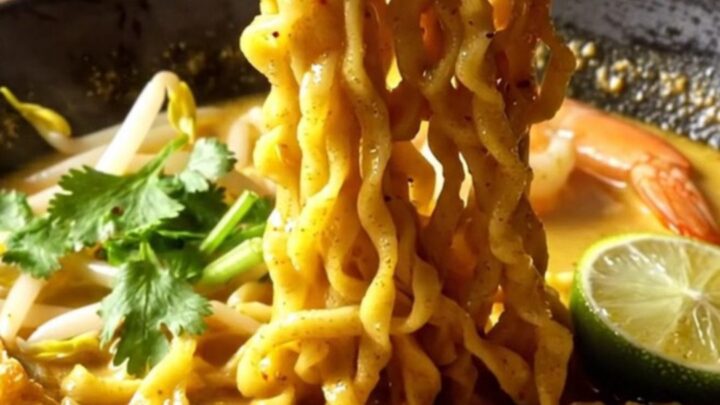
The ramen noodles are added and cooked until springy, absorbing some of the broth. The final bowls are garnished with fresh bean sprouts, cilantro, and lime wedges. The steam carries the aroma of coconut and chili, and the ruby oil glistens on top of each serving.
Common mistakes
One common mistake is boiling the coconut milk too vigorously, which can cause it to separate and look curdled. Keep the heat at a gentle simmer. Another is overcooking the shrimp, making them rubbery; cook just until they turn pink.
If you add the noodles directly to the broth, be careful not to overcook them, as they will continue to soften in the hot liquid. Stir the broth occasionally to prevent the paste from sticking to the bottom.
How to tell it’s done
The laksa is done when the shrimp are pink and opaque and reach an internal temperature of 145°F (63°C). The noodles should be tender but still springy.
The broth should be creamy and lightly thickened, with a layer of ruby-red oil on the surface. Taste the broth and adjust seasoning if needed. The tofu puffs should be plump and have absorbed some broth without falling apart.
- Shellfish: 145°F (63°C) in the thickest part
Up next · Part 3 of 3
4 variations · storage & make-ahead · 5 answers · printable card
Tips, FAQ & printable recipe (Part 3)← Back to the ingredients (Part 1)