Desserts · Part 2 of 3: Instructions
Creamy Chocolate Pavê with Glossy Ganache Step-by-step instructions
- Prep
- Cook
- Total
- Serves
- 8
Before you start
Before beginning, ensure that your workspace is clean and that you have all your ingredients prepared and at the appropriate temperatures. If your chocolate cream or ganache requires preparation, ensure they have cooled to room temperature before starting the assembly.
Have your 8x8 inch baking dish ready on a flat, stable surface. Preparing these components in advance makes the assembly process smooth and efficient, allowing you to focus on creating even, distinct layers that define the final presentation of the dessert.
Ingredients at a glance (4)
- 200 g biscuits, such as Maria or plain tea biscuits
- 3 cups chocolate cream filling, prepared
- 1 cup chocolate ganache, prepared
- 1/2 cup dual-color chocolate curls
Instructions
Layering the base
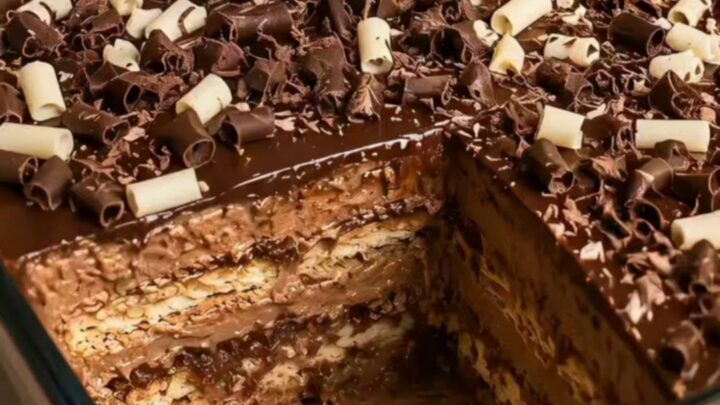
- Assemble the layersArrange a single layer of biscuits at the bottom of the glass baking dish. Spread a generous portion of the chocolate cream over the biscuits to cover them completely. Repeat this layering process until all ingredients are used, ensuring the final layer is cream.Look for The layers should be even and fill the dish to the top.Tip Dip the biscuits briefly in milk if a softer texture is preferred.
At the end of this phase, the dish should be filled with alternating layers of biscuits and chocolate cream. Check that the edges are clean and that the layers are level.
The surface should be flat and ready for the final ganache application, ensuring a professional look once the dish is eventually sliced and served to guests.
Applying the ganache
- Apply the ganachePour the prepared chocolate ganache over the top layer of the chocolate cream. Use a spatula to spread it into a smooth, even layer across the surface. Ensure the edges are sealed to maintain the integrity of the layers.Look for The ganache should have a glossy, reflective surface.Tip Tap the dish gently on the counter to remove any air bubbles from the ganache.
The ganache should cover the entire surface of the chocolate cream, creating a smooth, reflective, and glossy top. Check that there are no gaps at the corners of the dish where the cream might be exposed. The ganache should be uniform in thickness, providing a cohesive and polished look to the top of the dessert.
Chilling and garnishing
- Chill and garnishSprinkle the dual-color chocolate curls over the ganache topping. Place the baking dish in the refrigerator for at least 4 hours to allow the dessert to set properly before slicing and serving. Ensure any egg-based components are cooked to 160°F (71°C) during initial preparation.Look for The dessert should feel firm to the touch once chilled.Safe temperature 160°F (71°C) internal temperature (egg dishes)Tip Use a warm, dry knife for clean, sharp slices.
After chilling, the dessert should be completely firm. The chocolate curls should be evenly distributed and look crisp against the glossy ganache. Before serving, check that the edges are sharp and that the dessert has fully set, ensuring that each slice reveals the beautiful, distinct layers of the pavê.
Common mistakes
A common mistake is using too much cream between layers, which can cause the dessert to become unstable and slide. Ensure each layer of cream is just thick enough to coat the biscuits.
Another error is failing to chill the dessert for the full duration; if served too soon, the layers will not have set, resulting in a messy presentation. Finally, avoid using warm ganache, as it may cause the cream layer underneath to melt if poured too quickly or at too high a temperature.
How to tell it’s done
The pavê is ready once it has been chilled for at least 4 hours. The dessert should feel firm to the touch, and the ganache should be set and stable. When sliced with a warm knife, the layers should remain intact without sliding or losing their shape.
The internal temperature of any egg-based custard components should reach 160°F (71°C) during the initial preparation of the cream to ensure food safety.
- Egg dishes: 160°F (71°C) in the thickest part
Up next · Part 3 of 3
2 variations · storage & make-ahead · 3 answers · printable card
Tips, FAQ & printable recipe (Part 3)← Back to the ingredients (Part 1)