Dinner · Part 2 of 3: Instructions
Creamy Chicken Piccata Penne with Spinach Step-by-step instructions
- Prep
- Cook
- Total
- Serves
- 4
Before you start
Before starting, organize all your ingredients to keep the cooking process smooth and efficient. Boil a large pot of salted water for the penne pasta. Cube the chicken breasts into uniform bite-sized pieces and pat them completely dry.
Mince the garlic cloves, measure out the heavy cream, and grate the fresh parmesan cheese. Drain the capers and chop the fresh parsley. Having everything prepped and ready by the stove prevents the garlic or cream from burning while you scramble to prepare the next ingredient.
Ingredients at a glance (9)
- 8 oz penne pasta
- 1 tbsp olive oil
- 1 lb boneless skinless chicken breasts, cut into bite-sized cubes
- 3 cloves garlic, minced
- 1 cup heavy cream
- 1/2 cup grated parmesan cheese
- 2 tbsp capers, drained
- 2 cups fresh baby spinach
- 2 tbsp chopped fresh parsley
Instructions
Searing Chicken & Boiling Pasta
- Boil the PastaBring a large pot of salted water to a rolling boil. Add the penne pasta and cook according to package instructions until al dente. Drain the pasta, reserving one cup of the starchy pasta water, and set aside.Look for The pasta should be tender with a slight bite in the center.Tip Do not overcook the pasta, as it will soften further when folded into the hot cream sauce later.
- Sear the ChickenHeat the olive oil in a large skillet over medium-high heat. Add the cubed chicken breast in a single layer. Sear the chicken without moving it for 3 minutes to develop a golden crust, then flip and cook for another 3 to 4 minutes until the chicken is fully cooked through and reaches an internal temperature of 165°F (74°C). Remove the chicken from the skillet and set aside on a plate.Look for The chicken should be deeply browned and caramelized on all sides.Safe temperature 165°F (74°C) internal temperature (poultry)Tip Avoid overcrowding the pan so the chicken sears beautifully instead of steaming.
The kitchen will fill with the rich, savory aroma of browning meat as the chicken cubes sizzle in the hot oil. The chicken pieces should develop a deep golden-brown crust on all sides, releasing a delightful crackling sound. Meanwhile, the pasta water should reach a rolling boil, and the penne will begin to soften. Check that the chicken is fully cooked through and the pasta is al dente before moving to the next step.
Building the Creamy Piccata Sauce
- Sauté the GarlicReduce the skillet heat to medium. Add the minced garlic to the remaining oil and chicken drippings in the pan. Sauté for about 1 minute, stirring constantly to prevent the garlic from burning, until it is highly fragrant and lightly golden.Look for The garlic should smell sweet and fragrant without turning dark brown.Tip Keep a close eye on the garlic as it burns quickly and can turn bitter.
- Simmer the CreamPour the heavy cream into the skillet, stirring constantly to scrape up the delicious browned bits stuck to the bottom of the pan. Bring the mixture to a gentle simmer and let it cook for 3 to 4 minutes until the cream has thickened slightly.Look for The cream should bubble gently and coat the back of a spoon.Tip Scrape the bottom of the skillet thoroughly to release all the savory caramelized chicken flavor.
As you stir the minced garlic and heavy cream into the skillet, the bubbling liquid will lift the browned bits from the pan, turning a beautiful light golden hue. The sauce will begin to simmer gently, releasing a sweet garlic and rich dairy fragrance. The cream will thicken slightly, coating the back of a spoon. Check that the sauce is smooth, bubbling gently, and reduced to a velvety consistency before adding the cheese.
Combining and Wilting Spinach
- Fold in Pasta and GreensAdd the cooked penne, grated parmesan cheese, drained capers, and fresh baby spinach to the skillet. Gently fold the ingredients together over low heat until the spinach wilts and the cheese melts completely into a glossy, cohesive sauce. If the sauce is too thick, stir in a splash of the reserved pasta water.Look for The spinach should be wilted and the pasta evenly coated in a velvety sauce.Tip Turn off the heat as soon as the spinach wilts to keep its vibrant green color.
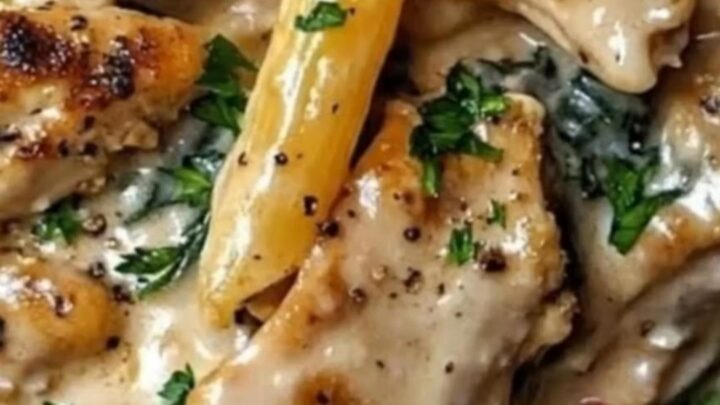
- Garnish and ServeTop the creamy penne pasta with the reserved golden-browned chicken pieces. Sprinkle the chopped fresh parsley over the dish for a final touch of color and freshness, then serve immediately while hot.Look for The dish should be piping hot and beautifully arranged with the chicken on top.Tip Warm your serving bowls beforehand to keep the cream sauce silky and smooth.
The skillet will transform into a colorful, glossy masterpiece as the warm penne, parmesan, capers, and fresh spinach are folded into the sauce. The spinach will quickly wilt down into bright green ribbons, and the parmesan will melt completely, creating a cohesive, glossy coating over the pasta.
The dish should look incredibly saucy and smell rich, briny, and fresh. Ensure the spinach is tender and the sauce clings perfectly to the penne.
Common mistakes
One common mistake is overcrowding the skillet when searing the chicken cubes, which causes them to steam in their own juices and turn grey instead of developing a golden crust. Cook the chicken in batches if necessary.
Another error is allowing the garlic to burn, which imparts a bitter flavor to the entire cream sauce; keep the heat moderate and add the cream quickly once the garlic becomes fragrant. Finally, avoid boiling the sauce vigorously after adding the parmesan cheese, as high heat can cause the cheese to clump and separate.
How to tell it’s done
The chicken is safely done when it reaches an internal temperature of 165°F (74°C) on an instant-read digital thermometer. The exterior should be deeply browned and caramelized, while the inside remains tender and juicy.
The penne pasta should be cooked al dente, meaning it is tender but still has a slight bite in the center. The final cream sauce should be thick enough to coat the penne generously without pooling thinly at the bottom of the skillet, indicating a perfect emulsion.
- Poultry: 165°F (74°C) in the thickest part
Up next · Part 3 of 3
2 variations · storage & make-ahead · 3 answers · printable card
Tips, FAQ & printable recipe (Part 3)← Back to the ingredients (Part 1)