Dinner · Part 2 of 3: Instructions
Creamy Chicken Penne with Broccoli Skillet Step-by-step instructions
- Prep
- Cook
- Total
- Serves
- 6
Before you start
Before starting the cooking process, organize all ingredients to ensure a smooth workflow. Chop the chicken breasts into even, bite-sized pieces so they cook at the same rate. Cut the broccoli into small, uniform florets. Shred the mozzarella cheese from a fresh block. Measure out the pasta and heavy cream. Having everything prepped and ready near the stove ensures the cream sauce is assembled quickly and efficiently.
Ingredients at a glance (5)
- 12 oz penne pasta
- 1 1/2 lb boneless, skinless chicken breasts, cut into bite-sized pieces
- 3 cups broccoli florets
- 1 1/2 cups heavy cream
- 1 1/2 cups shredded mozzarella cheese
Instructions
Boiling Pasta and Searing Chicken
- Cook the Pasta and BroccoliBring a large pot of water to a boil. Add the penne pasta and cook according to the package instructions for al dente, usually about 9 to 11 minutes. During the last 2 minutes of cooking, add the broccoli florets to the pot. Drain the pasta and broccoli together in a colander and set aside.Look for The pasta should be tender but still have a slight bite, and the broccoli should be bright green.Tip Do not overcook the pasta, as it will continue cooking in the oven later.
- Sear the ChickenHeat a large oven-safe skillet over medium-high heat. Add the chicken pieces in a single layer and sear without moving for 3 minutes. Stir and cook for another 3 to 4 minutes until golden brown and cooked through to an internal temperature of 165°F (74°C). Remove the chicken from the skillet and set aside.Look for The chicken should be golden brown on all sides and no longer pink in the center.Safe temperature 165°F (74°C) internal temperature (poultry)Tip Work in batches if the skillet is small to avoid crowding, which steams the meat instead of searing it.
At the end of this phase, the pasta is tender-crisp, and the broccoli is bright green and drained. The chicken pieces should have a beautiful golden-brown exterior and be cooked through to a safe internal temperature of 165 degrees Fahrenheit.
The skillet will have savory browned bits stuck to the bottom, which are essential for building the flavor of the cream sauce in the next step. The kitchen should smell incredibly savory and rich from the seared meat.
Simmering Sauce and Tossing Ingredients
- Bubble the Cream SauceReduce the heat to medium. Pour the heavy cream into the same skillet, scraping up any browned bits from the bottom. Bring the cream to a gentle simmer, stirring constantly, and let it bubble for 3 to 4 minutes until slightly thickened into a rich sauce.Look for The cream sauce should bubble gently and coat the back of a spoon.Tip Keep the heat at medium to prevent the cream from boiling too vigorously and separating.
- Toss and CombineAdd the cooked penne, broccoli, and seared chicken back into the skillet with the cream sauce. Use a wooden spoon or tongs to gently toss all the ingredients together until everything is evenly coated in the rich cream sauce.Look for The pasta, broccoli, and chicken should be thoroughly coated and glistening with sauce.Tip If the sauce seems too thick, splash in a tablespoon of reserved pasta water to loosen it.
At this point, the heavy cream has deglazed the skillet and simmered into a smooth, velvety sauce that coats the back of a spoon. The cooked pasta, broccoli, and seared chicken are fully folded into the skillet, with every piece glistening and thoroughly coated in the rich cream sauce. The mixture should be hot and fragrant before the cheese is added. The sauce should bubble gently around the edges of the pan.
Baking and Melting the Cheese
- Top with Cheese and BakePreheat the oven to 400°F (204°C). Spread the pasta mixture evenly in the skillet. Sprinkle the shredded mozzarella cheese in an even layer over the top. Transfer the skillet to the preheated oven and bake for 8 to 10 minutes, or until the cheese is completely melted and bubbling gently.Look for The cheese should be melted, gooey, and starting to turn golden brown in spots.Tip For an extra golden and bubbly cheese crust, turn on the broiler for the last 1 to 2 minutes of baking.
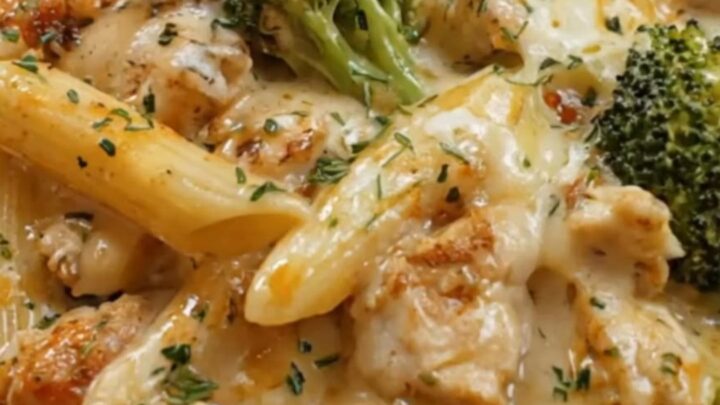
At the final checkpoint, the mozzarella cheese is completely melted, forming a thick, gooey blanket over the pasta. The cheese should be bubbling gently at the edges of the skillet, with beautiful golden-brown spots developing across the surface.
When a fork is lifted from the pan, the cheese should stretch in long, appetizing strings, and the sauce underneath should be thick and bubbling hot. The entire dish looks rustic, warm, and ready to serve.
Common mistakes
One common mistake is overcooking the pasta during the boiling stage. Since the pasta undergoes a second cooking process in the hot cream sauce and oven, boiling it past al dente will result in mushy, bloated noodles.
Another error is allowing the skillet to get too hot when adding the cream, which can cause the cream to separate. Finally, avoid using pre-shredded cheese, as the starch coating prevents that perfect, long-stretching cheese pull.
How to tell it’s done
The dish is perfectly done when the mozzarella cheese is fully melted, bubbling, and golden brown on top, and the internal temperature of the chicken has reached a safe 165°F (74°C). The sauce should be thick and bubbling around the edges of the skillet.
Let the skillet rest for five minutes before serving; this allows the cream sauce to cool slightly and thicken further, ensuring it clings beautifully to the pasta instead of pooling at the bottom of the plate.
- Poultry: 165°F (74°C) in the thickest part
Up next · Part 3 of 3
2 variations · storage & make-ahead · 3 answers · printable card
Tips, FAQ & printable recipe (Part 3)← Back to the ingredients (Part 1)