Dinner · Part 2 of 3: Instructions
Creamy Chicken Penne with Broccoli and Peppers Step-by-step instructions
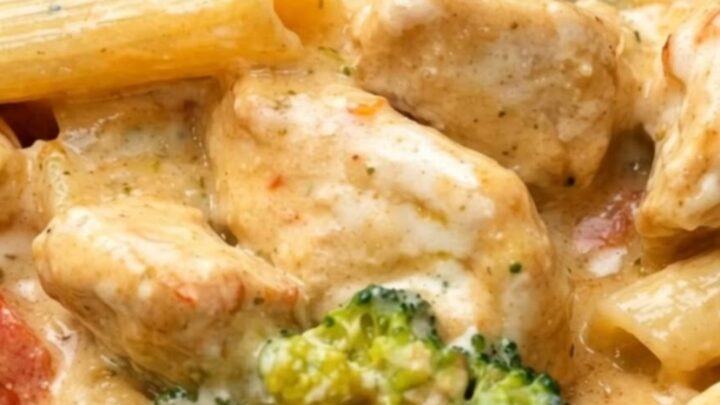
- Prep
- Cook
- Total
- Serves
- 4
Before you start
Before beginning, ensure all ingredients are measured and prepared. Slice the chicken breasts into even strips to guarantee uniform cooking. Cut the broccoli into small, bite-sized florets and slice the red bell pepper into thin strips.
Cook the penne pasta in boiling water until al dente, then drain and set aside. Having these components ready allows the cooking process to flow smoothly once the skillet is hot.
Ingredients at a glance (7)
- 2 tbsp olive oil
- 1 lb boneless, skinless chicken breasts, cut into strips
- 1 red bell pepper, sliced into thin strips
- 2 cups broccoli florets
- 1 cup heavy cream
- 1 cup grated parmesan cheese
- 8 oz penne pasta, cooked and drained
Instructions
Searing the Chicken
- Sear the ChickenHeat the olive oil in a large skillet over medium-high heat. Add the chicken strips to the hot skillet. Cook, stirring occasionally, until the chicken is golden brown and cooked through to a safe internal temperature of 165°F (74°C).Look for The chicken is golden brown and opaque throughout.Safe temperature 165°F (74°C) internal temperature (poultry)Tip Do not crowd the pan to ensure a good sear.
At the end of this phase, the chicken strips should be beautifully browned on the outside with a deep golden crust. The skillet will sizzle loudly as the chicken cooks, releasing a savory, mouthwatering aroma.
When sliced, the chicken must be completely opaque throughout, confirming it has reached a safe internal temperature of 165°F (74°C) before proceeding.
Sautéing the Vegetables and Melting the Sauce
- Sauté the VegetablesAdd the sliced red bell pepper and broccoli florets directly to the skillet with the cooked chicken. Sauté the mixture over medium heat for about 3 to 4 minutes, stirring frequently, until the vegetables are vibrant and tender-crisp.Look for The broccoli turns bright green and the peppers soften slightly.Tip Keep the vegetables moving to prevent burning.
- Simmer the Cream and CheesePour the heavy cream into the skillet, stirring to combine with the chicken and vegetables. Bring the mixture to a gentle simmer over medium-low heat. Stir in the grated parmesan cheese gradually, allowing it to melt completely into a smooth, velvety sauce.Look for The cheese is fully melted and the sauce is bubbling gently.Tip Use medium-low heat to prevent the cream from boiling over.
By the end of this phase, the broccoli florets will turn a vibrant green, and the red bell peppers will soften slightly while retaining a gentle bite. The heavy cream will bubble gently around the edges of the pan, and the grated parmesan cheese will melt completely into the warm liquid, forming a thick, smooth, and cohesive sauce.
Combining and Coating the Pasta
- Toss and ServeAdd the cooked and drained penne pasta to the skillet. Toss all the ingredients together gently until the pasta, chicken, and vegetables are thoroughly coated in the creamy cheese sauce. Let it heat through for 1 minute before removing from heat and serving.Look for The sauce clings evenly to the pasta and everything is hot.Tip Serve immediately while the sauce is at its creamiest.
In this final phase, the cooked penne pasta is thoroughly integrated with the chicken, vegetables, and sauce. The pasta should be glistening, with the velvety sauce clinging evenly to every tube and crevice. The mixture will sound rich and saucy as it is tossed, and the steam rising from the skillet will carry the rich scent of cheese and seared chicken.
Common mistakes
A common mistake is overcrowding the skillet when searing the chicken. If too many chicken strips are added at once, they will steam in their own juices rather than sear, resulting in a pale color and a rubbery texture.
Cook the chicken in batches if necessary to ensure each piece has direct contact with the hot oil. Additionally, avoid boiling the cream on high heat, as this can cause the sauce to separate or curdle.
How to tell it’s done
The chicken is fully cooked and safe to eat when it reaches an internal temperature of 165°F (74°C) on an instant-read thermometer.
The vegetables should be tender-crisp, meaning they are cooked through but still retain a bright color and a slight snap. The pasta should be tender but firm to the bite, and the sauce should be thick enough to coat the back of a spoon smoothly.
- Poultry: 165°F (74°C) in the thickest part
Up next · Part 3 of 3
2 variations · storage & make-ahead · 3 answers · printable card
Tips, FAQ & printable recipe (Part 3)← Back to the ingredients (Part 1)