Dinner · Part 2 of 3: Instructions
Creamy Chicken Linguine with Spinach for a Quick Dinner Step-by-step instructions
- Prep
- Cook
- Total
- Serves
- 4
Before you start
Before beginning, ensure all ingredients are measured and ready, as the cooking process moves quickly once the heat is on. Dice the chicken breasts into uniform, bite-sized pieces to ensure they cook evenly.
Shred the mozzarella cheese if using a block, and wash and dry the fresh baby spinach to remove any excess moisture. Having a large pot of water already simmering on the stove will save significant time, allowing you to move seamlessly from boiling the pasta to preparing the creamy sauce.
Ingredients at a glance (4)
- 1 lb linguine pasta
- 1 lb boneless skinless chicken breasts, diced
- 4 cups fresh baby spinach
- 1 cup shredded mozzarella cheese
Instructions
Boiling the pasta
- Cook the pastaBring a large pot of salted water to a boil. Add the linguine and cook according to the package directions until al dente. Reserve a small amount of pasta water before draining the noodles in a colander.Look for The pasta should be firm to the bite, known as al dente.Tip Keep the pasta water to help adjust the consistency of the sauce later.
The pasta is ready when it is tender but firm to the bite. It should be drained well, but keeping a small amount of the starchy cooking water is a vital step for adjusting the consistency of the final sauce, ensuring it is perfectly smooth and well-integrated later.
Searing the protein
- Sear the chickenWhile the pasta cooks, heat a large skillet over medium-high heat. Add the diced chicken breasts and cook, stirring occasionally, until the chicken is golden brown and reaches an internal temperature of 165°F (74°C).Look for The chicken pieces should be opaque throughout and golden brown on the edges.Safe temperature 165°F (74°C) internal temperature (poultry)Tip Ensure the pieces are uniform in size for even cooking.
The chicken is perfectly cooked when it is golden brown on the exterior and opaque throughout. It should have a nice sear without being dried out, providing a savory foundation for the creamy sauce that will be built in the same pan, capturing all the flavor.
Creating the sauce
- Combine and finishLower the heat and stir in the fresh baby spinach. Add the cooked linguine and shredded mozzarella cheese, tossing with tongs until the cheese is melted and the sauce coats the pasta perfectly.Look for The sauce should be thick, creamy, and clinging to the noodles.Tip Add a splash of reserved pasta water if the sauce becomes too thick.
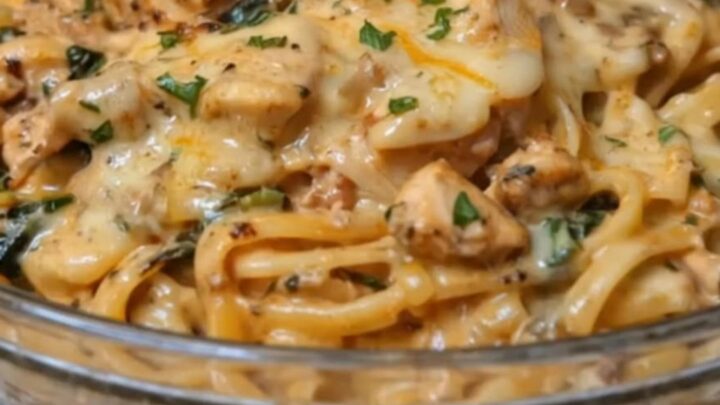
The final dish is ready when the spinach is wilted, the mozzarella is fully melted, and the sauce is thick enough to coat the pasta. The mixture should appear glossy, with the spinach evenly distributed and the cheese creating a smooth, cohesive, and luxurious texture throughout the dish.
Common mistakes
A common mistake is overcrowding the skillet when searing the chicken, which causes the meat to steam rather than brown, leading to a loss of flavor.
Another error is overcooking the pasta in the boiling water; it should be slightly firm, as it will continue to cook briefly when tossed with the hot sauce.
Finally, adding the cheese while the heat is too high can sometimes cause the sauce to break or become stringy; always lower the temperature before incorporating the cheese.
How to tell it’s done
The chicken is done when it is opaque throughout and reaches an internal temperature of 165°F (74°C). The pasta should be cooked to al dente, meaning it is tender but still offers a slight resistance when bitten.
The sauce is finished when the mozzarella has completely melted, creating a thick, glossy consistency that coats the back of a spoon and clings beautifully to the linguine strands without being watery or thin.
- Poultry: 165°F (74°C) in the thickest part
Up next · Part 3 of 3
2 variations · storage & make-ahead · 3 answers · printable card
Tips, FAQ & printable recipe (Part 3)← Back to the ingredients (Part 1)