Dinner · Part 2 of 3: Instructions
Creamy Chicken Cordon Bleu Pasta Casserole Step-by-step instructions
- Prep
- Cook
- Total
- Serves
- 6
Before you start
Before beginning the assembly, ensure the oven is fully preheated to the required temperature. Have all ingredients measured and ready to use, especially the shredded chicken and diced ham.
If the chicken is not already cooked, prepare it ahead of time by boiling or poaching, then shred it into bite-sized pieces. Clean your workspace and have the baking dish and mixing bowl within easy reach to streamline the cooking process.
Ingredients at a glance (5)
- 1 lb penne pasta
- 2 cups cooked chicken breast, shredded
- 1 cup diced ham
- 2 cups creamy Swiss cheese sauce
- 1 cup panko breadcrumbs
Instructions
Pasta Preparation
- Prepare the BasePreheat the oven to 375°F (190°C). Bring a large pot of salted water to a boil and cook the penne pasta until al dente according to package directions. Drain the pasta thoroughly using a colander and set aside.Look for Pasta should be firm to the bite before draining.Tip Do not overcook the pasta as it will continue to soften in the oven.
The pasta should be cooked until it is tender yet still retains a slight bite, known as al dente. After draining, ensure the pasta is free of excess water, which could thin out the sauce. Check that the pasta is evenly cooked throughout so that the texture remains consistent once combined with the creamy sauce in the final baking stage.
Mixing the Ingredients
- Combine IngredientsIn a large mixing bowl, combine the cooked pasta, shredded chicken, diced ham, and the creamy Swiss cheese sauce. Stir gently until all components are evenly coated in the sauce.Look for The sauce should evenly coat the pasta and meat mixture.Tip Ensure the chicken is at room temperature before mixing to help the casserole heat evenly.
The mixture is ready for the oven once the pasta, shredded chicken, diced ham, and cheese sauce are thoroughly combined. The sauce should look glossy and coat every ingredient evenly.
Check that the chicken and ham are distributed throughout the pasta to ensure that every serving contains a balanced amount of all the key components of the dish.
Final Assembly and Baking
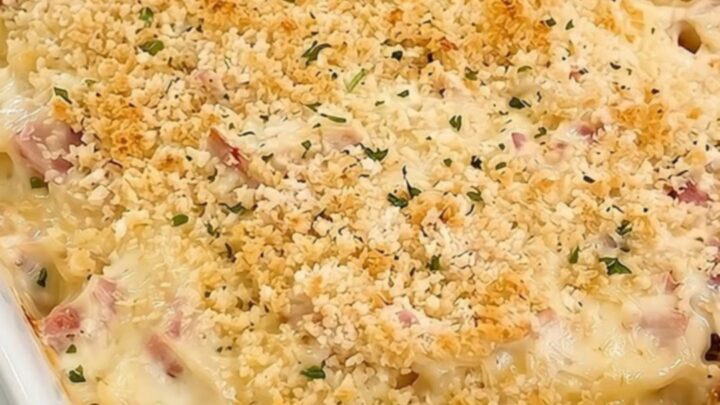
- Assemble and BakeTransfer the mixture to a 9x13 inch baking dish. Sprinkle the panko breadcrumbs evenly over the top. Bake for 20 minutes until bubbling. Ensure the chicken reaches an internal temperature of 165°F (74°C). Let rest for 5 minutes before serving.Look for The top should be golden brown and the edges bubbling.Safe temperature 165°F (74°C) internal temperature (poultry)Tip Place the baking dish on a rimmed sheet pan to catch any potential drips.
The casserole is ready for the oven once the panko is spread evenly over the surface. After baking, the crust should be uniformly golden and crisp. The sauce will be bubbling, and the entire dish should be hot throughout, indicating that all components are perfectly heated and ready for serving.
Common mistakes
Avoid overcooking the pasta during the initial boiling stage; it should be slightly firm, as it will continue to cook in the oven. Another common mistake is failing to mix the sauce thoroughly with the pasta and meat, which can lead to uneven flavor distribution.
Ensure that every piece of penne is coated in the creamy cheese sauce before transferring the mixture to the baking dish to achieve the best possible texture and taste.
How to tell it’s done
The casserole is done when the sauce is bubbling vigorously around the edges and the panko topping has turned a deep, golden brown. Use a food thermometer to check the center of the dish; the chicken must reach an internal temperature of at least 165°F (74°C) to ensure it is safe to eat.
Let the casserole rest for 5 minutes after removing it from the oven to allow the sauce to set slightly, which makes serving much cleaner and easier.
- Poultry: 165°F (74°C) in the thickest part
Up next · Part 3 of 3
2 variations · storage & make-ahead · 3 answers · printable card
Tips, FAQ & printable recipe (Part 3)← Back to the ingredients (Part 1)