Dinner · Part 2 of 3: Instructions
Creamy Chicken Broccoli Rotini Pasta in One Pan Step-by-step instructions
- Prep
- Cook
- Total
- Serves
- 4
Before you start
Before beginning the cooking process, organize and measure all ingredients to ensure a smooth workflow. Cut the chicken into uniform one-inch cubes, and pat them dry with paper towels to ensure a proper sear.
Chop the broccoli into bite-sized florets. Measure out the heavy cream and freshly grate the cheddar cheese. Having these components ready near the stove prevents overcooking and ensures the sauce comes together perfectly.
Ingredients at a glance (5)
- 8 oz rotini pasta
- 1 lb boneless, skinless chicken breasts, cut into 1-inch cubes
- 2 cups broccoli florets
- 1 cup heavy cream
- 1 1/2 cups shredded cheddar cheese
Instructions
Boiling the Pasta and Broccoli
- Boil the Pasta and BroccoliBring a large pot of water to a boil over high heat. Add the rotini pasta and cook according to the package instructions. During the final two minutes of boiling, stir the broccoli florets directly into the pot with the pasta. Drain the pasta and broccoli together in a colander, then set them aside.Look for The pasta should be al dente and the broccoli bright green.Tip Do not overcook the broccoli, as it will continue to soften slightly when tossed in the warm sauce later.
At the end of this phase, the rotini pasta should be cooked to an al dente texture, offering a slight bite in the center. The broccoli florets should be vibrant green and tender-crisp. When drained together, steam should rise from the colander, and the vegetables should retain their bright color without appearing mushy or dull.
Searing the Chicken Cubes
- Sear the Chicken CubesPat the chicken cubes dry with paper towels. Heat a large skillet over medium-high heat. Add the chicken cubes in a single layer and sear without moving for three minutes to develop a golden crust. Toss and cook for another three to four minutes until the chicken is cooked through and reaches an internal temperature of 165°F (74°C).Look for The chicken cubes should have a deep golden-brown crust on all sides.Safe temperature 165°F (74°C) internal temperature (poultry)Tip Avoid crowding the skillet so the chicken sears beautifully instead of steaming in its own juices.
The chicken cubes should display a deep, golden-brown crust on their exterior surfaces, while the skillet should have caramelized browned bits stuck to the bottom.
The meat will sizzle actively in the hot skillet, emitting a rich, savory aroma. A meat thermometer inserted into the thickest cube must register 165 degrees Fahrenheit.
Creating the Velvety Cheese Sauce
- Build the Creamy Sauce BaseReduce the heat to medium-low and pour the heavy cream directly into the skillet with the seared chicken. Use a wooden spoon to gently scrape up any browned bits stuck to the bottom of the pan. Bring the cream to a gentle simmer and let it bubble for about two minutes until it begins to thicken slightly.Look for The cream should bubble gently and coat the back of a spoon.Tip Keep the heat low during this step to prevent the cream from boiling rapidly and separating.
- Melt the Cheese and CombineSprinkle the shredded cheddar cheese into the simmering cream, stirring constantly until the cheese is completely melted and the sauce is smooth. Add the drained rotini pasta and broccoli florets to the skillet. Gently toss all the ingredients together until the pasta, chicken, and broccoli are fully coated in the velvety cheese sauce. Serve immediately.Look for The sauce should be thick, glossy, and cling evenly to the pasta.Tip For an even creamier finish, splash a tablespoon of reserved pasta water into the skillet if the sauce becomes too thick.
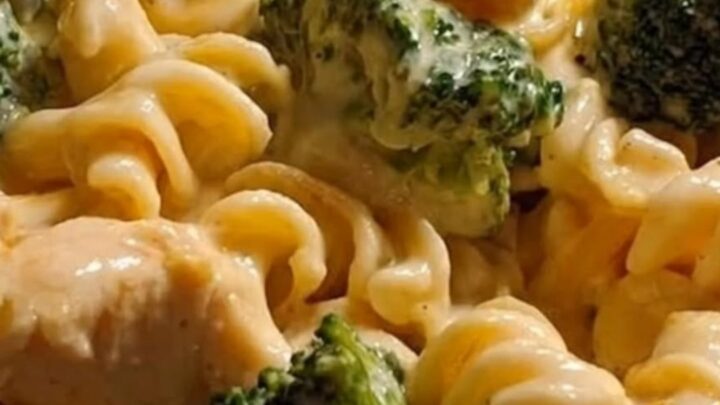
The final sauce should be completely smooth, glossy, and bubble gently around the edges of the skillet. The melted cheddar cheese should be fully integrated into the heavy cream without any clumping or oil separation. When the pasta and broccoli are tossed in, the sauce should cling evenly to every spiral and crevice.
Common mistakes
The most common mistake when making this dish is boiling the cream over excessively high heat or adding the cheese to a boiling liquid. High heat can cause the proteins in both the cream and the cheese to clump, resulting in a broken, oily, or grainy sauce.
To prevent this, always reduce the heat to low before adding the dairy, and stir constantly until the cheese is completely melted and smooth.
How to tell it’s done
To determine doneness, ensure the chicken cubes are fully cooked by inserting an instant-read digital meat thermometer into the largest piece; it must register a safe internal temperature of 165°F (74°C).
The pasta should be tender but still retain a firm bite, and the cheese sauce should be thick enough to coat the back of a spoon smoothly without running off too quickly.
- Poultry: 165°F (74°C) in the thickest part
Up next · Part 3 of 3
2 variations · storage & make-ahead · 3 answers · printable card
Tips, FAQ & printable recipe (Part 3)← Back to the ingredients (Part 1)