Dinner · Part 2 of 3: Instructions
Creamy Chicken and Broccoli Tortellini for a Quick Dinner Step-by-step instructions
- Prep
- Cook
- Total
- Serves
- 4
Before you start
Before beginning, ensure all ingredients are prepped and within reach. Cut the chicken breast into uniform, bite-sized pieces to ensure even cooking. Wash and trim the broccoli florets into small, manageable sizes so they cook at the same rate as the pasta.
Grate the parmesan cheese finely and measure the heavy cream. Having all components ready is essential for maintaining the momentum needed for this quick-cooking recipe.
Ingredients at a glance (5)
- 1 lb boneless skinless chicken breast, cut into bite-sized pieces
- 1 lb cheese tortellini, fresh or refrigerated
- 2 cups broccoli florets
- 1 cup heavy cream
- 1/2 cup grated parmesan cheese
Instructions
Searing the chicken
- Sauté the chickenPlace the bite-sized chicken breast pieces into a hot, oiled skillet. Cook over medium-high heat, stirring occasionally, until the pieces are golden brown and cooked through to an internal temperature of 165°F (74°C). Ensure the skillet is large enough to prevent overcrowding, allowing the meat to sear properly rather than steam.Look for Chicken is opaque throughout and golden brown.Safe temperature 165°F (74°C) internal temperature (poultry)Tip Pat the chicken dry with paper towels before adding to the skillet to ensure a better sear.
The chicken pieces should appear deeply golden brown on all sides and have a firm, opaque texture. The skillet will show a thin layer of flavorful brown bits on the bottom, which will later contribute to the richness of the cream sauce. Ensure the chicken is thoroughly cooked through before proceeding, as this is the primary protein component of the dish.
Building the creamy sauce
- Prepare the sauce and vegetablesAdd the broccoli florets to the skillet with the cooked chicken. Pour in the heavy cream and allow it to simmer gently until the broccoli becomes tender-crisp and the sauce begins to thicken slightly. Stir in the grated parmesan cheese until fully incorporated, creating a rich, glossy consistency that coats the back of a spoon.Look for Sauce thickens and coats the spoon evenly.Tip Use freshly grated parmesan for the smoothest melting texture in the sauce.
The cream will have reduced slightly, changing from a thin liquid to a thicker, luxurious sauce that clings to the broccoli florets. The parmesan should be fully melted and integrated, resulting in a smooth, glossy appearance. The broccoli should be bright green and offer just a slight resistance when pierced with a fork, indicating it is perfectly tender-crisp.
Final assembly
- Combine with tortelliniGently fold the pre-cooked cheese tortellini into the creamy chicken and broccoli mixture. Toss carefully to ensure every tortellini is thoroughly coated in the sauce. Heat everything through for an additional minute until the pasta is hot, then serve immediately in shallow bowls to showcase the rich, velvety texture of the dish.Look for Pasta is heated through and well-coated.Tip If the sauce becomes too thick, a tablespoon of pasta water can be added to adjust the consistency.
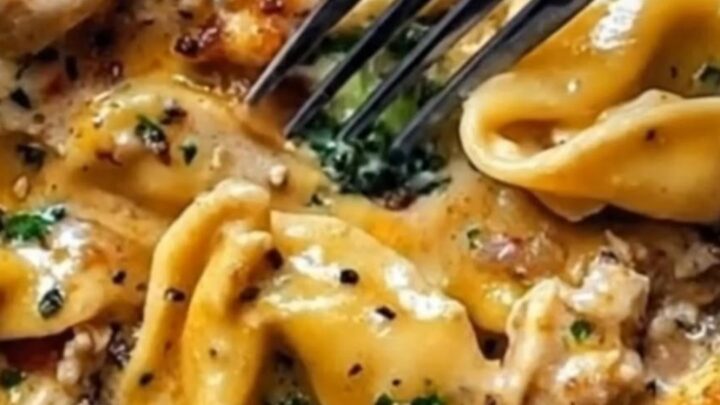
The finished dish should have a cohesive, uniform appearance, with the creamy sauce evenly distributed across the tortellini and chicken.
The tortellini should remain plump and intact, having absorbed just enough of the sauce to become flavorful and hot. When served, the steam should rise from the dish, and the sauce should maintain its glossy, clinging quality on the plate.
Common mistakes
A common mistake is overcrowding the skillet, which causes the chicken to steam in its own juices rather than browning, leading to a loss of flavor. Another potential error is boiling the cream too rapidly, which can cause the sauce to break or become overly reduced.
Maintain a gentle simmer throughout the process. Finally, ensure the tortellini is not overcooked before adding it to the skillet, as it will continue to absorb liquid from the sauce.
How to tell it’s done
The chicken is considered done when it reaches an internal temperature of 165°F (74°C) and is opaque throughout. The broccoli should be tender-crisp, maintaining a vibrant green color without turning mushy.
The sauce is properly finished when it has reached a velvety, napé consistency, meaning it is thick enough to coat the back of a spoon cleanly without running off immediately.
- Poultry: 165°F (74°C) in the thickest part
Up next · Part 3 of 3
2 variations · storage & make-ahead · 3 answers · printable card
Tips, FAQ & printable recipe (Part 3)← Back to the ingredients (Part 1)