Dinner · Part 2 of 3: Instructions
Creamy Chicken Alfredo Lasagna Rolls for a Quick Dinner Step-by-step instructions
- Prep
- Cook
- Total
- Serves
- 4
Before you start
Before beginning, ensure your workspace is clean and organized. Preheat your oven to 375°F (190°C) so it is ready for the baking process. Prepare the lasagna noodles according to the package instructions, ensuring they are cooked al dente.
Drain them well and lay them flat on a piece of parchment paper to prevent sticking. Gather your mixing bowls, spatula, and a 9x13 inch baking dish. Having all ingredients measured and ready before you start assembling the rolls will make the process smooth and efficient.
Ingredients at a glance (4)
- 8 sheets lasagna noodles, cooked
- 2 cups cooked chicken, shredded
- 2 cups alfredo sauce, store-bought or made ahead
- 1 cup shredded mozzarella cheese
Instructions
Filling Preparation
- Prepare the FillingIn a medium mixing bowl, combine the shredded cooked chicken with one cup of the alfredo sauce. Stir until the chicken is thoroughly coated in the creamy sauce mixture. Set the remaining cup of sauce aside for topping the rolls later.Look for The chicken should be evenly coated and look creamy.Tip Ensure the chicken is shredded into small, uniform pieces for easier rolling.
The chicken mixture should be thick, creamy, and well-combined. Ensure there are no large lumps of chicken, as smaller pieces make the rolling process much easier and ensure that every bite has a consistent texture and flavor profile before you move on to assembly.
Rolling the Lasagna
- Assemble the RollsLay each cooked lasagna noodle flat on a clean surface. Spoon a generous amount of the chicken mixture onto one end of each noodle. Carefully roll the noodle up tightly to enclose the filling. Place the rolls seam-side down into a greased 9x13 inch baking dish.Look for The rolls should be tight and fit snugly in the dish.Tip Use a damp towel to cover the noodles while working to prevent them from drying out.
Each roll should be tight and compact, with the seam facing downward in the baking dish. This prevents the rolls from unravelling during the baking process. Ensure they are packed closely together in the dish so they maintain their shape while they heat up in the oven.
Baking to Perfection
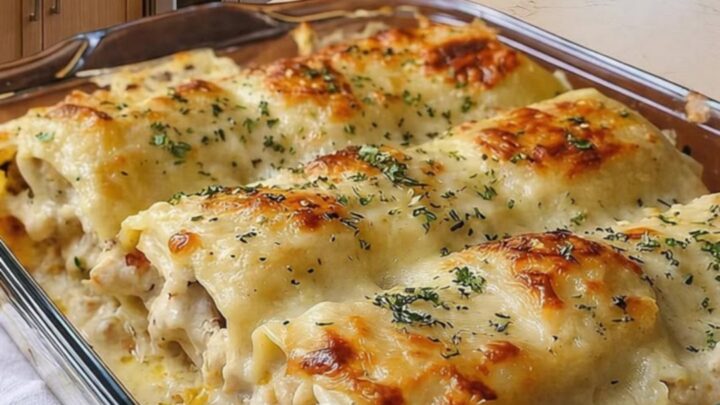
- Bake and ServePour the remaining alfredo sauce over the arranged lasagna rolls. Sprinkle the shredded mozzarella cheese evenly across the top. Bake in a preheated oven at 375°F (190°C) until the cheese is melted and bubbling, and the rolls reach an internal temperature of 165°F (74°C). Let the dish rest for 5 minutes before serving.Look for The cheese should be golden-brown and bubbling.Safe temperature 165°F (74°C) internal temperature (poultry)Tip Place the dish on a baking sheet to catch any sauce that might bubble over.
The finished rolls will smell rich and garlicky, with the cheese visibly browned and the sauce bubbling. The dish should feel heavy and consistent, with no loose parts.
Let it rest for a few minutes so the sauce can settle and the rolls firm up slightly before you attempt to lift them out.
Common mistakes
A common mistake is overfilling the noodles, which makes them difficult to roll and causes the filling to spill out into the baking dish. Use a consistent amount of chicken mixture for each noodle.
Another error is not using enough sauce, which can lead to dry noodles that stick to the bottom of the pan. Ensure the rolls are well-covered with the remaining alfredo sauce before placing them in the oven to maintain moisture.
How to tell it’s done
The dish is done when the alfredo sauce is bubbling vigorously around the edges and the mozzarella cheese on top has melted into a golden-brown, slightly crispy crust.
The internal temperature of the chicken must reach 165°F (74°C). Always use a food thermometer to check the center of a roll to ensure it has reached the safe temperature before serving.
- Poultry: 165°F (74°C) in the thickest part
Up next · Part 3 of 3
2 variations · storage & make-ahead · 3 answers · printable card
Tips, FAQ & printable recipe (Part 3)← Back to the ingredients (Part 1)