Dinner · Part 2 of 3: Instructions
Creamy Cajun Garlic Shrimp & White Cheddar Grits Step-by-step instructions
- Prep
- Cook
- Total
- Serves
- 4
Before you start
Before you start, gather all your ingredients and have them measured and ready. The grits take about 25 minutes to cook, so begin those first. Make sure the shrimp are peeled and deveined, and pat them dry with paper towels. Mince the garlic, shred the cheese if you're using a block, and slice the green onions.
Heat your cast iron skillet over high heat so it's ready when you need it. Keep the broth and cream at room temperature so they don't seize up when added to the grits. Have your serving bowls ready, and you'll be able to move through the steps without any last-minute scrambling.
Ingredients at a glance (12)
- 1 cup stone-ground grits
- 2 cups chicken broth
- 1 cup heavy cream
- 4 tbsp butter, divided
- 1 1/2 cups sharp white cheddar cheese, shredded
- 1 lb jumbo shrimp, peeled and deveined
- 2 tbsp Cajun seasoning
- 1 tsp smoked paprika
- 4 cloves garlic, minced
- 2 tbsp olive oil
- 1 tbsp lemon juice
- 2 tbsp green onions, sliced
Instructions
Simmer the Grits
- Cook the GritsIn a medium saucepan, bring the chicken broth and heavy cream to a gentle simmer over medium heat. Slowly whisk in the stone-ground grits, reduce the heat to low, and cook, stirring frequently, for about 25 minutes until the grits are thick and creamy. Stir in 2 tablespoons of the butter and the shredded white cheddar until the cheese is fully melted and the grits are velvety. Season with salt to taste.Look for The grits should be thick enough to hold a spoon upright and have a smooth, creamy texture.Tip Stir the grits often to prevent sticking and ensure even cooking.
- Season the ShrimpPat the jumbo shrimp dry with paper towels. In a bowl, toss the shrimp with the Cajun seasoning and smoked paprika until evenly coated. Set aside while the grits finish cooking.Look for The shrimp should be fully coated with the reddish-brown spice mixture.Tip Patting the shrimp dry helps the seasoning adhere and promotes browning.
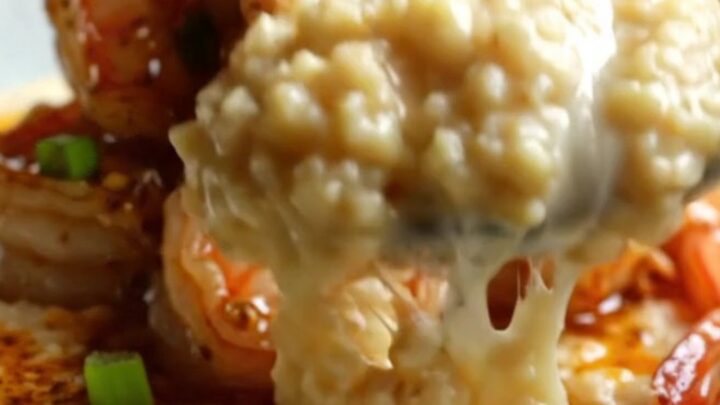
At the end of this phase, the kitchen smells of creamy corn and toasting cheese. The grits should be thick enough to coat the back of a spoon and hold a slight ribbon when drizzled. The cheese should be fully melted, creating a smooth, pale golden mixture. The shrimp are seasoned and waiting, their spice rub giving off a warm, peppery aroma. Before moving on, do a quick taste test—the grits should be creamy and well-seasoned, with a subtle tang from the cheddar.
Sear Shrimp and Build Sauce
- Sear the ShrimpHeat the olive oil in a large cast iron skillet over high heat until shimmering. Add the seasoned shrimp in a single layer and cook for 2 minutes per side, until the shrimp are pink and opaque. Remove the shrimp from the skillet and set aside.Look for The shrimp should have a golden-brown crust and be just cooked through.Safe temperature 145°F (63°C) internal temperature (shellfish)Tip Do not overcrowd the skillet; cook in batches if needed.
- Make the Garlic Butter Pan SauceReduce the heat to medium. Add the remaining 2 tablespoons of butter to the skillet with the drippings. Once melted, add the minced garlic and cook for 30 seconds until fragrant. Pour in the lemon juice and a splash of chicken broth, scraping up any browned bits from the bottom of the pan. Let the sauce bubble and reduce slightly for 1 to 2 minutes.Look for The sauce should be a rich, ruby-tinted, slightly thickened liquid with a strong garlic aroma.Tip Scrape the browned bits thoroughly—they add deep flavor to the sauce.
- Return Shrimp to SauceReturn the cooked shrimp to the skillet and toss them in the garlic butter sauce until they are coated and heated through, about 1 minute. Remove from heat.Look for The shrimp should be glossy with sauce and warmed through.Safe temperature 145°F (63°C) internal temperature (shellfish)Tip Do not overcook the shrimp here—they are already cooked.
The skillet is sizzling as the shrimp hit the hot pan, and the air fills with the smoky scent of Cajun spices. The shrimp are seared until they have a deep golden-brown crust on both sides. After removing them, the pan drippings are transformed with butter, garlic, and lemon into a glossy, ruby-tinted sauce.
The garlic becomes fragrant, and the sauce bubbles gently. The shrimp are returned to the pan just to warm through, coating them in the rich, spicy sauce. The whole kitchen now smells irresistible.
Plate and Serve
- Plate the GritsDivide the cheesy grits among four shallow bowls, creating a smooth, even layer in each.Look for The grits should be creamy and spreadable.Tip Use the back of a spoon to create a slight well for the shrimp.
- Top with Shrimp and SauceMound the Cajun shrimp evenly over the grits in each bowl. Spoon the remaining garlic butter sauce from the skillet over the shrimp and grits.Look for Each bowl should have a generous portion of shrimp and a good amount of sauce.Tip Spoon the sauce right before serving to keep the shrimp warm.
- Garnish and ServeSprinkle the sliced green onions over the top of each bowl. Serve immediately while hot.Look for The green onions add a fresh, bright contrast to the rich dish.Tip Serve with extra hot sauce on the side if desired.
The cheesy grits are spooned into bowls, creating a soft, creamy bed. The shrimp are mounded on top, their caramelized edges glistening with the garlic butter sauce. The sauce pools around the shrimp and seeps into the grits. A final sprinkle of fresh green onions adds a pop of color and a crisp, oniony bite. The dish looks vibrant and inviting, with layers of texture and color. Everything is hot and ready to serve, promising a comforting, satisfying meal.
Common mistakes
A common mistake is cooking the grits too quickly over high heat, which can make them lumpy or scorch the bottom. Always start with a gentle simmer and then lower the heat, stirring frequently. Another issue is overcooking the shrimp—they can turn rubbery in seconds.
Watch them closely and remove them from the skillet as soon as they turn pink. Also, don't skip the step of scraping the browned bits from the skillet when making the sauce; those bits are packed with flavor. Finally, be generous with the seasoning—Cajun flavors should be bold and lively, not timid.
How to tell it’s done
The grits are done when they are thick, creamy, and the grains are tender—they should hold a mound when spooned. The shrimp are done when they are pink, opaque, and have reached an internal temperature of 145°F (63°C) on an instant-read thermometer.
They should be firm to the touch and have a slight curl. The pan sauce should be slightly thickened and glossy. When you ladle the shrimp and sauce over the grits, everything should be piping hot. If the grits get too thick as they sit, loosen them with a splash of warm broth or cream.
- Shellfish: 145°F (63°C) in the thickest part
Up next · Part 3 of 3
4 variations · storage & make-ahead · 5 answers · printable card
Tips, FAQ & printable recipe (Part 3)← Back to the ingredients (Part 1)