Dinner · Part 2 of 3: Instructions
Creamy Cajun Blackened Salmon & Cheddar Grits in 20 Minutes Step-by-step instructions
- Prep
- Cook
- Total
- Serves
- 2
Before you start
Before starting, gather all ingredients and measure them out. Pat the salmon fillets dry and coat them generously with the Cajun seasoning. Shred the white cheddar cheese if not already shredded. Chop the chives and juice the lemon.
Have the chicken broth and heavy cream measured and ready. Preheat the cast iron skillet over high heat so it is smoking hot by the time you are ready to sear the salmon. The grits take about 20 minutes, so start them first.
Ingredients at a glance (11)
- 2 fresh salmon fillets (about 6 oz each)
- 2 tbsp olive oil
- 2 tbsp Cajun blackening spice
- 1 cup stone-ground grits
- 2 cups chicken broth
- 1 cup heavy cream
- 4 tbsp unsalted butter, divided
- 1 1/2 cups sharp white cheddar cheese, shredded
- 1/4 tsp cayenne pepper
- 1 tbsp fresh lemon juice
- 2 tbsp fresh chives, chopped
Instructions
Creamy Grits Base
- Simmer the creamy gritsIn a medium saucepan, combine the chicken broth and heavy cream. Bring to a gentle boil over medium-high heat. Slowly whisk in the stone-ground grits, reduce the heat to low, and simmer, stirring often, until the grits are thick and tender, about 20 minutes.Look for The grits will thicken noticeably and start to pull away from the sides of the pan.Tip Stir frequently to prevent sticking and to keep the texture smooth.
- Finish the grits with cheese and butterOnce the grits are thick and creamy, remove the pan from the heat. Stir in 2 tablespoons of the butter and the shredded white cheddar cheese until fully melted and velvety. Season with salt to taste. Cover and keep warm while you cook the salmon.Look for The cheese should melt into a glossy, smooth sauce.Tip If the grits get too thick, loosen with a splash of warm broth or milk.
The grits should be thick and creamy, with the cheese fully melted into a glossy, velvety sauce. The texture should be smooth with a slight bite from the stone-ground corn.
The smell is rich and buttery, with a hint of sharp cheddar. Stir the grits and check that they are not too thick; they should still be loose enough to spoon. If they seem stiff, add a splash of warm broth or milk.
Blackened Salmon Sear
- Coat the salmon with Cajun spicePat the salmon fillets dry with paper towels. Coat each fillet generously on both sides with the Cajun blackening spice, pressing lightly so the spice adheres.Look for The fillets should be completely covered in a dark, fragrant spice crust.Tip Let the seasoned salmon sit at room temperature for up to 15 minutes before searing, but no longer.
- Sear the salmon in a hot skilletHeat a cast iron skillet over high heat until smoking hot. Add the olive oil and swirl to coat. Carefully place the salmon fillets in the skillet, presentation side down. Sear without moving for 3 minutes, then flip and cook for another 3 minutes, until the crust is charred and the fish flakes easily.Look for The spice crust will darken and crisp, and the salmon will turn opaque and flaky.Safe temperature 145°F (63°C) internal temperature (fish)Tip Use a fish spatula to flip gently, keeping the crust intact.
- Check the salmon donenessTo ensure the salmon is fully cooked, insert an instant-read thermometer into the thickest part of a fillet. It should register at least 145°F (63°C). The flesh should be opaque and separate easily with a fork.Look for The thermometer reads 145°F (63°C) and the fish flakes cleanly.Safe temperature 145°F (63°C) internal temperature (fish)Tip Remove the salmon from the skillet immediately to prevent overcooking.
- Make the spicy pan drizzleAfter removing the salmon, reduce the heat to low. Add the remaining 2 tablespoons of butter to the hot skillet, along with the cayenne pepper and fresh lemon juice. Stir and scrape up any browned bits from the bottom of the pan. Cook for 1 minute until the butter is melted and bubbling.Look for The butter will foam and turn a rich amber color, infused with the spicy pan drippings.Tip Scrape the browned bits well; they carry deep flavor.
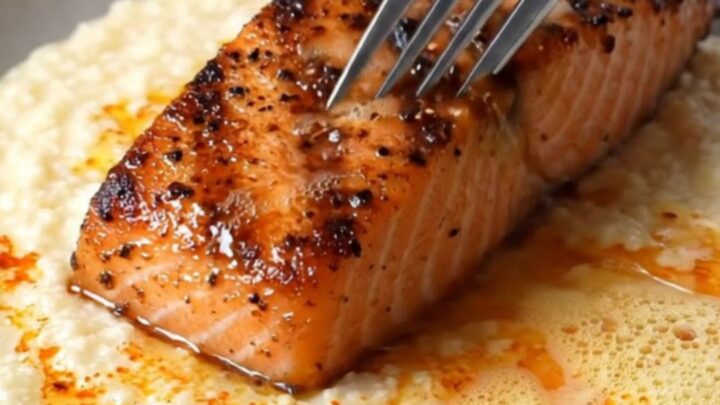
The salmon should have a dark, charred crust with visible blackened spots. The interior should be opaque and flaky, and the internal temperature should read 145°F (63°C). The skillet will be sizzling, and the aroma will be smoky and spicy. The pan sauce should be bubbling and fragrant, with the butter melted and the lemon juice brightening the drippings.
Plating and Finishing
- Plate the grits and salmonSpoon the cheesy grits into wide serving bowls, creating a smooth bed. Place a blackened salmon fillet on top of each bowl of grits.Look for The grits should be thick but spoonable, and the salmon should sit proudly on top.Tip Warm the bowls slightly to keep everything hot.
- Drizzle and garnishSpoon the warm spiced butter over each salmon fillet, letting it cascade over the grits. Sprinkle with chopped fresh chives and serve immediately.Look for The butter glistens over the dark crust and the chives add a fresh green contrast.Tip Serve right away so the grits stay creamy and the salmon stays crisp.
The bowls should be filled with a generous bed of creamy grits, topped with the blackened salmon. The spiced butter should be drizzled over the salmon, creating a glossy sheen. The chives add a fresh, green contrast. The dish should look vibrant and inviting, with the grits smooth and the salmon proudly perched on top. Serve immediately while everything is hot.
Common mistakes
A common mistake is overcrowding the skillet, which lowers the temperature and steams the salmon instead of searing it. Cook the fillets in a single layer with space between them. Another mistake is stirring the grits too infrequently, which can lead to lumps or sticking.
Stir often, especially as they thicken. Overcooking the salmon is easy; use a thermometer and remove the fillets as soon as they hit 145°F (63°C). Finally, do not skip the pan sauce, as it adds essential moisture and brightness.
How to tell it’s done
The salmon is done when it reaches an internal temperature of 145°F (63°C) and flakes easily with a fork. The crust should be dark and charred in spots, but the interior should still be moist and tender.
The grits are done when they are thick, creamy, and the grains are tender, with no raw crunch. They should hold their shape on a spoon but still be soft and luxurious. The pan sauce should be bubbling and fragrant, with the butter fully melted and combined with the lemon juice.
- Fish: 145°F (63°C) in the thickest part
Up next · Part 3 of 3
4 variations · storage & make-ahead · 5 answers · printable card
Tips, FAQ & printable recipe (Part 3)← Back to the ingredients (Part 1)