Dinner · Part 2 of 3: Instructions
Creamy Cajun Beef Spaghetti for a Quick Comfort Dinner Step-by-step instructions
- Prep
- Cook
- Total
- Serves
- 4
Before you start
Before beginning, ensure all ingredients are measured and ready to go, as this dish comes together quickly once the cooking process starts. Have the cheese grated, the spices measured, and the pasta water set to boil.
Preparing everything in advance prevents the sauce from overcooking or thickening too much while you search for ingredients. Also, ensure the skillet is large enough to comfortably hold both the meat and the pasta, which prevents overcrowding and allows for even heating throughout the entire cooking process.
Ingredients at a glance (7)
- 1 lb ground beef
- 1 tbsp Cajun seasoning
- 1 cup heavy cream
- 1 cup shredded cheddar cheese
- 1 cup shredded mozzarella cheese
- 8 oz spaghetti
- chopped parsley for serving
Instructions
Browning and seasoning the beef
- Prepare the pasta and beefBring a large pot of salted water to a boil and cook the spaghetti according to package instructions until al dente. Meanwhile, in a large skillet over medium-high heat, brown the ground beef. Season with Cajun seasoning and cook until the internal temperature reaches 160°F (71°C) and no pink remains.Look for The beef is fully browned and aromatic.Safe temperature 160°F (71°C) internal temperature (ground meat)Tip Ensure the beef is evenly broken down into small crumbles for better texture.
The ground beef should be deeply browned and fragrant with the aroma of the Cajun spices. The fat should be rendered and the meat broken down into consistent, bite-sized crumbles. Before moving to the next phase, verify that the beef is fully cooked through and no raw pink color remains, ensuring a safe and flavorful foundation for the creamy sauce that follows.
Developing the cheese sauce
- Create the cheesy sauceReduce the heat to medium-low and pour the heavy cream into the skillet with the seasoned beef. Bring to a gentle simmer, then stir in the shredded cheddar and mozzarella cheeses. Continue to stir until the cheeses have completely melted and the sauce is thick and smooth.Look for The sauce is thick, creamy, and coats the back of a spoon.Tip Keep the heat low so the cheese melts evenly without separating.
The sauce should be smooth, thick, and velvety, with no visible clumps of cheese remaining. It should bubble gently as the heat is maintained at a low level.
The mixture will have a rich, golden color from the combination of the cream and the cheeses. Check the consistency to ensure it is thick enough to coat the back of a spoon before adding the cooked pasta to the skillet.
Combining and finishing the dish
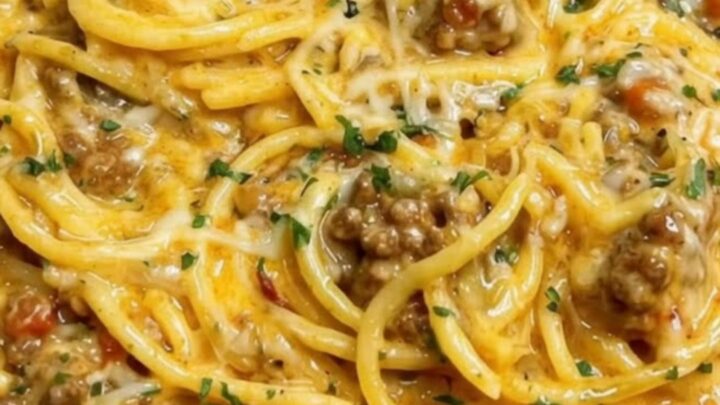
- Combine and serveDrain the cooked spaghetti and add it directly into the skillet with the cheesy beef sauce. Use tongs to toss the pasta thoroughly until every strand is coated in the sauce. Serve immediately in bowls, garnished with freshly chopped parsley.Look for The pasta is evenly coated and steaming.Tip Serve while hot to maintain the best creamy consistency.
The pasta should be fully coated in the cheesy beef sauce, with no dry strands remaining. The final dish will look glossy and steaming hot, with the parsley garnish adding a fresh pop of color. Check that the sauce has thoroughly integrated with the pasta, creating a cohesive, comforting meal that is ready to be plated and served immediately to the table.
Common mistakes
A common mistake is cooking the cheese over heat that is too high, which can cause the sauce to separate or become grainy. Always keep the heat at a low setting when adding the cheese to ensure a smooth, emulsified sauce.
Another error is overcooking the pasta; it should be boiled just until tender. Since it will continue to soften slightly when tossed in the hot sauce, cooking it to a perfect al dente is crucial for maintaining the right texture for the final dish.
How to tell it’s done
The dish is considered done once the pasta is cooked to al dente and the cheese sauce has reached a thick, uniform consistency. The beef must be cooked until it reaches an internal temperature of 160°F (71°C) to ensure it is thoroughly cooked.
When the sauce is finished, it should be glossy and cling firmly to the pasta without pooling at the bottom of the bowl. If the sauce appears too thick, a small splash of pasta water can be added to adjust the texture.
- Ground meat: 160°F (71°C) in the thickest part
Up next · Part 3 of 3
2 variations · storage & make-ahead · 3 answers · printable card
Tips, FAQ & printable recipe (Part 3)← Back to the ingredients (Part 1)