Dinner · Part 2 of 3: Instructions
Creamy Butternut Squash Ravioli with Crispy Sage Step-by-step instructions
- Prep
- Cook
- Total
- Serves
- 4
Before you start
Before you start, bring a large pot of salted water to a boil. Have all your ingredients measured and ready: the butter, cream, parmesan, nutmeg, and pecans. Set the sage leaves nearby.
Because the cooking goes quickly, it helps to have everything within reach. You'll also want a colander for draining the ravioli and a large skillet for the sauce.
Ingredients at a glance (9)
- 350 g fresh butternut squash ravioli
- 80 g butter
- 12 leaves fresh sage
- 1/2 cup heavy cream
- 1/4 cup grated parmesan
- 1/4 tsp freshly grated nutmeg
- 1/4 cup toasted pecans, chopped
- Sea salt, to taste
- Black pepper, to taste
Instructions
Boil and Brown
- Boil the ravioliBring a large pot of salted water to a rolling boil. Gently drop the fresh butternut squash ravioli into the water and cook for about 4 minutes, until they float to the surface and are tender. Reserve about 1/2 cup of the pasta water, then drain the ravioli in a colander. Do not rinse.Look for The ravioli float to the top and look plump, with a tender bite when tested.Tip Keep the ravioli moving gently with a spoon so they don't stick to the bottom.
- Melt the butterWhile the ravioli cook, place the butter in a large skillet over medium heat. Let it melt completely, swirling occasionally, until it foams and then turns a deep amber brown, about 3 minutes. The butter will smell nutty and the solids will be golden brown at the bottom of the pan.Look for The butter is a rich hazelnut brown and gives off a toasty aroma.Tip Watch closely after the foam subsides—brown butter can go from perfect to burnt quickly.
- Fry the sage leavesAdd the fresh sage leaves to the brown butter in a single layer. Fry for 20 to 30 seconds per side until they turn crisp and darken slightly. Use tongs or a fork to transfer the sage leaves to a paper towel-lined plate. Leave the brown butter in the skillet.Look for The sage leaves are crisp and crackling, with a deep green color and a fragrant aroma.Tip Don't overcrowd the pan—fry in batches if needed to keep the leaves crisp.
The ravioli are floating and tender, the butter has turned a deep amber with a nutty aroma, and the sage leaves are crisp and crackling.
The kitchen smells warm and toasty. Before moving on, make sure the sage is set aside on paper towels and the brown butter is still in the skillet.
Make the Sauce
- Make the cream sauceReduce the heat to low. Pour the heavy cream into the skillet with the brown butter, then add the freshly grated nutmeg and the grated parmesan. Whisk continuously for 2 to 3 minutes until the cheese melts and the sauce becomes silky and slightly thickened. Season with sea salt and black pepper to taste.Look for The sauce is smooth, glossy, and coats the back of a spoon.Tip If the sauce seems too thick, loosen it with a splash of the reserved pasta water.
- Coat the ravioliAdd the drained ravioli to the skillet with the sauce. Gently toss with a wooden spoon or tongs until every piece is coated in the creamy brown butter sauce. Cook for 1 to 2 minutes, allowing the ravioli to absorb some of the sauce and warm through.Look for The ravioli are evenly coated and the sauce clings to each piece.Tip Use a gentle folding motion to avoid breaking the delicate ravioli.
The sauce is silky, smooth, and coats the back of a spoon. It has a pale golden color and a rich, nutty scent. The ravioli are gently coated and glisten with the creamy sauce. Taste and adjust seasoning before finishing.
Finish and Serve
- Finish and serveRemove the skillet from the heat. Sprinkle the toasted chopped pecans over the ravioli and top with the crispy sage leaves. Serve immediately, with extra grated parmesan on the side if desired.Look for The dish is glossy, nutty, and topped with crisp sage and pecan crunch.Tip Serve right away so the sauce stays silky and the sage remains crisp.
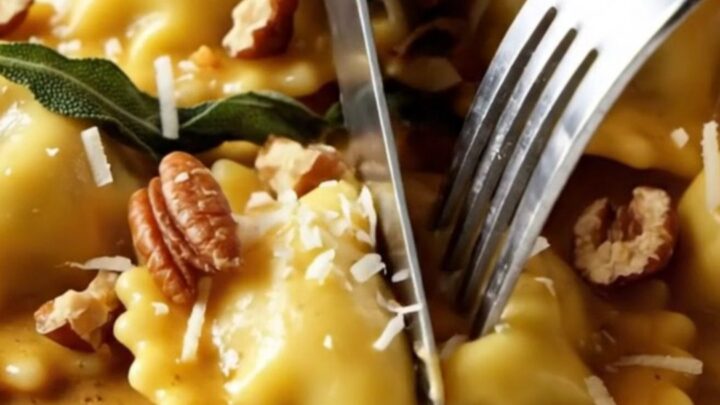
The dish is ready: ravioli coated in glossy sauce, topped with crispy sage and toasted pecans. The textures contrast beautifully—creamy, crunchy, and crisp. Serve immediately to enjoy the best texture and flavor.
Common mistakes
One common mistake is overcooking the ravioli, which makes them mushy. Fresh ravioli cook quickly, so watch closely and test one early.
Another pitfall is burning the butter—it goes from brown to bitter quickly, so keep the heat moderate and swirl the pan often. Finally, don't skip the pasta water; adding a splash helps the sauce come together smoothly.
How to tell it’s done
The ravioli are done when they float to the surface and are tender when pierced with a fork, about 4 minutes for fresh pasta.
The sauce is ready when it coats the back of a spoon and has a silky, glossy texture. The sage leaves should be crisp and crackle when bitten. Taste and adjust seasoning with salt and pepper before serving.
Up next · Part 3 of 3
4 variations · storage & make-ahead · 5 answers · printable card
Tips, FAQ & printable recipe (Part 3)← Back to the ingredients (Part 1)