Dinner · Part 2 of 3: Instructions
Creamy Broccoli and Cauliflower Alfredo Bake Step-by-step instructions
- Prep
- Cook
- Total
- Serves
- 6
Before you start
Before beginning, gather all necessary ingredients and ensure the oven is preheated to 375°F (190°C). Prepare the vegetables by cutting the broccoli and cauliflower into uniform, bite-sized florets; this consistency is key to ensuring they cook evenly.
Have your glass casserole dish ready and positioned on a stable surface. If you are preparing your own Alfredo sauce, ensure it is fully cooked and kept warm, as this will help the final casserole bake more efficiently and evenly in the oven.
Ingredients at a glance (4)
- 2 heads broccoli florets, cut into bite-sized pieces
- 1 head cauliflower florets, cut into bite-sized pieces
- 2 cups Alfredo sauce, store-bought or made ahead
- 2 cups mozzarella cheese, shredded
Instructions
Blanching
- Prepare the vegetablesBring a large pot of salted water to a boil. Add the broccoli and cauliflower florets to the boiling water and blanch for about three to four minutes until they are bright green and slightly tender, then drain thoroughly using a colander.Look for The vegetables should be vibrant in color and slightly softened but still firm enough to hold their shape during the final bake.Tip Ensure the florets are cut into uniform sizes so they cook evenly throughout the blanching process.
After blanching, the broccoli and cauliflower should be bright in color and have lost their raw crunch. They must be thoroughly drained to avoid adding extra moisture to the dish. The florets should be tender enough to pierce with a fork with minimal resistance, indicating they are ready to be combined with the sauce for the final baking phase.
Assembly
- Assemble the casseroleTransfer the blanched vegetables into a rectangular glass casserole dish. Pour the Alfredo sauce evenly over the top, ensuring every floret is well-coated in the creamy mixture. Use a silicone spatula to gently toss the ingredients together if necessary for even distribution.Look for The sauce should coat the vegetables completely without pooling excessively at the bottom of the dish.Tip Distribute the sauce while the vegetables are still warm to help it penetrate the crevices of the florets.
During assembly, the vegetables should be evenly coated with the Alfredo sauce. The mixture should look creamy and consistent, with the sauce clinging to the florets rather than sitting at the bottom of the glass dish. Ensure the top is smoothed out so that the shredded cheese can be distributed in an even layer across the entire surface.
Baking
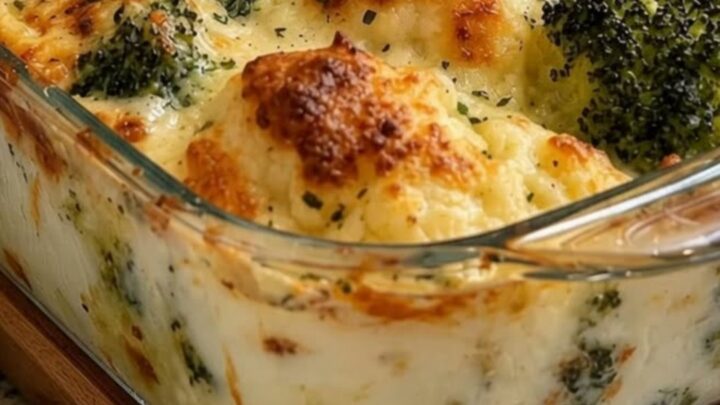
- Bake and finishPreheat the oven to 375°F (190°C). Sprinkle the shredded mozzarella cheese generously over the top of the vegetable mixture. Bake in the preheated oven for twenty minutes, or until the sauce is bubbling and the cheese on top has melted into a golden-brown crust.Look for The cheese should be golden brown and the sauce should be actively bubbling around the edges of the casserole dish.Tip For an extra golden finish, place the dish under the broiler for the last two minutes of cooking time, but watch closely to prevent burning.
The final bake is complete when the cheese has melted completely and developed a deep golden-brown hue. The edges of the dish should show active bubbling of the sauce, indicating that the heat has penetrated through the center of the casserole.
The dish should smell fragrant and toasted, signaling that it is ready to be removed from the oven and rested.
Common mistakes
A common mistake is failing to drain the blanched vegetables thoroughly. Excess water trapped in the florets will dilute the Alfredo sauce, leading to a thin, watery consistency instead of a rich, creamy coating.
Another error is overcrowding the baking dish, which prevents the heat from circulating properly and can result in uneven browning. Always use a dish large enough to accommodate the vegetables in a single layer or a shallow mound to ensure the cheese melts and browns correctly.
How to tell it’s done
The bake is finished when the sauce is bubbling vigorously around the edges of the dish and the cheese topping has transformed into an even, golden-brown crust. The vegetables should be fork-tender but still retain a slight structure.
Because this is a vegetarian dish without raw proteins, you do not need to worry about internal temperatures, but the visual cues of bubbling sauce and toasted cheese are the most reliable indicators of a perfectly prepared casserole.
Up next · Part 3 of 3
2 variations · storage & make-ahead · 3 answers · printable card
Tips, FAQ & printable recipe (Part 3)← Back to the ingredients (Part 1)