Dinner · Part 2 of 3: Instructions
Creamy Brie and Bacon Cavatappi Pasta Step-by-step instructions
- Prep
- Cook
- Total
- Serves
- 4
Before you start
Before beginning, ensure the bacon is diced and fried until crispy, as the slow cooker will not crisp the meat. Prepare the garlic by mincing it finely to ensure it dissolves into the sauce.
Have the cavatappi pasta ready to be boiled in a separate pot, as it should be added to the slow cooker immediately after draining to ensure it absorbs the sauce effectively. Ensure the brie is at room temperature to help it begin melting properly.
Ingredients at a glance (8)
- 16 oz triple-cream French Brie, rind scored
- 8 oz bacon, diced and crispy
- 6 cloves garlic, minced
- 2 cups chicken broth
- 16 oz cavatappi, cooked
- 1 tbsp fresh thyme
- 1/4 cup toasted walnuts, for serving
- 1/2 tsp cracked black pepper, for serving
Instructions
Layering the Base
- Layer the CrockpotPlace the whole wheel of triple-cream French Brie, with the rind lightly scored, into the center of the slow cooker. Surround the cheese with the diced crispy bacon, minced garlic, and the chicken broth. Ensure the ingredients are evenly distributed around the cheese for consistent flavor extraction during the slow-cooking process.Look for The brie is centered and surrounded by ingredients.Tip Score the rind of the brie lightly to help it melt more evenly into the liquid base.
The ingredients should be neatly arranged in the slow cooker, with the brie wheel positioned in the center.
The bacon, garlic, and broth should surround the cheese, providing the necessary liquid and aromatics for the slow-melting process to begin effectively. Ensure the crockpot lid is clean and ready to provide a tight seal for the two-hour duration.
Melting the Brie
- Slow Cook the SauceCover the slow cooker and set it to cook on LOW for two hours. During this time, the brie will slowly collapse into a luxurious, molten pool, infusing the broth and bacon drippings with creamy, savory notes. After two hours, carefully remove the remaining rind from the pot, leaving behind the smooth, thickened sauce.Look for The brie has collapsed and the sauce is smooth.Tip Check the consistency after two hours; if it seems too thick, add a splash of warm broth.
After two hours, the brie should be completely melted and integrated into the broth and bacon drippings. The sauce should be thick, creamy, and free of large lumps of unmelted cheese. The rind should be clearly separated and ready for easy removal with a fork or tongs before the pasta is introduced to the pot.
Final Assembly
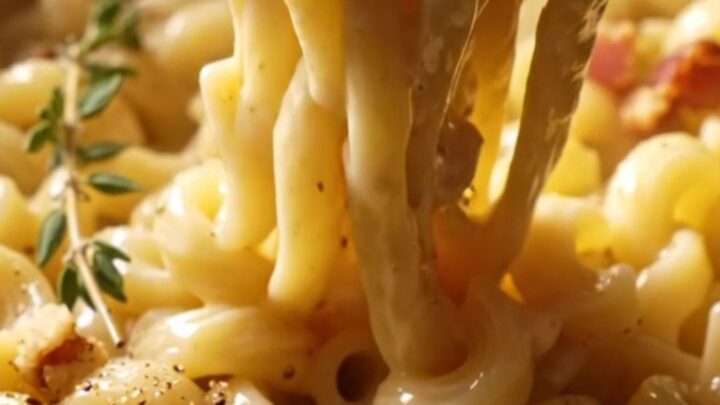
- Combine and ServeCook the cavatappi in a separate pot of boiling salted water until al dente. Drain the pasta and immediately toss it into the slow cooker with the molten brie sauce. Stir in the fresh thyme until well combined. Serve hot, topped with toasted walnuts and freshly cracked black pepper for added texture and a sharp finish.Look for The pasta is fully coated in the creamy sauce.Tip Toss the pasta gently to ensure the sauce coats every crevice of the cavatappi noodles.
The pasta should be perfectly coated in the thick, molten brie sauce. The fresh thyme should be evenly distributed, and the final dish should look vibrant and cohesive. The addition of toasted walnuts and cracked black pepper should provide a visual and textural contrast, confirming that the dish is ready for immediate service.
Common mistakes
A common mistake is failing to remove the rind of the brie after it melts, which can lead to an unpleasant texture in the final sauce. Another error is adding the pasta before it is properly cooked, as the slow cooker will not soften raw noodles sufficiently.
Avoid using low-quality bacon, as the flavor of the fat is integral to the sauce; ensure it is properly crisped before adding it to the slow cooker to avoid a greasy, unappealing texture.
How to tell it’s done
The dish is ready when the brie has completely collapsed into a smooth, thick, and uniform sauce that coats the back of a spoon. The pasta should be cooked to al dente, providing a slight bite that contrasts with the creamy, velvety texture of the sauce.
The final dish should be hot, aromatic with garlic and thyme, and visibly glossy. There is no specific internal temperature required for this dish as it does not contain raw proteins.
Up next · Part 3 of 3
2 variations · storage & make-ahead · 3 answers · printable card
Tips, FAQ & printable recipe (Part 3)← Back to the ingredients (Part 1)