Dinner · Part 2 of 3: Instructions
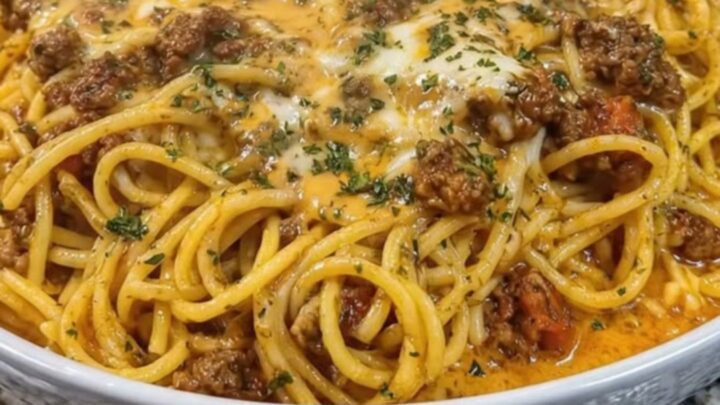
Creamy Beef Bolognese Spaghetti with Melted Cheese Step-by-step instructions
- Prep
- Cook
- Total
- Serves
- 4
Before you start
Before you begin, ensure all ingredients are measured and ready to use. Finely mince the fresh parsley and grate the mozzarella and provolone cheeses if they are not already shredded. Set out a large skillet and a colander for draining the pasta.
Having your workspace clean and all components organized will allow you to transition smoothly between the sauce preparation and the final assembly, ensuring the pasta remains at the perfect temperature when it meets the sauce.
Ingredients at a glance (7)
- 1 lb spaghetti
- 1 lb ground beef
- 2 cups tomato sauce
- 1/2 cup heavy cream
- 1 cup mozzarella cheese, shredded
- 1/2 cup provolone cheese, shredded
- fresh parsley, minced, for serving
Instructions
Building the Meat Base
- Prepare the Bolognese BaseIn a large skillet over medium-high heat, brown the ground beef until it is completely cooked through and no longer pink. Drain any excess fat if necessary. Add the tomato sauce to the skillet and stir well to combine with the beef. Simmer the mixture for 10 minutes to allow the flavors to meld together properly.Look for The beef should be browned and the sauce thickened.Safe temperature 160°F (71°C) internal temperature (ground meat)Tip Ensure the beef reaches an internal temperature of 160°F (71°C) to be safe.
The ground beef should be well-browned with a deep color, and the tomato sauce should have thickened into a rich, fragrant base. The kitchen should smell savory and slightly acidic from the tomatoes.
Ensure the beef is thoroughly cooked before proceeding to the next step, as this forms the structural foundation of the entire dish.
Creating the Creamy Sauce
- Cook Pasta and Finish SauceWhile the sauce simmers, bring a large pot of salted water to a boil. Add the spaghetti and cook according to the package directions until al dente. Drain the pasta using a colander. Pour the heavy cream into the skillet with the beef sauce and stir continuously until the sauce becomes smooth, glossy, and well-incorporated.Look for The sauce should be creamy and the pasta tender.Tip Reserve a small amount of pasta water to adjust the sauce consistency if needed.
The sauce should transform from a bright red to a lovely, creamy orange hue once the heavy cream is incorporated. The texture should be velvety and glossy, clinging to the spoon. The spaghetti should be cooked to an al dente state, ready to absorb the sauce immediately upon being combined in the skillet.
Final Cheesy Finish
- Combine and Melt CheeseToss the cooked spaghetti into the skillet with the creamy bolognese sauce until every strand is coated. Sprinkle the shredded mozzarella and provolone cheeses evenly over the top. Cover the skillet for 1-2 minutes or place it under a broiler until the cheese is melted and bubbling. Garnish with minced fresh parsley before serving warm.Look for The cheese should be melted and stretchy.Tip Watch the cheese closely under the broiler to prevent burning.
The dish is complete when the cheese has melted into a uniform, stretchy blanket over the pasta. The parsley garnish should look vibrant against the melted cheese. The entire skillet should be hot and fragrant, ready for immediate serving while the cheese is at its peak elasticity and the sauce is perfectly warm.
Common mistakes
Avoid overcooking the pasta, as it will continue to soften slightly when tossed with the hot sauce. Another common error is adding the heavy cream too early or at too high a temperature, which can cause the sauce to separate or curdle.
Finally, ensure the beef is properly browned at the start; if the meat is just steamed in the sauce, you lose the depth of flavor that comes from the Maillard reaction achieved during the browning process.
How to tell it’s done
The bolognese is done when the ground beef is fully browned and has reached a safe internal temperature of 160°F (71°C). The sauce should be thick enough to coat the back of a spoon, and the cream should be fully emulsified.
The pasta is done when it is al dente, meaning it is tender but still offers a slight resistance when bitten. Finally, the cheese should be completely melted and bubbling, forming a cohesive, stretchy layer over the top of the pasta.
- Ground meat: 160°F (71°C) in the thickest part
Up next · Part 3 of 3
2 variations · storage & make-ahead · 3 answers · printable card
Tips, FAQ & printable recipe (Part 3)← Back to the ingredients (Part 1)