Dinner · Part 2 of 3: Instructions
Creamy Beef and Potato Taco Bowls for a Cozy Weeknight Dinner Step-by-step instructions
- Prep
- Cook
- Total
- Serves
- 6
Before you start
Before you begin, ensure you have all your ingredients measured and ready. Peel and cube the potatoes into uniform one-inch pieces to guarantee they finish cooking at the same time.
Brown the ground beef in a sturdy skillet until it reaches a deep, caramelized color, then drain the excess fat thoroughly to keep the final dish from becoming overly greasy.
Have your slow cooker clean and ready on a heat-resistant surface, and ensure your cheddar cheese is shredded and set aside for the final step.
Ingredients at a glance (4)
- 2 lb ground beef
- 2 lb potatoes, peeled and cubed
- 2 tbsp taco seasoning
- 2 cups cheddar cheese, shredded
Instructions
Searing and prepping
- Prepare the meat and potatoesBrown the ground beef in a skillet over medium-high heat until fully cooked. Drain any excess fat. Peel and cut the potatoes into uniform one-inch cubes to ensure they cook evenly. Place the prepared potatoes into the base of the slow cooker.Look for The meat should be browned and no longer pink.Safe temperature 160°F (71°C) internal temperature (ground meat)Tip Ensure the potatoes are cut to a similar size for consistent cooking.
The meat is browned, fragrant, and free of excess fat. The potatoes are cubed uniformly, ready for the slow cooker. This phase sets the stage for the deep, savory flavors to develop properly during the long, slow cook.
Slow cooking the base
- Combine and slow cookAdd the browned beef to the slow cooker with the potatoes. Sprinkle the taco seasoning over the mixture and stir well to ensure everything is evenly coated. Cover the slow cooker and cook on high for 4 hours, or until the potatoes are fork-tender.Look for The potatoes should be soft when pierced with a fork.Tip Stirring the mixture halfway through can help distribute the seasoning.
The kitchen should smell like savory spices and beef as the ingredients simmer together. The potatoes should be soft, having absorbed the taco seasoning and beef juices, creating a tender and flavorful foundation for the final cheese layer.
Melting and serving
- Melt the cheese and serveOnce the potatoes are tender, stir the mixture one last time. Sprinkle the shredded cheddar cheese over the top of the beef and potato mixture. Cover the slow cooker again for about 5 to 10 minutes, or until the cheese is completely melted and bubbly. Serve immediately while hot.Look for The cheese should be melted and stretchy.Tip Keep the lid on after adding the cheese to trap the heat.
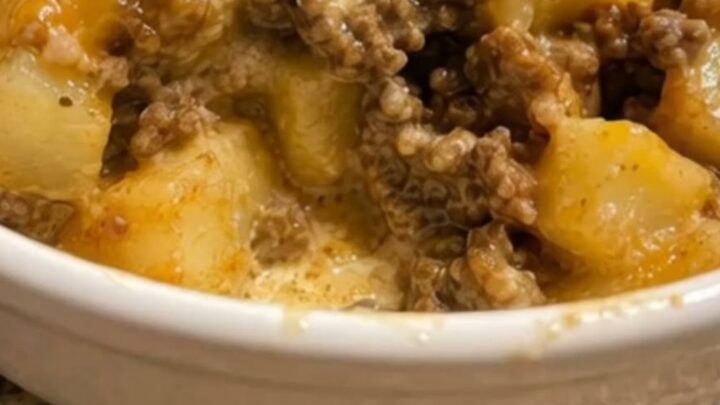
The cheese is melted, stretchy, and covers the top of the dish completely. The entire mixture is hot, creamy, and ready to be scooped into bowls. Ensure the cheese is fully integrated and bubbling before you cut the heat.
Common mistakes
Avoid cutting the potatoes into uneven sizes, as this leads to some pieces being mushy while others remain raw. Failing to brown the beef properly is another common error, as it misses the opportunity to build foundational flavor.
Do not add the cheese too early; it should only be added once the potatoes are fully cooked, as long periods of heat will cause the cheese to separate and become oily. Finally, ensure you do not skip draining the excess fat from the beef, as this is essential for maintaining the right texture.
How to tell it’s done
The dish is considered done when the potatoes are fork-tender, meaning they offer no resistance when pierced. The ground beef should be thoroughly cooked and flavorful. The cheese should be completely melted and bubbly, creating a cohesive, creamy layer over the beef and potatoes.
If you feel the potatoes are still firm, continue cooking on high for an additional 20 minutes before checking again. The internal temperature of the beef must reach 160°F (71°C) to ensure it is safely cooked throughout.
- Ground meat: 160°F (71°C) in the thickest part
Up next · Part 3 of 3
2 variations · storage & make-ahead · 3 answers · printable card
Tips, FAQ & printable recipe (Part 3)← Back to the ingredients (Part 1)