Dinner · Part 2 of 3: Instructions
Creamy Baked Mac and Cheese with Blistered Cheddar Crust Step-by-step instructions
- Prep
- Cook
- Total
- Serves
- 6
Before you start
Before beginning the cooking process, measure out all of the ingredients and shred the cheddar cheese by hand to ensure a smooth workflow.
Set up a large pot of water for boiling the pasta, and grease a grey rectangular baking dish with cooking spray. Preheating the oven to 375°F (190°C) ensures it reaches the correct temperature by the time the macaroni and cheese is ready for baking.
Ingredients at a glance (3)
- 16 oz elbow pasta
- 3 cups cheese sauce
- 2 cups shredded cheddar cheese
Instructions
Pasta Preparation
- Boil the elbow pastaBring a large pot of water to a boil. Add the elbow pasta and cook for 7 to 8 minutes, or until just al dente. Drain the pasta thoroughly in a colander and set aside, avoiding rinsing to retain the natural starches.Look for The pasta should be tender but still have a firm bite in the center.Tip Do not overcook the pasta as it will continue to cook in the oven.
At the end of this phase, the elbow pasta should be cooked to a firm al dente texture, drained, and set aside. The pasta should look plump but still retain a firm bite, ready to absorb the cheese sauce without turning mushy during the baking process.
Sauce and Pasta Combination
- Fold pasta into cheese sauceWarm the glossy cheese sauce in a large pot over low heat. Add the drained elbow pasta directly into the warm cheese sauce. Use a large spoon or spatula to fold the pasta gently until every noodle is thoroughly coated.Look for Every piece of macaroni should be fully submerged in the glossy cheese sauce.Tip Fold gently to avoid breaking the cooked pasta shapes.
The elbow macaroni should be thoroughly folded into the glossy cheese sauce. Every single piece of pasta must be completely coated in the rich, velvety sauce, creating a highly saucy and decadent mixture that is ready to be transferred to the baking dish.
Oven Baking and Crust Development
- Assemble in the baking dishTransfer the coated pasta and cheese sauce into a grey rectangular baking dish, spreading it into an even layer. Evenly scatter the shredded cheddar cheese over the top, covering the pasta completely to create a uniform layer.Look for The top should be fully covered with a blanket of shredded cheddar cheese.Tip Distribute the cheese evenly to ensure a uniform crust.
- Bake until blistering and bubblyPlace the baking dish into the preheated oven at 375°F (190°C). Bake for 20 to 25 minutes until the cheddar cheese on top is beautifully blistered and golden-brown, and the sauce is bubbling hot around the edges. Remove and let rest.Look for The cheddar should be deeply golden and bubbling vigorously around the edges.Tip Letting the dish rest for 5 minutes helps the cheese sauce set before serving.
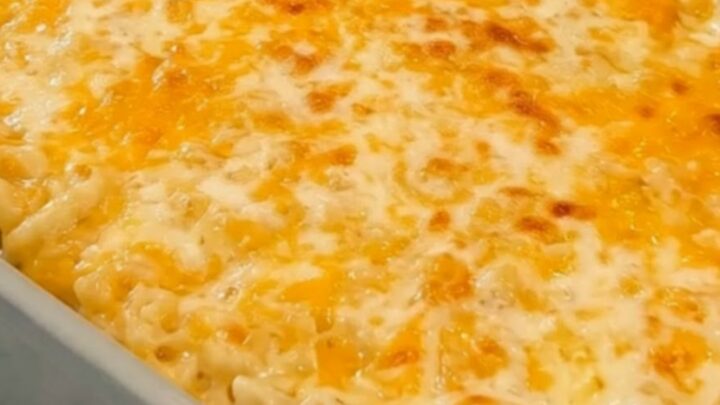
After baking, the casserole should be bubbling vigorously around the edges of the grey rectangular baking dish. The top layer of cheddar cheese should be fully melted, displaying a beautiful mosaic of golden-brown blistered spots and molten cheese.
A spoon inserted into the center should easily scoop out pasta coated in a hot, steaming, and incredibly stretchy cheese sauce.
Common mistakes
A common mistake is using pre-shredded cheddar cheese, which contains starches that prevent a smooth melt, resulting in a grainy or chalky crust. Another frequent error is overcooking the pasta during the initial boil.
Because the pasta undergoes a second cooking phase in the oven, boiling it past the al dente stage will lead to a mushy, structureless casserole. Finally, ensure the cheese sauce is warmed gently before combining to maintain a perfectly smooth consistency.
How to tell it’s done
This baked macaroni and cheese is fully cooked and ready to serve when the cheddar cheese on top is completely melted, deeply golden-brown, and blistered in spots, while the sauce underneath bubbles vigorously around the edges of the dish.
Since there are no raw proteins or eggs in this specific recipe, the primary indicator of doneness is the visual state of the cheese crust and the hot, steaming temperature of the interior sauce.
Up next · Part 3 of 3
2 variations · storage & make-ahead · 3 answers · printable card
Tips, FAQ & printable recipe (Part 3)← Back to the ingredients (Part 1)