Dinner · Part 1 of 3: Ingredients
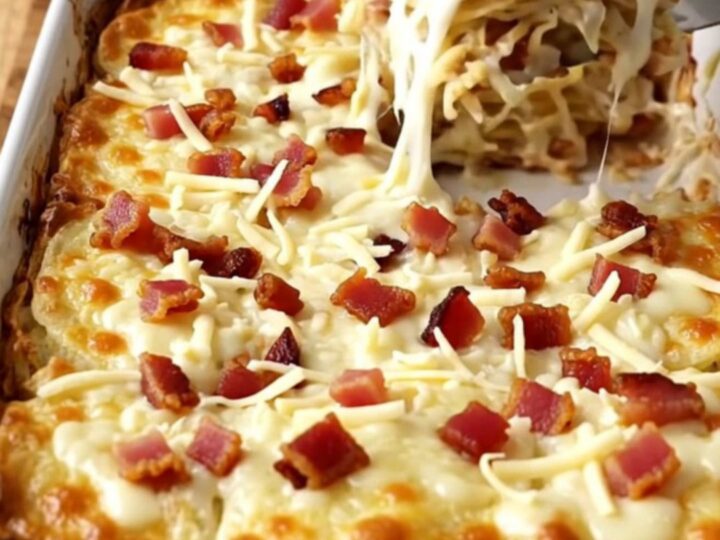
Creamy Bacon Alfredo Scalloped Potatoes
- Prep
- Cook
- Total
- Serves
- 6
Transform humble potatoes into a decadent side dish with this simple Alfredo and bacon bake. By layering thinly sliced potatoes with a rich, velvety sauce and plenty of cheese, you create a dish that is both comforting and impressive.
It is the perfect solution for busy weeknights when a hearty, crowd-pleasing side is needed without spending hours in the kitchen. Just arrange, pour, top, and bake for a result that brings restaurant-quality flavor directly to your dinner table.
This recipe relies on the classic combination of creamy Alfredo sauce and savory bacon to elevate standard russet potatoes. The starch from the potatoes naturally thickens the sauce during the baking process, resulting in a cohesive and creamy texture that pairs perfectly with the salty crunch of the bacon and the melted mozzarella topping.
This method is straightforward and requires minimal active preparation time, making it an ideal choice for home cooks looking to serve a sophisticated yet accessible side dish that pairs well with roasted meats or a crisp green salad.
Ingredients
- 3 lbs russet potatoes, thinly sliced
- 2 cups alfredo sauce, store-bought or made ahead
- 2 cups shredded mozzarella cheese
- 6 slices cooked bacon, chopped
Why this recipe works
The method of shingling the potato slices allows the Alfredo sauce to seep between each layer. As the dish bakes, the potatoes release their natural starches, which emulsify with the cream-based sauce to create a thick, luscious consistency that binds the layers together perfectly. This ensures that every bite is evenly coated and flavorful, rather than having dry spots or watery pockets throughout the casserole.
Using pre-cooked bacon ensures that the smoky, savory flavor is concentrated and consistent throughout the dish. By adding the mozzarella at the start or halfway through, the cheese melts into the sauce while the top layer crisps up slightly.
This creates a beautiful golden-brown crust that provides a textural contrast to the tender, melt-in-your-mouth potatoes underneath, resulting in a balanced and satisfying dish that feels indulgent without being overly complicated to prepare.
Notes and substitutions
For the best results, use russet potatoes as their high starch content helps thicken the sauce significantly. If using a different variety like Yukon gold, the texture will be slightly creamier but less firm. Ensure that the potato slices are very thin, ideally about an eighth of an inch, to guarantee they become tender within the forty-five-minute baking window. If slices are too thick, they may remain slightly firm in the center.
When selecting a baking dish, a ceramic or glass 9x13 inch pan is ideal because it distributes heat evenly and prevents the edges from burning before the center is cooked.
If the top browns too quickly before the potatoes are tender, tent the dish loosely with aluminum foil for the remainder of the cooking time. The Alfredo sauce should be at room temperature before pouring to ensure it flows easily and covers the potatoes effectively.
- russet potatoes: Yukon gold potatoes for a creamier, waxier texture that holds its shape well when sliced thin.
- alfredo sauce: A homemade béchamel sauce seasoned with parmesan and garlic can replace store-bought versions.
Equipment
- 9x13 inch ceramic baking dish
- Mandoline or sharp knife
- Spatula
Up next · Part 2 of 3
3 steps · 45 min of cooking · what to look for at each stage
Step-by-step instructions (Part 2)