Dinner · Part 2 of 3: Instructions
Creamy Apple White Cheddar Chicken for a Quick Dinner Step-by-step instructions
- Prep
- Cook
- Total
- Serves
- 4
Before you start
Before beginning, ensure that you have your slow cooker cleaned and ready on a heat-resistant surface. Wash and dice your apples into uniform half-inch cubes to ensure they cook at the same rate as the chicken.
Measure out your heavy cream and shred the white cheddar cheese, keeping it in the refrigerator until the final phase of the recipe to ensure it stays fresh and easy to handle when it is time to add it to the pot.
Ingredients at a glance (5)
- 4 pieces chicken breasts
- 2 cups diced apples
- 1 tsp dried thyme
- 1 cup heavy cream
- 1 cup shredded white cheddar cheese
Instructions
Preparation and layering
- Assemble the slow cookerPlace the chicken breasts at the bottom of the slow cooker. Scatter the diced apples evenly over the chicken, then sprinkle the dried thyme over the top of the fruit and meat. Pour the heavy cream over the entire mixture to ensure everything is well-coated.Look for The chicken should be in a single layer at the bottom for even cooking.Tip Peel the apples if a smoother texture is preferred in the final sauce.
At this stage, all ingredients are layered properly in the slow cooker. The chicken is at the bottom, covered with apples and thyme, and submerged in the cream.
Everything should be arranged neatly to ensure that the flavors distribute evenly as the cooker heats up, setting the foundation for a tender and flavorful final result.
Slow cooking process
- Cook the chickenCover the slow cooker and set it to cook on low for 4 hours. Ensure the chicken reaches an internal temperature of 165°F (74°C) before checking for doneness. The chicken should be very tender and easily shredded with two forks once the time is up.Look for The chicken is tender enough to shred easily with a fork.Safe temperature 165°F (74°C) internal temperature (poultry)Tip Avoid opening the lid during the cooking process to maintain a consistent temperature.
The chicken has completed its four-hour cooking cycle. The meat should be extremely tender, showing no resistance when tested with a fork. The apples should be soft and translucent, having released their juices into the cream to create a fragrant, savory base that is ready for the final addition of the cheese.
Finishing and serving
- Add cheese and serveOnce the chicken is fully cooked, stir in the shredded white cheddar cheese until it is melted and incorporated into the cream sauce. Let the mixture rest for 5 minutes before serving on a plate. The sauce should be glossy and thick enough to coat the back of a spoon.Look for The cheese is fully melted and the sauce has thickened slightly.Tip Stir gently to avoid breaking the chicken apart too much if large shreds are desired.
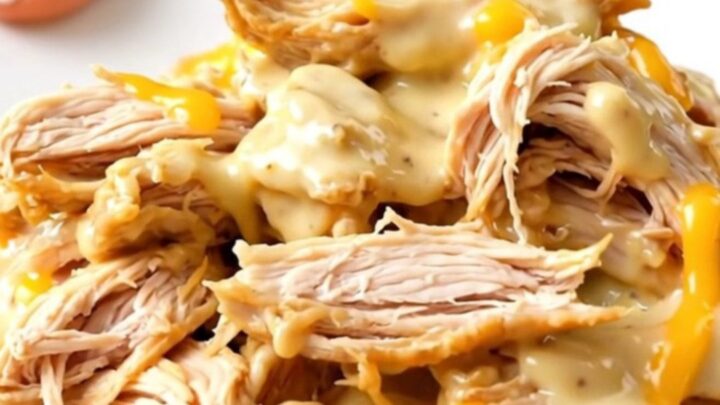
The white cheddar has been stirred in and is fully melted, creating a smooth and rich sauce. The mixture should be hot, steaming, and have a uniform, glossy appearance. The chicken is perfectly shredded, fully coated in the sauce, and ready to be plated for an immediate, comforting meal.
Common mistakes
A common mistake is overcrowding the slow cooker, which can lead to uneven cooking and excess liquid. Ensure the chicken breasts are in a single layer. Another error is adding the cheese too early; melting it only at the very end prevents the sauce from splitting or becoming oily.
Finally, avoid using pre-shredded cheese if possible, as it often contains anti-caking agents that can interfere with the smooth, creamy texture of the final sauce.
How to tell it’s done
The chicken is considered done when it reaches an internal temperature of 165°F (74°C). You can verify this by inserting a meat thermometer into the thickest part of the breast.
Beyond the temperature, the meat should be opaque throughout and shred easily with a fork. The sauce will appear glossy and should coat the back of a spoon smoothly, indicating that the cheese has fully melted and integrated with the creamy cooking liquid.
- Poultry: 165°F (74°C) in the thickest part
Up next · Part 3 of 3
2 variations · storage & make-ahead · 3 answers · printable card
Tips, FAQ & printable recipe (Part 3)← Back to the ingredients (Part 1)