Dinner · Part 2 of 3: Instructions
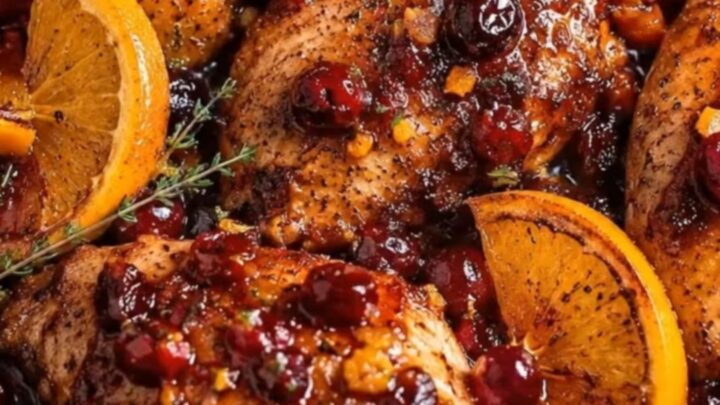
Cranberry Orange Glazed Chicken for a Quick Dinner Step-by-step instructions
- Prep
- Cook
- Total
- Serves
- 4
Before you start
Before beginning, ensure all ingredients are measured and ready. Pat the chicken breasts dry with paper towels to improve the quality of the sear. Slice the orange into uniform rounds, removing any seeds to ensure a smooth eating experience.
Prepare the workspace by clearing away clutter, keeping the skillet, tongs, and a serving plate within easy reach. Having everything prepped allows for a smooth cooking flow, especially when managing the heat during the glazing process. Remember to keep the chicken chilled until the very last moment before it enters the hot skillet.
Ingredients at a glance (3)
- 4 pieces chicken breasts
- 1 cup fresh cranberries
- 1 whole orange, sliced
Instructions
Phase 1: Searing the Chicken
- Sear the chickenPlace the chicken breasts into a preheated cast-iron skillet over medium-high heat. Sear the chicken until a golden brown crust forms on the bottom side, then flip to cook the other side.Look for The chicken should develop a deep golden-brown color on the exterior.Tip Avoid moving the chicken too early to ensure a good sear.
The chicken should be golden-brown on the outside. It will not be cooked through yet, but the color is essential for the final flavor profile. Ensure the skillet is hot enough to hear a distinct sizzle when the meat hits the surface, which indicates that the Maillard reaction is taking place effectively.
Phase 2: Glazing the Dish
- Add the glaze ingredientsReduce the heat to medium. Add the fresh cranberries and the orange slices to the skillet around the chicken. Allow the fruit to release its juices and begin to caramelize, creating a thick, glossy sauce in the pan.Look for The sauce should thicken into a glossy consistency and the cranberries should start to burst.Tip Slightly press down on the orange slices to release more juice into the pan.
The liquid in the pan should begin to transform into a syrupy glaze as the cranberries break down and the orange juice reduces. The kitchen will smell fragrant and citrusy. The fruit should be soft but still hold its shape, and the sauce should have a vibrant, glossy appearance that coats the chicken.
Phase 3: Final Cooking and Resting
- Finish and serveContinue simmering until the chicken is cooked through and reaches an internal temperature of 165°F (74°C). Remove the chicken from the skillet and let it rest for at least 5 minutes before slicing and serving with the pan sauce.Look for The chicken will be firm to the touch and the juices will run clear.Safe temperature 165°F (74°C) internal temperature (poultry)Tip Basting the chicken with the glaze during the final minutes adds extra flavor.
The chicken is cooked through when it reaches 165°F (74°C). The glaze should be thick enough to cling to the chicken, and the fruit should be tender. Before serving, ensure the chicken has rested for 5 minutes, which is vital for maintaining the juiciness of the meat and allowing the glaze to set slightly.
Common mistakes
A common mistake is overcrowding the skillet, which lowers the temperature too quickly and causes the chicken to steam rather than sear. If your skillet is small, work in batches to maintain high heat.
Another error is failing to reduce the heat after searing; if the pan remains too hot, the fruit sugars in the glaze may burn and turn bitter.
Monitor the flame carefully during the simmering phase, adjusting it to maintain a gentle bubble rather than a violent boil, which could cause the glaze to break or scorch before the chicken is fully cooked.
How to tell it’s done
To determine if the chicken is done, use a meat thermometer inserted into the thickest part of the breast. It must reach a safe internal temperature of 165°F (74°C). Visually, the juices should run clear when the meat is pierced, and the texture should be firm but yielding.
The glaze should be reduced to a thick, syrupy consistency that coats the back of a spoon. Always allow the chicken to rest for at least 5 minutes; this critical step allows the internal juices to redistribute, ensuring the meat remains tender and juicy when finally sliced for serving.
- Poultry: 165°F (74°C) in the thickest part
Up next · Part 3 of 3
2 variations · storage & make-ahead · 3 answers · printable card
Tips, FAQ & printable recipe (Part 3)← Back to the ingredients (Part 1)