Dinner · Part 2 of 3: Instructions
Cowboy Butter Portobello Ribeye Bites: Slow-Cooker Dinner Step-by-step instructions
- Prep
- Cook
- Total
- Serves
- 6
Before you start
Before you start, cut the ribeye into 1-inch cubes and pat them dry with paper towels. Thickly slice the portobello mushrooms and peel the shallots, cutting them in half if they are large.
Have the cowboy butter softened and the au jus mix measured. If using a slow cooker liner, place it in the insert now for easy cleanup. Set out the serving plates and have the mashed potatoes ready to warm just before serving.
Ingredients at a glance (6)
- 2 lb well-marbled ribeye steak, cut into 1-inch cubes
- 8 oz portobello mushroom caps, thickly sliced
- 6 shallots, peeled and halved
- 1/2 cup garlic-herb cowboy butter, softened
- 1 oz dry au jus mix
- creamy whipped mashed potatoes, for serving
Instructions
Layer and Season
- Layer the IngredientsPlace the cubed ribeye steak bites in the bottom of a 6-quart slow cooker in an even layer. Scatter the thickly sliced portobello mushroom caps and peeled shallots over the beef, spreading them out so they are distributed evenly.Look for The beef, mushrooms, and shallots should fill the bottom of the slow cooker in a single layer.Tip For the most tender bites, trim any large pieces of hard fat from the ribeye before cubing.
- Add the Butter and Au JusPlace the garlic-herb cowboy butter on top of the beef and vegetables in small pats. Sprinkle the dry au jus mix evenly over everything. Do not stir—the butter will melt and create a rich sauce as it cooks.Look for The butter and au jus mix should coat the top of the meat and vegetables.Tip If the cowboy butter is very firm, let it sit at room temperature for 10 minutes before adding.
At the end of this phase, the slow cooker contains a neat layer of raw beef, mushrooms, and shallots, topped with pats of butter and a dusting of au jus mix. The ingredients should be evenly distributed, and the butter will begin to soften. Everything is ready for the lid to go on and the heat to work its magic.
Slow Simmer
- Cook Low and SlowCover the slow cooker and cook on low for 4 to 5 hours, until the beef is fork-tender and the mushrooms are soft. Do not lift the lid during the first 3 hours to keep the heat steady. Let it rest for 3 minutes before slicing.Look for The sauce should be bubbling gently around the edges and the beef should shred easily with a fork.Safe temperature 145°F (63°C) internal temperature (steaks, chops and roasts)Tip Cooking on low gives the collagen in the beef time to break down, resulting in tender bites.
- Check for DonenessAfter 4 hours, check the beef by piercing a cube with a fork. It should be very tender and offer little resistance. If not, continue cooking for another 30 to 60 minutes. The internal temperature of the beef should read at least 145°F (63°C) on an instant-read thermometer.Look for The beef is done when it is fork-tender and the sauce has thickened slightly.Safe temperature 145°F (63°C) internal temperature (steaks, chops and roasts)Tip Let the beef rest for at least 3 minutes after cooking to allow the juices to redistribute.
After several hours, the slow cooker is filled with a rich, bubbling gravy. The beef is fork-tender, the mushrooms are silky, and the shallots have softened into sweet, mellow bites.
The aroma of garlic and herbs fills the kitchen. The sauce is glossy and coats the back of a spoon. The beef has reached a safe internal temperature of 145°F (63°C) or higher.
Rest and Serve
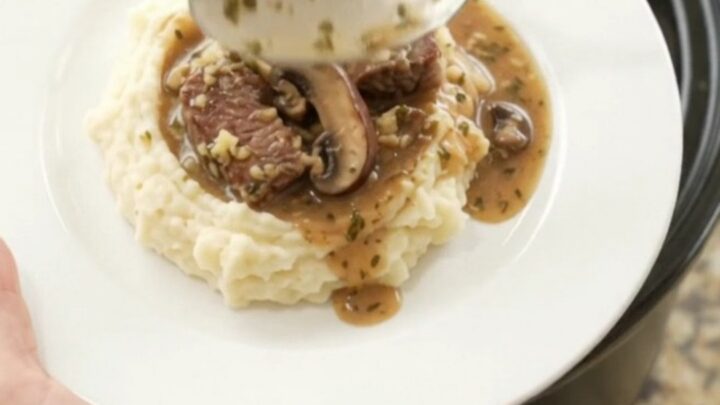
- Rest and ServeTurn off the slow cooker and let the beef rest for at least 3 minutes. Serve the ribeye bites and mushrooms over creamy whipped mashed potatoes, spooning the garlic-herb butter au jus over the top.Look for The sauce should be glossy and rich, coating the beef and mushrooms.Safe temperature 145°F (63°C) internal temperature (steaks, chops and roasts)Tip Spoon extra au jus over the mashed potatoes for extra flavor.
The slow cooker is turned off, and the beef rests for at least 3 minutes. When served over mashed potatoes, the meat is juicy and tender, the mushrooms are meaty, and the sauce pools around the potatoes. The dish looks and smells like a comforting, hearty meal, ready to be enjoyed.
Common mistakes
A common mistake is lifting the lid too often, which lets out heat and extends the cooking time. Resist the urge to peek for the first 3 hours. Another pitfall is overcooking the beef, which can make it dry and stringy.
Start checking at the 4-hour mark and adjust accordingly. Also, do not skip the resting time—it is essential for a juicy bite. Finally, be sure to use a slow cooker that is at least 6 quarts so the ingredients are not crowded.
How to tell it’s done
The beef is done when it is fork-tender and easily pierced with no resistance. The internal temperature should read at least 145°F (63°C) on an instant-read thermometer inserted into the center of a cube.
The mushrooms should be soft and glossy, and the shallots should be translucent and sweet. The sauce should be bubbling gently and slightly thickened. Let the beef rest for at least 3 minutes before serving to allow the juices to redistribute.
- Steaks, chops and roasts: 145°F (63°C) in the thickest part, then a 3-minute rest
Up next · Part 3 of 3
4 variations · storage & make-ahead · 5 answers · printable card
Tips, FAQ & printable recipe (Part 3)← Back to the ingredients (Part 1)