Dinner · Part 3 of 3: Tips & recipe card
Cowboy Butter Garlic Potato Tenderloin Tips Tips, FAQ & printable recipe
- Prep
- Cook
- Total
- Serves
- 6
Tips for success
For the best texture, use a slow cooker on the low setting rather than high. The gentle heat allows the beef to become tender without becoming stringy.
If you are short on time, you can cook on high for 3 to 4 hours, but check the beef frequently to avoid overcooking.
The sauce is delicious over mashed potatoes, rice, or crusty bread.
To thicken it further, mix 1 tablespoon cornstarch with 2 tablespoons cold water and stir into the hot liquid during the last 30 minutes of cooking. This will create a richer, gravy-like consistency.
Variations
- Add Mushrooms: Add 8 oz sliced cremini mushrooms along with the potatoes. They will cook down and add an earthy depth to the sauce.
- Spicy Kick: Stir 1/2 teaspoon red pepper flakes or a minced jalapeño into the butter before adding to the pot for a subtle heat.
- Herb Swap: Use rosemary or thyme in place of the parsley in the cowboy butter for a different aromatic profile.
- Vegetable Boost: Add 2 carrots, peeled and cut into 2-inch chunks, along with the potatoes. They will become tender and sweet.
Storage and make-ahead
- Fridge
- Leftovers keep in the refrigerator for up to 4 days in an airtight container. Reheat gently before serving.
- Freezer
- Freeze cooked and cooled portions in freezer-safe containers for up to 3 months. Thaw overnight in the refrigerator and reheat gently.
- Reheat
- Reheat in a saucepan over medium-low heat, stirring occasionally, until hot. Add a splash of beef broth if the sauce has thickened too much.
Store leftovers in an airtight container in the refrigerator for up to 4 days. The flavors will continue to meld, making it even better the next day. Reheat gently on the stovetop or in the microwave until warmed through.
You can prep the ingredients the night before: trim the beef, halve the potatoes, and measure the garlic and butter.
Store them separately in the refrigerator. In the morning, layer everything in the slow cooker and cook as directed.
Serving ideas
Serve the beef and potatoes with a generous ladle of the buttery au jus over the top. For a complete meal, add a side of steamed green beans or a simple green salad. The rich sauce is perfect for sopping up with crusty bread.
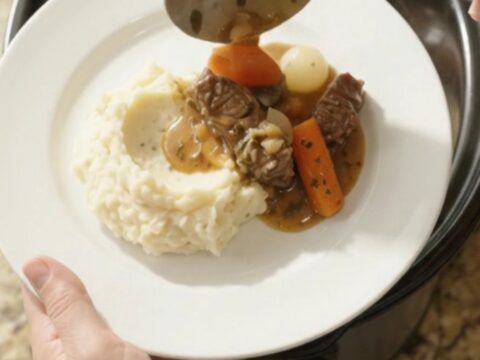
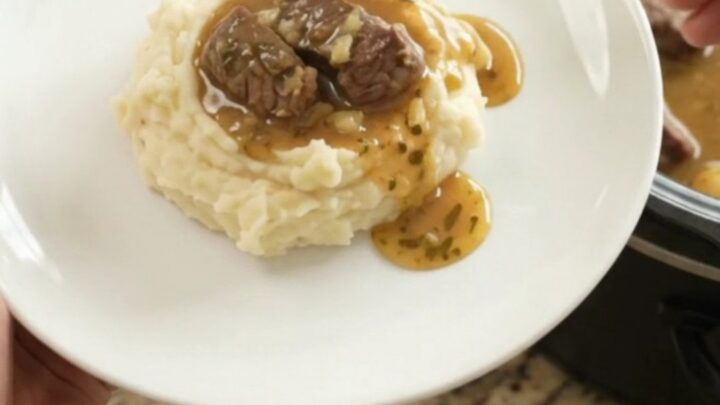
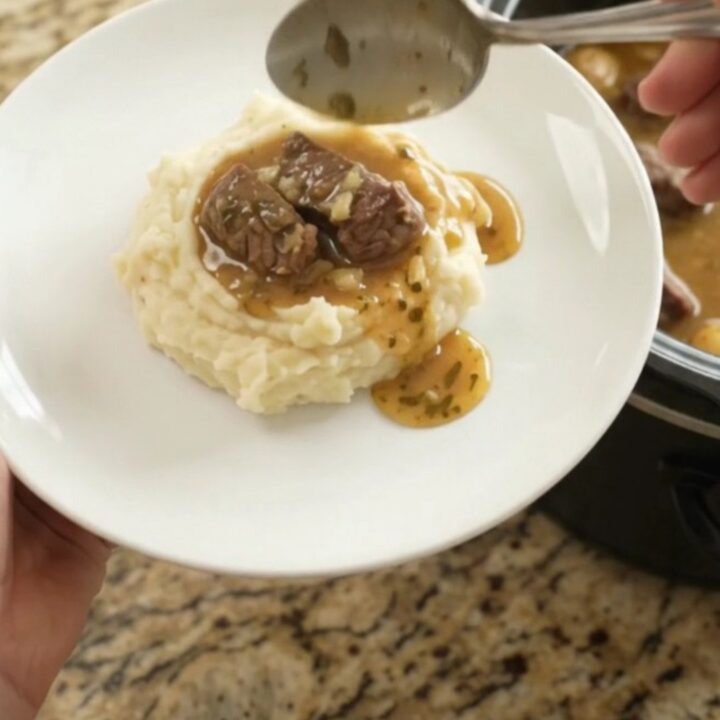
For an extra-indulgent presentation, spoon the beef and potatoes over a bed of creamy mashed potatoes.
The juices soak into the mash, creating a comforting, hearty plate. Garnish with fresh chopped parsley if desired, though the dish is delicious as-is.
Frequently asked questions
Can this recipe be made ahead of time?
What is cowboy butter?
Can the cooking time be reduced?
What can be used instead of beef tenderloin tips?
How should leftovers be stored?
Cowboy Butter Garlic Potato Tenderloin Tips
Ingredients
- 2 lb beef tenderloin tips
- 1 1/2 lb baby Yukon Gold potatoes, halved
- 2 tbsp minced garlic
- 2 sticks garlic-herb cowboy butter, cut into pieces
- 1 oz dry au jus mix
Instructions
- Place the beef tenderloin tips in the bottom of a 6-quart slow cooker. Scatter the halved baby potatoes over and around the beef. Sprinkle the minced garlic evenly over the top.
- Place the pieces of garlic-herb cowboy butter on top of the beef and potatoes. Sprinkle the dry au jus mix over everything.
- Cover the slow cooker and cook on low for 6 to 7 hours, until the beef is fork-tender and the potatoes are easily pierced with a knife. Do not open the lid during cooking except to check doneness near the end. Let it rest for 3 minutes before slicing.
- Turn off the slow cooker. Let the beef rest in the hot liquid for at least 3 minutes. Then serve the beef and potatoes with a generous spoonful of the buttery au jus.
Estimated nutrition per serving
- Calories
- 580
- Protein
- 35 g
- Carbohydrates
- 28 g
- Fat
- 35 g
Next recipe
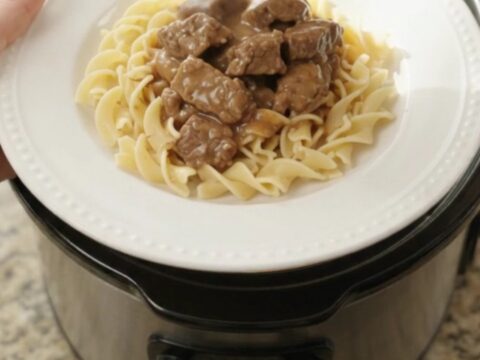
Slow Cooker Sour Cream Garlic Potato Tenderloin Tips
See the recipe → →This recipe is based on a short cooking video and is published under the pen name Clara Weller. It was checked before publication, but errors can slip through. Nutrition, when shown, is an estimate. Read more in our editorial policy and on our food safety page.
More recipes to try
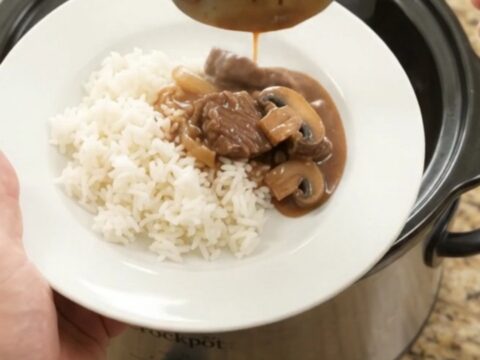
Bourbon Gravy Mushroom Tenderloin Tips: 5-Ingredient Crockpot Dinner
Total time: 6 h 10 min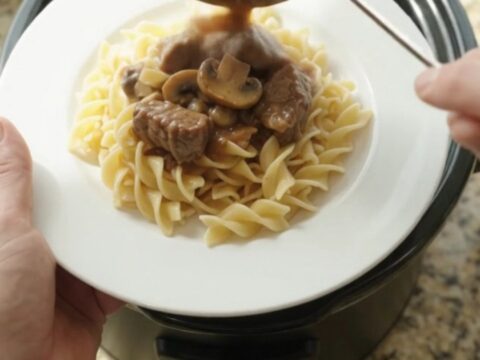
Sour Cream Mushroom Tenderloin Tips: Easy Crockpot Dinner
Total time: 6 h 10 min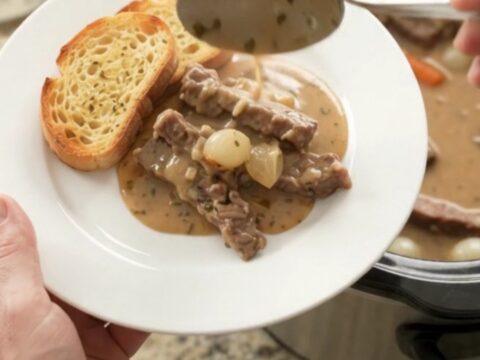
Creamy Gruyère Flank Steak Crockpot Dinner
Total time: 6 h 15 min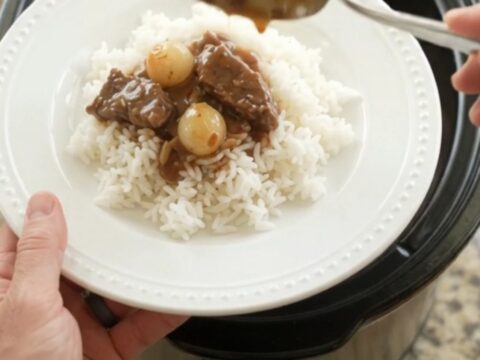
Bourbon Gravy Flank Steak: 5-Ingredient Crockpot Dinner
Total time: 8 h 10 min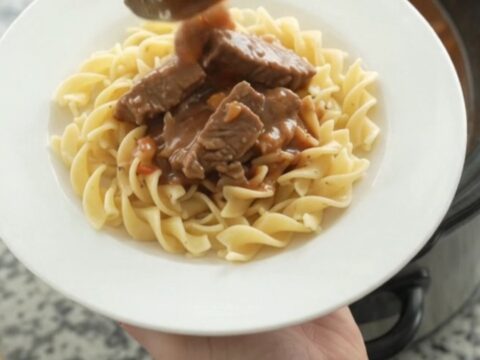
Slow Cooker Sour Cream Stroganoff Flank Steak
Total time: 8 h 25 min