Dinner · Part 1 of 3: Ingredients
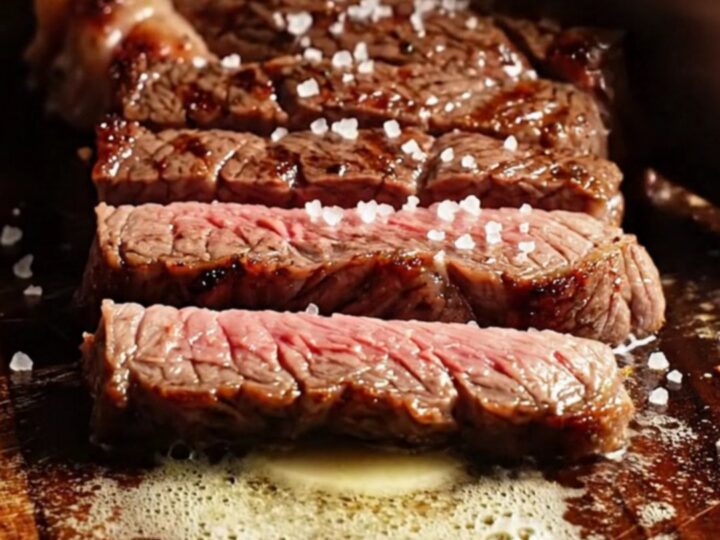
Espresso-Ancho Strip Steak with Bone Marrow Butter
- Prep
- Cook
- Total
- Serves
- 2
This espresso-ancho rubbed New York strip steak with melting bone marrow butter is the steakhouse dinner you can make at home in minutes. A dark, savory crust forms from the coffee-chili rub, while the rich marrow butter melts into every slice.
Searing in a screaming-hot cast-iron skillet locks in juices and creates a deeply flavorful bark. The result is a restaurant-worthy steak that's surprisingly simple.
A thick-cut New York strip steak gets a bold, aromatic rub of finely ground espresso, ancho chili powder, brown sugar, and kosher salt. The rub creates a dark, savory bark when seared at high heat, while a compound butter made with roasted bone marrow and fresh parsley melts over the finished steak for richness.
This recipe delivers deep, smoky, steakhouse flavor in under 30 minutes, perfect for a special dinner or a weekend treat. Serve with your favorite sides and enjoy a truly legendary meal.
Ingredients
- 1 lb New York strip steak, 1 1/2 inches thick
Espresso-Ancho Rub
- 1 tbsp finely ground espresso
- 1 tbsp ancho chili powder
- 1 tsp brown sugar
- 1 tbsp kosher salt
Bone Marrow Butter
- 2 oz roasted bone marrow
- 4 tbsp unsalted butter, softened
- 1 tbsp fresh parsley, finely chopped
For serving
- flaky sea salt, for serving
Why this recipe works
The combination of espresso and ancho chili powder creates a rub that is both deeply savory and slightly sweet, with a subtle smokiness that complements the beef. The coffee's natural bitterness balances the richness of the steak and butter, while the ancho adds a mild, earthy heat. The brown sugar helps the rub caramelize and form a dark, crisp crust during searing, locking in moisture and flavor.
Searing in a cast-iron skillet at 485°F (250°C) ensures a rapid Maillard reaction, producing a deeply browned crust in just a few minutes per side. This high-heat method creates a contrast between the flavorful exterior and the tender, juicy interior.
Resting the steak allows the juices to redistribute, ensuring every slice is moist and tender. The bone marrow butter, whipped with herbs, adds a luxurious finish that melts into the warm meat.
Notes and substitutions
Choose a well-marbled New York strip steak at least 1 1/2 inches thick for the best results. Prime or Choice grade beef will yield a more tender and flavorful steak. If you can't find bone marrow, you can substitute with additional butter or a flavored compound butter. The espresso should be finely ground, like espresso powder, to ensure it blends into the rub without being gritty.
A cast-iron skillet is ideal for achieving the high heat needed for a good sear. If you don't have one, use a heavy stainless steel pan. Heat the skillet until it's smoking hot before adding the steak.
The rub can be prepared ahead of time and stored in an airtight container. For a milder heat, reduce the ancho chili powder to 2 teaspoons. Flaky sea salt, such as Maldon, adds a final touch of texture and flavor.
- New York strip steak: Ribeye or sirloin steak, at least 1 inch thick
- Ancho chili powder: Chipotle chili powder for a smokier heat, or regular chili powder for milder flavor
- Roasted bone marrow: Extra butter or a compound butter with fresh herbs
- Fresh parsley: Fresh thyme or rosemary
Equipment
- Cast-iron skillet
- Meat thermometer
- Mixing bowl
- Chef's knife
- Cutting board
Up next · Part 2 of 3
3 steps · 10 min of cooking · what to look for at each stage
Step-by-step instructions (Part 2)