Dinner · Part 2 of 3: Instructions
Coconut Crusted Mahi-Mahi with Mango Salsa in One Skillet Step-by-step instructions
- Prep
- Cook
- Total
- Serves
- 2
Before you start
Gather everything before you turn on the heat, because the fish cooks quickly once it enters the pan. Dice the mango, chop the red onion and chili, and set them in a small bowl. Halve the lime and keep it at hand for the final squeeze. Finely grate the shredded coconut and spread it in an even layer on a cutting board or shallow dish.
Pat the mahi-mahi fillets dry with paper towels, since dry fish takes the coating better. Keep the fillets cold in the refrigerator until you are ready to coat them, and take them out only just before cooking, for no more than 30 minutes. Set out the butter, oil, salt, a spoon for basting and a fish spatula beside the stove.
Ingredients at a glance (9)
- 1 ripe mango, peeled and diced
- 1/4 red onion, finely chopped, plus extra for the salsa
- 1 small red chili, seeded and finely chopped
- 1 lime, halved, plus juice to finish
- 1/2 cup shredded unsweetened coconut, finely grated
- 2 mahi-mahi fillets (about 6 oz each)
- 1 tbsp unsalted butter
- 1 tbsp vegetable oil
- 1/2 tsp kosher salt, plus more to taste
Instructions
Prepare the salsa and coating
- Prepare the mango salsaDice the ripe mango and finely chop the red onion and red chili on a wooden cutting board. Combine them in a small bowl and set aside. Keep the mahi-mahi refrigerated until you are ready to coat it.Look for Mango pieces are small and even, with onion and chili finely minced.Tip Chop the onion finely so it stays crisp and does not overpower the sweet fruit.
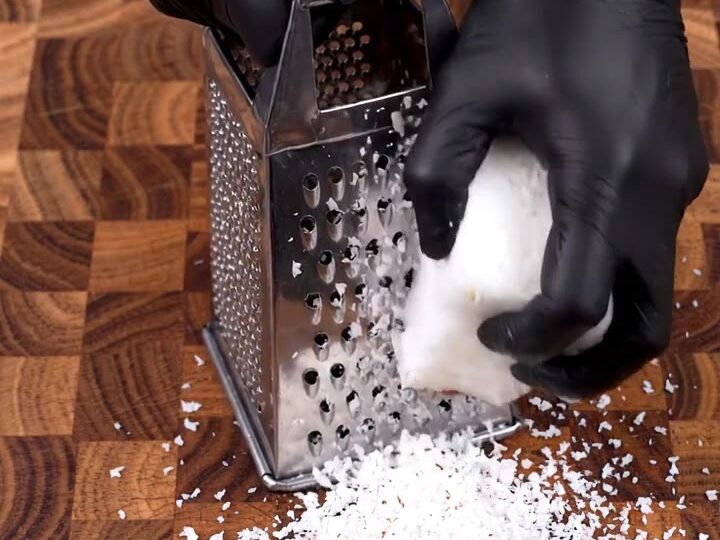
- Grate the coconutFinely grate the shredded coconut and scatter it over the cutting board or a shallow dish. Spread it into an even layer about the width of the fillets, so the crust covers both sides evenly.Look for Coconut looks fine and feathery, spread in an even layer.Tip Finer coconut browns faster and gives a more even crust.
- Coat the filletsPat the mahi-mahi fillets dry and season them lightly with kosher salt. Press each fillet firmly into the coconut, turn it over and press again, so the coconut adheres on both sides.Look for Both sides of each fillet look fully covered in coconut.Tip Pat the fish dry first, so the coconut sticks instead of sliding off.
The salsa is ready in its bowl: diced mango, finely chopped red onion and chili, bright and sweet smelling. The coconut is grated into a fine, even layer, and the fillets are dry and seasoned lightly with salt. Pat the fish dry once more if it looks damp. Press each fillet firmly into the coconut on both sides before you move on. The coating should cover the fish evenly and cling without falling off, so the crust will brown uniformly once it hits the hot fat.
Melt butter and sear the crust
- Melt the butter and oilPlace the cast iron skillet over medium heat. Add the butter and vegetable oil and heat until the butter melts and the mixture foams gently across the surface of the pan.Look for Butter has melted and the fat is foaming around the edges.Tip Medium heat keeps the coconut from scorching before the fish cooks through.
- Sear the coconut crustLay the coated fillets in the hot fat, away from each other. Sear for about 3 to 4 minutes, spooning the hot butter and oil over the fish with a spoon until the coconut turns golden.Look for Coconut edges turn golden brown and the crust smells toasty.Tip Baste often to brown the coconut evenly and keep the top of the fish moist.
- Flip and finish cookingCarefully turn the fillets with a fish spatula and cook 3 to 4 minutes more, basting the second side, until the coconut is crisp and the flesh is opaque and flakes easily. The fish is safe at 145°F (63°C), the USDA safe temperature for fish, and the thickest part should flake with a fork.Look for Flesh is opaque all the way through and flakes easily at the center.Safe temperature 145°F (63°C) internal temperature (fish)Tip Thin fillets cook quickly, so check the center a minute early.
The butter and oil have melted together and are foaming gently across the surface of the skillet, a sign the pan is hot enough. When you lay the fillets in, you should hear a soft, steady sizzle. Spoon the fat over the fish as it cooks.
The coconut edges turn golden and smell toasty after about 3 to 4 minutes. Check the underside before turning: it should be deep golden brown and crisp at the edges, with no pale patches. If the coconut darkens too fast, lower the heat a little.
Flip, finish and top with salsa
- Finish with salsa and limeSpoon the mango, red onion and chili salsa over the fillets in the skillet. Squeeze fresh lime juice across the fish and serve straight from the skillet, with a lime half on the side for extra squeezing.Look for Salsa is spooned over the crust and the lime juice glistens on top.Tip Add the salsa just before serving so the mango stays bright and fresh.
Turn each fillet carefully with the fish spatula and cook the second side for another 3 to 4 minutes, basting until the coconut is crisp and golden on both sides. The flesh should look opaque all the way through and flake easily with a fork at the thickest point. Check that the center reaches 145°F (63°C) before you finish. Only then spoon the salsa over the fish, squeeze fresh lime juice across the top and serve right away from the skillet with the lime half alongside.
Common mistakes
The most common mistake is coating the fish too early and letting it sit, since the coconut absorbs moisture and softens. Coat the fillets just before the pan goes on the heat. Another frequent error is cooking over high heat: the coconut burns in the time it takes the fish to cook through, leaving bitter, dark shreds. Medium heat gives you time to brown the crust evenly.
Crowding the skillet also causes problems, because the fish steams instead of searing and the coating turns soft. Leave space between the fillets, and cook in two batches if your pan is small. Finally, do not add the salsa too early. Mango and lime lose their brightness and the salsa turns watery when it sits on warm fish.
How to tell it’s done
The fish is done when the flesh is opaque from edge to center and flakes cleanly when you press it with a fork. The thickest part should read 145°F (63°C) on an instant-read thermometer, which is the USDA safe temperature for fish. The coconut crust should be deep golden and crisp on both sides, with the edges slightly darker.
If the flesh still looks translucent or glassy in the center, give it another minute on the second side and check again. Avoid pressing the fish, since that squeezes out juices and dries the texture. Once it flakes and reads 145°F (63°C), lift the fillets onto plates and spoon the salsa on top.
- Fish: 145°F (63°C) in the thickest part
Up next · Part 3 of 3
4 variations · storage & make-ahead · 5 answers · printable card
Tips, FAQ & printable recipe (Part 3)← Back to the ingredients (Part 1)