Dinner · Part 2 of 3: Instructions
Coconut Crusted Mahi Mahi with Mango Salsa Step-by-step instructions
- Prep
- Cook
- Total
- Serves
- 4
Before you start
Before starting, dice the mango and red onion, and juice the lime. Grate the fresh coconut using a box grater and set it aside. Pat the mahi mahi fillets dry and season them with salt and pepper.
Have the egg beaten in a shallow dish and the coconut-panko mixture ready. Place the butter and oil in the skillet so they are ready to heat when the fish is coated.
Ingredients at a glance (12)
- 1 ripe golden mango, diced
- 1/4 cup diced red onion
- 2 tbsp fresh lime juice
- 4 mahi mahi fillets (6 oz each)
- 1/2 tsp kosher salt
- 1/4 tsp black pepper
- 1 cup fresh white coconut meat, grated
- 1/2 cup panko breadcrumbs
- 1 large egg, beaten
- 2 tbsp unsalted butter
- 2 tbsp vegetable oil
- 1/2 tsp red chili flakes
Instructions
Fresh Salsa and Seasoned Fish
- Make the mango salsaIn a medium bowl, combine the diced mango, red onion, lime juice, and red chili flakes. Stir gently to mix. Set aside while you prepare the fish.Look for The salsa should be bright and fragrant, with the mango still in small chunks.Tip If the mango is very ripe, handle it gently to keep the pieces intact.
- Season the fishPat the mahi mahi fillets dry with paper towels. Season both sides with kosher salt and black pepper.Look for The fillets should be evenly seasoned but not heavily coated.Tip Patting dry helps the crust adhere better.
The salsa should be bright and fragrant, with the mango still in small, juicy chunks. The fish fillets should be evenly seasoned but not heavily coated.
The coconut and panko are mixed and ready in a shallow dish, and the egg is beaten in another. Everything is prepped and within reach for the cooking phase.
Golden Crust and Sizzling Skillet
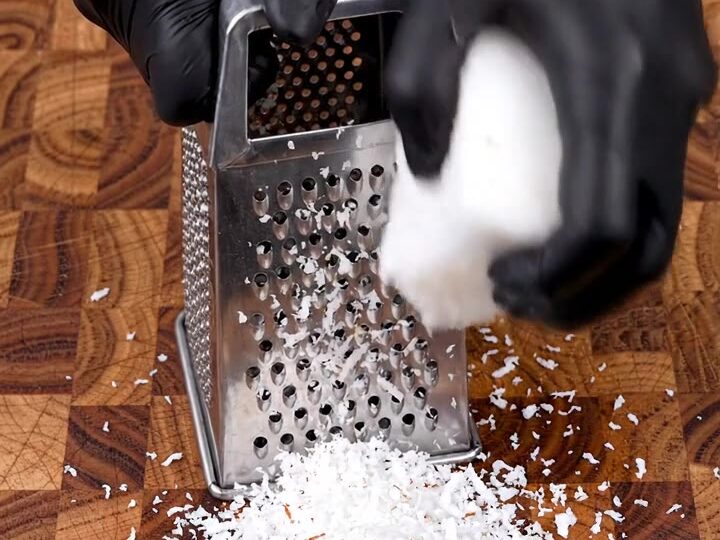
- Grate the coconutUsing a box grater, grate the fresh white coconut meat into a shallow dish. Add the panko breadcrumbs and mix with your fingers until combined.Look for The coconut should be fluffy and evenly mixed with the panko.Tip Use the large holes of the grater for a more textured crust.
- Coat the filletsDip each seasoned fillet into the beaten egg, letting any excess drip off. Then press both sides into the coconut-panko mixture until evenly coated.Look for The crust should cover the fish completely but not be too thick.Tip Press gently so the crust sticks without clumping.
- Heat the skilletPlace a large cast iron skillet over medium-high heat. Add the butter and vegetable oil. Swirl the pan until the butter is melted and sizzling.Look for The butter should foam and then subside, but not brown.Tip If the butter starts to brown, lower the heat slightly.
- Pan fry the fishCarefully place the coated fillets in the hot skillet. Cook without moving for 3-4 minutes until the underside is deeply golden and crunchy. Flip and cook the other side for 3-4 minutes more, until the fish is opaque and flakes easily with a fork, and the internal temperature reaches 145°F (63°C).Look for The crust should be deep golden brown and crisp on both sides.Safe temperature 145°F (63°C) internal temperature (fish)Tip Use a thin spatula to flip gently, keeping the crust intact.
The butter and oil are sizzling in the skillet, and the coated fillets are placed in without crowding. The crust turns deeply golden and crunchy on the first side before flipping. The second side cooks until the fish is opaque and reaches 145°F (63°C). The kitchen smells of toasted coconut and butter.
Salsa Topping and Serving
- Spoon salsa over the fishRemove the skillet from the heat. Spoon the mango salsa generously over each fillet, letting the juices mingle with the buttery pan drippings.Look for The salsa should be bright and colorful against the golden crust.Tip Spoon the salsa just before serving to keep the crust crunchy.
- Finish with lime and serveSqueeze additional fresh lime juice over the fish if desired. Lift each fillet with a spatula and serve immediately, spooning any extra salsa from the pan over the top.Look for The fish should be glossy and the salsa glistening with lime.Tip Serve straight from the skillet for a rustic presentation.
The mango salsa is spooned generously over the hot fillets, letting the lime and chili mingle with the pan drippings. A final squeeze of lime adds brightness. The fish is lifted onto plates with a spatula, keeping the crust intact, and any extra salsa is spooned from the pan.
Common mistakes
One common mistake is using coconut that is too wet, which makes the crust soggy instead of crunchy. Make sure the grated coconut is fresh and not packed with excess moisture.
Another is overcrowding the skillet, which lowers the oil temperature and steams the fish. Cook in batches if needed. Flipping too early can tear the crust, so wait until the underside is deeply golden before turning.
How to tell it’s done
The fish is done when the crust is deeply golden and crunchy on both sides, and the flesh is opaque and flakes easily with a fork.
The internal temperature should read 145°F (63°C) on an instant-read thermometer inserted into the thickest part of the fillet. Avoid overcooking, as mahi mahi can become dry.
- Fish: 145°F (63°C) in the thickest part
Up next · Part 3 of 3
4 variations · storage & make-ahead · 5 answers · printable card
Tips, FAQ & printable recipe (Part 3)← Back to the ingredients (Part 1)