Dinner · Part 2 of 3: Instructions
Slow-Cooker Southern Oyster Cornbread Dressing Step-by-step instructions
- Prep
- Cook
- Total
- Serves
- 12
Before you start
Before starting, crumble the cornbread into a large bowl and let it sit out for an hour to dry slightly. Dice the celery and onion, and chop the fresh sage. Melt the butter and set aside.
Shuck the oysters if needed, keeping their liquor. Have your 6-quart slow cooker ready and lightly greased. This recipe requires about 20 minutes of active prep, then the slow cooker does the work.
Ingredients at a glance (8)
- 10 cups crumbled skillet cornbread
- 2 pints shucked Gulf oysters with their liquor
- 1 1/2 cups diced celery
- 1 cup diced yellow onion
- 3 tbsp chopped fresh sage
- 1/2 cup unsalted butter, melted
- chopped flat-leaf parsley for garnish, to taste
- lemon wedges for serving
Instructions
Build the Dressing
- Prepare the Cornbread BasePlace the crumbled cornbread in a large mixing bowl. Add the diced celery, diced onion, and chopped fresh sage. Toss gently with your hands or a spatula to combine, breaking up any large clumps of cornbread so the vegetables and herbs are evenly distributed.Look for The cornbread should be evenly coated with the vegetables and herbs, with no dry patches.Tip Use day-old cornbread that is slightly stale; it holds its shape better during slow cooking.
- Fold in the Oysters and ButterAdd the shucked oysters with their liquor to the cornbread mixture. Pour the melted butter over the top. Using a large spoon or your hands, fold everything together gently until the oysters are distributed and the cornbread is moistened but not mushy.Look for The mixture should look cohesive and slightly glossy from the butter and oyster liquor.Tip Fold gently to avoid breaking the oysters; they will release more liquor as they cook.
- Transfer to the Slow CookerLightly grease the insert of a 6-quart slow cooker with butter or nonstick spray. Spoon the cornbread mixture into the slow cooker and spread it into an even layer. Press down lightly with the back of a spatula to compact it slightly.Look for The mixture should fill the slow cooker about three-quarters full.Tip Do not overfill; the dressing will puff slightly as it cooks.
In this phase, you'll combine the cornbread, vegetables, sage, oysters, and butter in a large bowl. The mixture should be evenly moistened but not soupy, with the oysters distributed throughout. The aroma of sage and butter will be fragrant. Transfer to the slow cooker and spread evenly.
Slow-Cook to Set
- Slow-Cook on LowCover the slow cooker with the lid. Set to LOW and cook for 3 1/2 hours without lifting the lid. The dressing will slowly steam and set, with the edges turning golden brown and the center becoming firm to the touch.Look for After 3 hours, the edges will be golden and the center will be set but still moist.Safe temperature 145°F (63°C) internal temperature (shellfish)Tip Resist the urge to stir; stirring breaks up the custard as it sets.
- Check for DonenessAfter 3 1/2 hours, insert an instant-read thermometer into the center of the dressing. It should read at least 145°F (63°C) to ensure the oysters are fully cooked. The top should be golden brown and the edges crisp.Look for The thermometer reads 145°F (63°C) or higher; the top is golden and set.Safe temperature 145°F (63°C) internal temperature (shellfish)Tip If the center is still wet, cook for 15 more minutes and check again.
After 3 1/2 hours on low, the dressing will have transformed: the edges will be golden and slightly crisp, the center set and moist.
The kitchen will smell richly of butter, sage, and briny oysters. The top should be firm to the touch, and a thermometer inserted in the center will read 145°F (63°C).
Finish and Serve
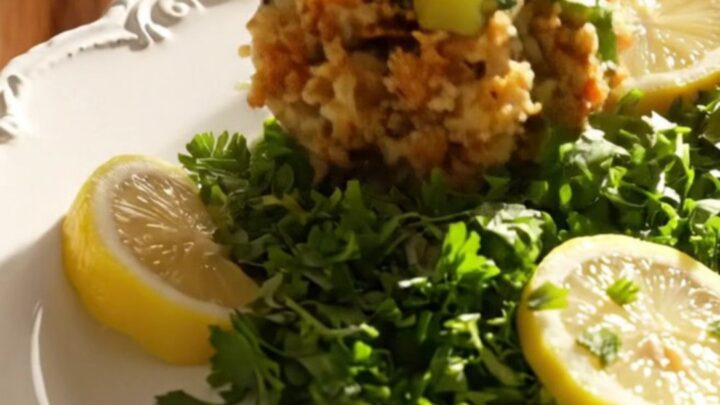
- Serve the DressingOnce done, turn off the slow cooker. Using a large spoon, scoop the dressing onto a warm platter. Garnish with chopped flat-leaf parsley and serve with lemon wedges on the side for squeezing over the top.Look for The dressing holds its shape when scooped, with visible oysters and herbs.Tip Let it rest for 5 minutes before serving to allow the juices to settle.
Once the dressing is fully cooked, turn off the slow cooker and let it rest for a few minutes. Scoop onto a warm platter, garnish with parsley and lemon wedges. The dressing should hold its shape, with visible oysters and herbs. Serve hot, with extra lemon for squeezing.
Common mistakes
One common mistake is overmixing the cornbread, which can make the dressing dense and pasty. Fold gently until just combined. Another is lifting the lid too often during cooking, which releases heat and extends the cooking time.
Avoid stirring the dressing once it starts to set, as this breaks the custard. Finally, don't skip checking the internal temperature — oysters need to reach 145°F (63°C) for food safety.
How to tell it’s done
The dressing is done when the top is golden brown and the edges are crisp, and the center is set but still moist. An instant-read thermometer inserted into the center should read at least 145°F (63°C) to ensure the oysters are fully cooked.
The texture should be similar to a savory bread pudding — firm enough to hold its shape when scooped, but not dry. If the center still looks wet, continue cooking in 15-minute increments.
- Shellfish: 145°F (63°C) in the thickest part
Up next · Part 3 of 3
4 variations · storage & make-ahead · 5 answers · printable card
Tips, FAQ & printable recipe (Part 3)← Back to the ingredients (Part 1)