Breakfast · Part 2 of 3: Instructions
Cloud-Soft Turkish Butter Açma Bagels Step-by-step instructions
- Prep
- Cook
- Total
- Serves
- 8
Before you start
Before starting, gather all the ingredients and equipment. Measure the milk and water and warm them gently until they are just warm to the touch, not hot. Separate the eggs, placing the whites in the dough and reserving the yolk for the egg wash.
Line a baking sheet with parchment paper. Clear a large work surface for kneading and shaping. Have a clean kitchen towel ready for covering the dough during rises. Preheat the oven only when the shaped açma are ready to bake, as they need a final rise before going in.
Ingredients at a glance (9)
- 1 cup warm milk
- 1 cup warm water
- 1 cup vegetable oil
- 2 egg whites
- 3 tbsp granulated sugar
- 1 packet active dry yeast
- 4-5 cups all-purpose flour
- 1 egg yolk, beaten
- 1 tbsp black nigella seeds
Instructions
Make the Dough
- Make the doughIn a large bowl, whisk together the warm milk, warm water, oil, egg whites, sugar, and yeast. Let the mixture sit for 5 minutes until the yeast is foamy. Gradually add the flour, 1 cup at a time, stirring with a wooden spoon until a soft, pillowy dough forms. Turn the dough out onto a lightly floured surface and knead for 8-10 minutes until smooth and elastic.Look for The dough should be soft, smooth, and slightly tacky but not sticky.Tip If the dough is too sticky, add a little more flour, 1 tablespoon at a time.
- Punch down and dividePunch down the risen dough to release the air. Turn it out onto a lightly floured surface and divide it into 8 equal pieces. Roll each piece into a ball, then let them rest for 5 minutes. This relaxes the gluten and makes shaping easier.Look for The dough balls should be smooth and evenly sized.Tip Keep the pieces you're not working with covered with a towel to prevent drying.
After mixing and kneading, the dough should be smooth, soft, and elastic, with a slight tackiness. It should have doubled in size after rising, filling the bowl with airy, pillowy dough. When you press a finger into it, the indentation should remain, indicating it's ready. The dough should smell yeasty and slightly sweet, with a soft, supple texture that feels alive in your hands.
Shape and Rise
- Shape the twistsRoll each dough ball into a rope about 12 inches long. Fold the rope in half and twist the two strands around each other. Bring the ends together to form a circle and pinch them to seal. Place the shaped açma on a parchment-lined baking sheet, leaving about 2 inches between each. Cover with a towel and let rise for 30 minutes until puffy.Look for The twists should hold their shape and look like braided rings.Tip If the dough springs back while rolling, let it rest a few more minutes.
- Preheat the ovenWhile the shaped açma are rising, preheat the oven to 390°F (200°C). Position a rack in the center of the oven. Make the egg wash by beating the egg yolk with a splash of water in a small bowl.Look for The oven should be fully heated before baking.Tip Use a pastry brush to apply the egg wash evenly.
The shaped twists should look neat and uniform, with the braided strands clearly defined. After the final rise, they should be puffy and almost doubled in size, feeling light and airy to the touch. The dough should spring back slowly when gently pressed, and the surface should be smooth and glossy. They should be evenly spaced on the baking sheet, ready for the egg wash and seeds.
Bake and Finish
- Brush and sprinkleGently brush the risen açma with the egg wash, making sure to cover the entire surface. Sprinkle generously with black nigella seeds. The egg wash gives the bread its glossy, mahogany-golden finish.Look for The surface should be evenly coated with egg wash and seeds.Tip Don't press too hard with the brush, or you may deflate the dough.
- Bake until goldenPlace the baking sheet in the preheated oven and bake for 20 minutes, or until the açma are puffed tall and deep mahogany golden. The internal temperature of the bread should register 190°F (88°C) on an instant-read thermometer. If the tops brown too quickly, loosely tent with foil.Look for The açma should be deeply browned and sound hollow when tapped on the bottom.Safe temperature 160°F (71°C) internal temperature (egg dishes)Tip Rotate the baking sheet halfway through for even browning.
- Cool and serveRemove the açma from the oven and let them cool on the baking sheet for 5 minutes. Transfer to a wire rack to cool slightly. Serve warm, pulling apart the tender strands. The bread should be cloud-soft and spring back when squeezed.Look for The açma should be soft to the touch and spring back when pressed.Tip Warm açma are best; reheat leftovers in a 300°F oven for 5 minutes.
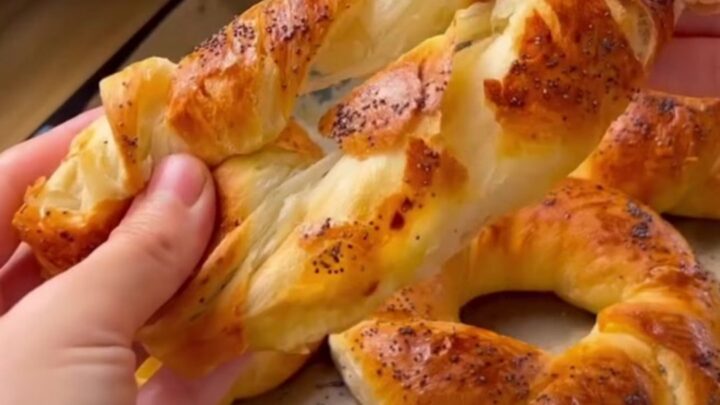
The açma should emerge from the oven tall, deeply browned, and glossy, with the nigella seeds toasted and fragrant. The crust should be crisp and crackly, while the interior remains soft and tender.
When you pull one apart, steam should rise from the cottony crumb, releasing a buttery, yeasty aroma. The bagels should feel light, and the strands should separate easily, revealing the cloud-like texture.
Common mistakes
A common mistake is adding too much flour, which makes the dough dense and heavy. Start with the lesser amount and add more only if needed. Another pitfall is not proofing the yeast; if the mixture doesn't foam, the yeast is dead and the bread won't rise.
Under-kneading can also lead to a dense texture, so knead until the dough is smooth and elastic. During shaping, if the dough resists, let it rest for a few minutes rather than forcing it. Finally, avoid over-browning by checking the oven temperature with an oven thermometer.
How to tell it’s done
The açma are done when they are puffed tall and deeply browned, with a mahogany-golden crust. The internal temperature should read 190°F (88°C) on an instant-read thermometer. If you tap the bottom of a bagel, it should sound hollow.
The bread should feel light and airy, and when squeezed, it should spring back without leaving a dent. If the tops brown too quickly before the centers are set, loosely cover with foil and continue baking until done.
- Egg dishes: 160°F (71°C) in the thickest part
Up next · Part 3 of 3
4 variations · storage & make-ahead · 5 answers · printable card
Tips, FAQ & printable recipe (Part 3)← Back to the ingredients (Part 1)