Dinner · Part 2 of 3: Instructions
Classic Tender Beef Pot Roast with Root Vegetables Step-by-step instructions
- Prep
- Cook
- Total
- Serves
- 6
Before you start
Before starting, take the beef chuck roast out of the refrigerator about 20 to 30 minutes before you plan to sear it. This helps the meat cook more evenly.
Prepare your vegetables by peeling and quartering the potatoes and slicing the carrots into thick rounds. Ensure your roasting pan is clean and dry. Have your beef broth measured and ready to pour, as the searing process moves quickly once the pan is hot.
Ingredients at a glance (4)
- 4 lb beef chuck roast
- 2 lb potatoes, peeled and quartered
- 6 medium carrots, sliced
- 3 cups beef broth
Instructions
Searing the Beef
- Sear the RoastHeat the roasting pan over medium-high heat. Once the pan is hot, carefully place the beef in the pan and sear until a deep, dark brown crust forms on all sides, turning occasionally with tongs.Look for The beef should have a deep, caramelized brown crust on all sides.Tip Ensure the pan is hot before adding the beef to achieve a proper sear.
At the end of this phase, the beef should have a dark, caramelized brown crust on all sides. The aroma of browned beef should be noticeable in the kitchen. Ensure the pan is not smoking excessively; if it is, slightly reduce the heat before the beef burns.
Assembling the Pan
- Prepare for BraisingRemove the seared beef from the pan momentarily. Add the sliced carrots and quartered potatoes to the bottom of the roasting pan. Place the seared beef roast on top of the vegetables. Pour the beef broth around the beef into the pan, ensuring the liquid reaches about halfway up the sides of the roast.Look for The liquid should surround the beef without completely submerging the top surface.Tip Adding the vegetables to the bottom allows them to absorb the juices released during cooking.
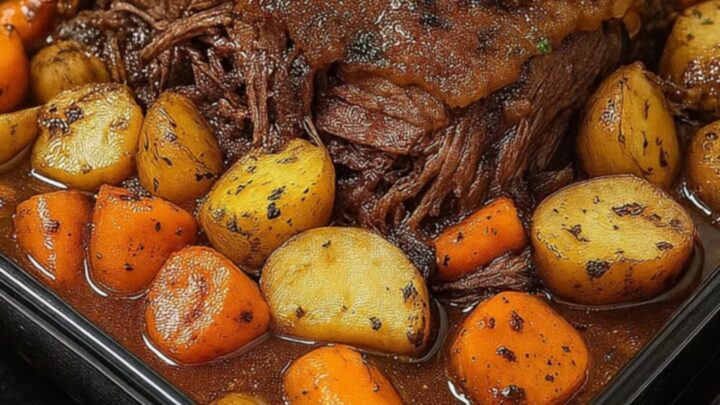
The roast should be nestled securely on a bed of potatoes and carrots. The broth should come halfway up the sides of the roast. The pan should look organized, with the vegetables evenly distributed to ensure they cook at the same rate as the meat.
Slow Roasting
- Slow Roast to PerfectionCover the pan tightly with a lid or heavy-duty foil. Place in an oven preheated to 325°F (163°C) and cook until the beef is fork-tender and reaches an internal temperature of 145°F (63°C). Once cooked, remove the roast from the oven and let it rest on a carving board for at least 3 minutes before shredding or slicing.Look for The beef should pull apart easily with a fork, indicating it is fully tender.Safe temperature 145°F (63°C) internal temperature (steaks, chops and roasts)Tip Resting the meat is essential to retain the juices and ensure maximum tenderness.
The final result should feature a roast that is fork-tender and surrounded by soft, glazed vegetables.
The liquid in the pan should have reduced slightly, creating a rich, flavorful gravy that coats the back of a spoon. Verify the internal temperature before removing the roast from the oven.
Common mistakes
Avoid the common mistake of rushing the searing phase; if the pan is not hot enough, the meat will steam rather than brown, resulting in a bland sauce.
Do not skip the resting period, as cutting the meat too early causes precious juices to leak out, leading to a dry texture. Finally, do not use a pan that is too large, as this will cause the broth to evaporate too quickly.
How to tell it’s done
The pot roast is done when it reaches an internal temperature of 145°F (63°C) and the meat is extremely tender. When tested with a fork, the beef should offer no resistance and pull apart easily.
The potatoes should be soft enough to be pierced easily with a knife, and the carrots should be tender but not mushy. If the beef still feels firm, continue cooking for an additional 15 minutes.
- Steaks, chops and roasts: 145°F (63°C) in the thickest part, then a 3-minute rest
Up next · Part 3 of 3
2 variations · storage & make-ahead · 3 answers · printable card
Tips, FAQ & printable recipe (Part 3)← Back to the ingredients (Part 1)