Desserts · Part 2 of 3: Instructions
Classic Sticky Toffee Pudding with Rich Butterscotch Sauce Step-by-step instructions
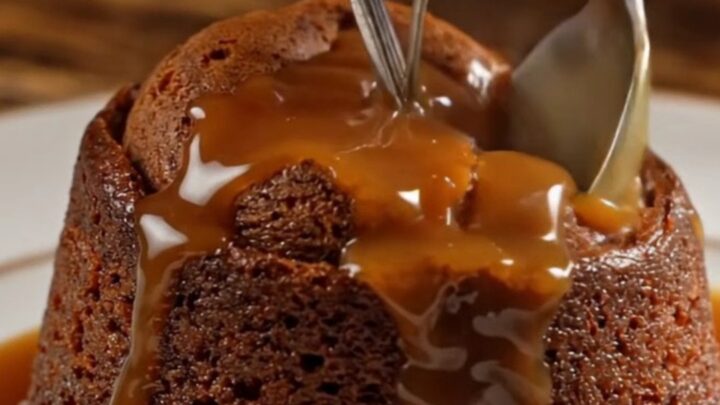
- Prep
- Cook
- Total
- Serves
- 6
Before you start
Before starting, ensure all ingredients are at room temperature, especially the eggs and butter, as this facilitates a smoother batter emulsion.
Prepare the workspace by gathering all measuring tools, the pudding molds, and a clean saucepan for the sauce.
Preheating the oven to 350°F (175°C) is essential, as the puddings require a consistent temperature to rise properly and achieve the desired springy texture without drying out during the baking process.
Ingredients at a glance (10)
- 200 g pitted Medjool dates
- 200 ml boiling tea
- 1 tsp baking soda
- 80 g butter
- 150 g muscovado sugar
- 2 eggs
- 180 g flour
- 200 g brown sugar
- 100 g butter
- 250 ml double cream
Instructions
Batter Preparation
- Prepare the date basePlace the pitted Medjool dates in a heatproof bowl and pour the boiling tea over them. Stir in the baking soda and let the mixture sit until the dates are soft and the tea has cooled slightly.Look for Dates should be very soft and easily mashed with a fork.Tip Ensure the tea is truly boiling to help soften the dates efficiently.
- Mix the batterIn a separate bowl, cream together the butter and muscovado sugar until smooth. Add the eggs one at a time, beating well after each. Fold in the flour and then incorporate the date and tea mixture into the batter.Look for The batter should be thick, smooth, and well-combined without any lumps of flour.Safe temperature 160°F (71°C) internal temperature (egg dishes)Tip Be careful not to overmix the batter once the flour is added to ensure a light texture.
The date mixture should be smooth and cooled, and the batter should be fully combined without any visible streaks of flour. The texture should be thick but pourable, ready to be divided into the molds for baking.
Baking the Sponges
- Bake the puddingsDivide the batter into individual pudding molds. Place the molds in an oven preheated to 350°F (175°C) and bake for 30 minutes until the sponges are dark, springy to the touch, and fully set.Look for The puddings will spring back when gently pressed and a toothpick should come out clean.Tip Grease the molds thoroughly before filling to ensure easy removal after baking.
The puddings should have risen well and be dark in color. They should feel springy and firm, indicating that the structure is set and the internal moisture has been perfectly balanced for a soft crumb.
Sauce and Assembly
- Make the toffee sauceWhile the puddings bake, combine the brown sugar, butter, and double cream in a saucepan. Simmer over medium heat, stirring constantly, until the sauce thickens into a rich, golden butterscotch consistency.Look for The sauce should be smooth, glossy, and thick enough to coat the back of a spoon.Tip Watch the sauce closely to prevent the sugar from burning during the simmering process.
- Assemble and serveOnce the puddings are baked, prick the tops with a fork. Pour the warm butterscotch sauce generously over the puddings, allowing it to soak into the sponge before serving warm.Look for The sauce should soak slightly into the sponge, creating a moist and decadent texture.Tip Serve immediately while warm for the best experience of the contrasting textures and flavors.
The butterscotch sauce should be a deep golden brown, smelling rich and caramelized. It should be thick enough to coat a spoon and pour smoothly over the warm puddings for immediate serving.
Common mistakes
A common mistake is failing to soak the dates long enough, which results in a lumpy batter and a less intense flavor. Additionally, overmixing the batter after adding the flour can lead to a tough, rubbery sponge rather than a light and airy one.
Finally, rushing the sauce by using too high a heat can cause the cream to curdle or the sugar to burn, which ruins the delicate butterscotch flavor profile entirely.
How to tell it’s done
The puddings are done when they are dark, firm to the touch, and spring back gently when pressed. A toothpick inserted into the center should come out clean, indicating the sponge is fully set.
The butterscotch sauce is finished when it has thickened to a glossy, pourable consistency that coats the back of a spoon. When serving, ensure the puddings are warm to allow the sauce to penetrate the sponge thoroughly.
- Egg dishes: 160°F (71°C) in the thickest part
Up next · Part 3 of 3
2 variations · storage & make-ahead · 3 answers · printable card
Tips, FAQ & printable recipe (Part 3)← Back to the ingredients (Part 1)