Dinner · Part 2 of 3: Instructions
Classic Skillet Pepper Steak for a Quick Dinner Step-by-step instructions
- Prep
- Cook
- Total
- Serves
- 4
Before you start
Before starting, ensure all ingredients are prepped and ready for immediate use. Slice the beef into thin, uniform strips against the grain to ensure tenderness; this is the most important step for the final texture. Slice the red bell peppers into consistent strips so they cook evenly.
Have the soy sauce measured and placed within arm's reach of the stove, as the cooking process moves very quickly once the skillet hits the heat. Having everything organized prevents the need to step away from the pan during the searing process.
Ingredients at a glance (3)
- 1 lb beef sirloin strips, sliced against the grain
- 2 large red bell peppers, sliced into strips
- 1/4 cup soy sauce
Instructions
Searing the Protein
- Sear the BeefHeat a large skillet over medium-high heat. Add the beef strips in a single layer and sear until deeply browned on all sides, ensuring the meat reaches an internal temperature of 145°F (63°C). Let the meat rest at least 3 minutes before serving.Look for The beef should be browned and sizzling with steam rising from the pan.Safe temperature 145°F (63°C) internal temperature (steaks, chops and roasts)Tip Do not crowd the pan, as this causes the meat to steam rather than sear.
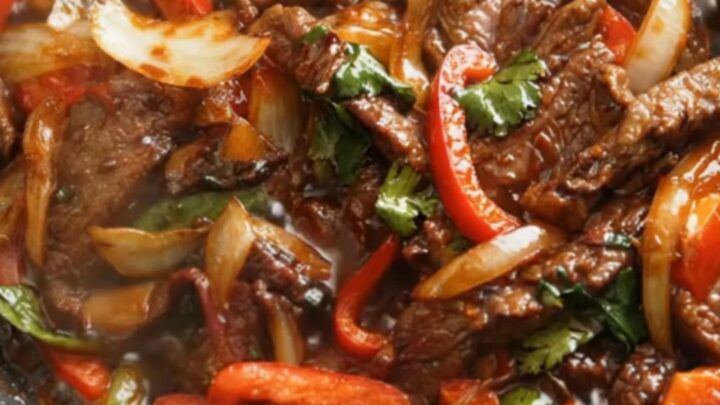
At the end of this phase, the beef should be deeply browned and sizzling. The aroma should be savory and toasted. Ensure the meat is not crowded in the pan, as this is the primary factor for achieving a good sear. If the pan appears to have too much liquid at the bottom, increase the heat slightly to help it evaporate before proceeding to add the vegetables.
Sautéing the Peppers
- Sauté the PeppersAdd the sliced red bell peppers to the skillet with the beef. Sauté for about 3 to 4 minutes, or until the peppers are tender-crisp and have picked up the flavorful drippings from the beef.Look for The peppers will soften slightly and become vibrant in color.Tip Maintain high heat to keep the peppers crisp rather than mushy.
The peppers should be vibrant in color and slightly softened, yet they should still offer a satisfying snap when bitten. They will have absorbed the rendered beef fat and flavor from the skillet. If they look too dry, a tiny drop of oil can be added, but usually, the residual fat from the beef is sufficient to coat the peppers perfectly during this stage.
Glazing and Finishing
- Glaze and ServePour the soy sauce over the mixture and toss continuously with tongs until the sauce reduces into a glossy, thick coating that clings to the beef and peppers. Remove from heat and serve immediately.Look for The sauce will thicken and turn into a shiny glaze covering every piece.Tip Allowing the meat to rest ensures maximum juiciness in every bite.
The final result is a dish where the sauce has reduced into a thick, syrupy glaze that clings to every strip of beef and pepper. It should smell intensely savory and look glossy.
Before transferring to a plate, verify that the pan is clean of any burnt bits. The dish is ready when the sauce coats the back of a spoon and the beef has rested for the required time.
Common mistakes
A common mistake is overcrowding the skillet, which causes the beef to steam in its own juices instead of searing, resulting in a gray, rubbery texture. Always cook the beef in batches if necessary to ensure each piece has enough space.
Another error is failing to reach the proper pan temperature before adding the meat; if the pan is not hot enough, the beef will stick and lose its moisture. Finally, do not overcook the peppers; they should retain a slight crunch to provide a textural contrast to the beef.
How to tell it’s done
The beef is considered done when it has achieved a deep, caramelized brown crust on the outside and reached an internal temperature of 145°F (63°C). Using an instant-read thermometer is the most reliable way to check for doneness.
The meat should feel tender when pierced with a fork. Because the strips are thin, they cook very rapidly, so keep a close eye on the pan to prevent the meat from becoming dry or tough. The final resting period is essential for redistributing the juices.
- Steaks, chops and roasts: 145°F (63°C) in the thickest part, then a 3-minute rest
Up next · Part 3 of 3
2 variations · storage & make-ahead · 3 answers · printable card
Tips, FAQ & printable recipe (Part 3)← Back to the ingredients (Part 1)