Dinner · Part 2 of 3: Instructions
Classic Saucy Spaghetti with Ground Beef Step-by-step instructions
- Prep
- Cook
- Total
- Serves
- 4
Before you start
Before beginning, ensure all ingredients are measured and ready. Bring a large pot of water to a rolling boil and have a colander nearby for draining the pasta. Having the skillet preheated and the meat ready to go allows for a smooth cooking process.
Ensure you have a pair of pasta tongs or a large fork to help with mixing the pasta and sauce once they are combined, as this makes the final tossing step much easier and more efficient.
Ingredients at a glance (3)
- 1 lb ground beef
- 24 oz tomato sauce
- 1 lb spaghetti
Instructions
Browning the Beef
- Cook the ground beefPlace the skillet over medium-high heat. Add the ground beef and cook, breaking it apart with a wooden spoon, until browned and cooked through to an internal temperature of 160°F (71°C).Look for The meat should be browned and no longer pink.Safe temperature 160°F (71°C) internal temperature (ground meat)Tip Drain any excess fat from the skillet if desired before adding the sauce.
At the end of this phase, the ground beef should be deeply browned and fragrant. You will notice that the fat has rendered and the meat is broken into small, uniform crumbles. It is crucial to ensure the beef is cooked through to 160°F (71°C) and that most of the excess moisture has evaporated before adding the tomato sauce, as this creates the foundation for a rich, flavorful meal.
Developing the Sauce
- Prepare the saucePour the tomato sauce into the skillet with the browned beef. Stir well to combine and let the mixture simmer on low heat for about ten minutes to allow the flavors to meld together.Look for The sauce should be bubbling gently and thickened.Tip Keep the sauce warm on low while the pasta finishes cooking.
The sauce is ready when it has simmered and thickened slightly, appearing darker and more concentrated. It should smell aromatic, with the savory scent of the beef infusing the tomato base. Check that the sauce is not too watery; if it seems thin, continue to simmer for an additional few minutes until it reaches a consistency that will cling well to the pasta strands.
Combining and Finishing
- Boil and combine pastaBring a large pot of salted water to a boil. Cook the spaghetti according to the package directions until al dente. Drain the pasta and toss it directly into the skillet with the meat sauce, ensuring every strand is coated.Look for The pasta should be tender but firm to the bite.Tip Save a small splash of pasta water to help thin the sauce if it becomes too thick.
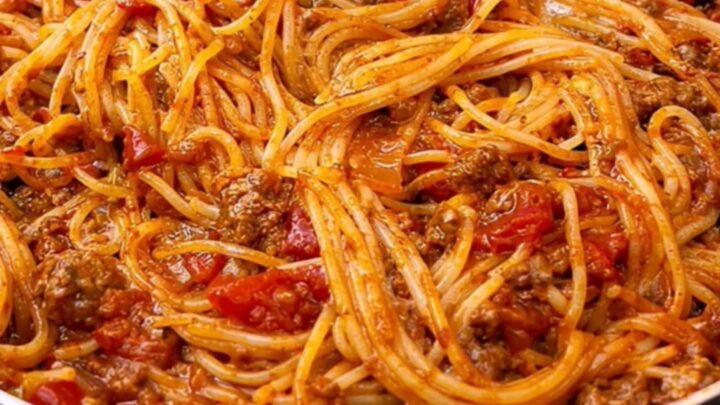
The final dish should look vibrant and cohesive, with the spaghetti strands completely coated in the glossy meat sauce. When you lift the pasta with tongs, it should pull away in a steaming, uniform heap.
Ensure that the pasta is hot throughout and that the sauce has thoroughly coated the noodles before removing the skillet from the heat to serve immediately while the dish is at its best.
Common mistakes
Avoid overcooking the pasta, as it will continue to soften slightly when tossed with the hot sauce. If the pasta is boiled past the al dente stage, it can become mushy and lose its ability to hold the sauce properly.
Another common mistake is failing to brown the meat sufficiently; ensure the beef develops a deep, dark color before adding the tomato sauce, as this browning is responsible for the primary flavor profile of the dish.
How to tell it’s done
The ground beef is fully cooked when it reaches an internal temperature of 160°F (71°C) and no longer displays any pink color. The spaghetti is done when it reaches an al dente texture, meaning it is tender but still offers a slight resistance when bitten.
Once the pasta is tossed with the sauce, it should appear glossy and well-coated, with no pools of liquid at the bottom of the skillet or on the serving plate.
- Ground meat: 160°F (71°C) in the thickest part
Up next · Part 3 of 3
2 variations · storage & make-ahead · 3 answers · printable card
Tips, FAQ & printable recipe (Part 3)← Back to the ingredients (Part 1)