Dinner · Part 2 of 3: Instructions
Classic Million Dollar Meat Lasagna Step-by-step instructions
- Prep
- Cook
- Total
- Serves
- 8
Before you start
Before beginning the assembly, ensure all ingredients are at room temperature to promote even cooking. Preheat your oven to 375°F (190°C) well in advance so it reaches the target temperature. Have your baking dish, spatula, and mixing bowls ready on the counter.
If the lasagna noodles are boiled, drain them thoroughly and lay them out on a clean kitchen towel to prevent them from sticking together. This preparation minimizes stress during the layering process and ensures a smooth workflow.
Ingredients at a glance (6)
- 1 lb meat sauce base
- 24 oz marinara sauce
- 15 oz ricotta cheese
- 1/2 cup grated parmesan cheese
- 12 count lasagna noodles, cooked
- 3 cups shredded mozzarella cheese
Instructions
Preparation of components
- Prepare the meat sauceHeat a large skillet over medium-high heat. Add the meat sauce base and cook, breaking it apart with a spatula, until browned and cooked through. Ensure the internal temperature reaches at least 160°F (71°C). Stir in the marinara sauce and simmer for 10 minutes to allow the flavors to meld together properly.Look for The meat is browned and the sauce is simmering gently.Safe temperature 160°F (71°C) internal temperature (ground meat)Tip Do not rush the browning process as it develops the depth of flavor.
- Prepare the cheese mixtureIn a medium mixing bowl, combine the ricotta cheese and grated parmesan cheese. Stir until the mixture is uniform and smooth. This filling creates the creamy layer that balances the acidity of the tomato sauce.Look for The ricotta and parmesan are fully incorporated.Tip Season with a pinch of salt if desired, but check the saltiness of the parmesan first.
The meat sauce should be rich, fragrant, and simmering with a deep red color. The ricotta mixture must be smooth, creamy, and well-mixed. Ensure the meat base has reached the safe internal temperature of 160°F (71°C). Once these components are ready, you are prepared to begin the assembly phase. The kitchen should smell savory and slightly herby, indicating that the sauce has developed enough flavor.
Layering the dish
- Assemble the lasagnaPreheat your oven to 375°F (190°C). In a 9x13 inch baking dish, spread a thin layer of the meat sauce at the bottom. Arrange a layer of cooked lasagna noodles over the sauce. Spread a portion of the ricotta mixture over the noodles, then top with a layer of meat sauce and a sprinkle of shredded mozzarella. Repeat these layers until all ingredients are used, finishing with a generous layer of mozzarella cheese on top.Look for The dish is layered evenly and topped with cheese.Tip Use a light hand when spreading the ricotta to avoid tearing the noodles.
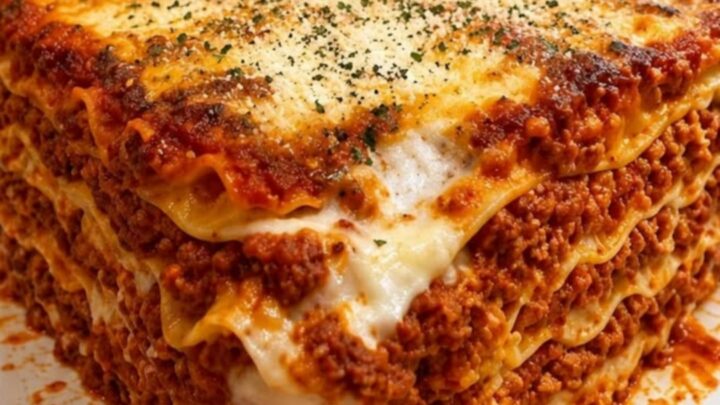
The dish should look structured, with clear, defined layers of meat, cheese, and noodles. Ensure the sauce covers the corners of the pan to prevent the noodles from drying out during the baking process.
The final layer of mozzarella should be evenly spread to cover the entire surface, providing a uniform base for that perfect golden-brown crust. Check that the noodles are not overlapping excessively to ensure consistent cooking throughout the entire dish.
Final bake and rest
- Bake and serveCover the baking dish with aluminum foil and bake for 25 minutes. Remove the foil and bake for an additional 15-20 minutes, or until the cheese is bubbly and golden brown. Let the lasagna rest for 15 minutes before slicing and serving. This resting period is essential to ensure clean, beautiful layers that hold their shape on the plate.Look for The cheese is golden and bubbling.Tip Do not skip the resting time, as it helps the lasagna set.
The lasagna is finished when the cheese is bubbling and has achieved a beautiful golden color. After the oven timer goes off, the dish needs to rest on a wire rack or a heat-proof surface for fifteen minutes. This phase is crucial for the structure of the lasagna. When the resting time is complete, the dish should look firm and stable, ready to be sliced into clean, professional-looking squares for serving.
Common mistakes
A common mistake is adding too much sauce or liquid, which can lead to a runny lasagna that does not hold its shape. Always spread the sauce in a thin, even layer.
Another oversight is failing to let the lasagna rest; slicing it immediately out of the oven causes the layers to collapse and slide. Finally, avoid using low-quality cheeses that contain anti-caking agents, as these prevent the cheese from melting into that desired gooey, cohesive crust.
How to tell it’s done
The lasagna is done when the top layer of mozzarella cheese is melted, golden brown, and bubbling across the entire surface. Use a knife or a skewer to check the center of the dish; it should slide through the layers with minimal resistance, indicating that the noodles are tender and the sauce is hot.
The internal temperature of the dish should reach at least 160°F (71°C) to ensure the meat and cheese components are thoroughly heated through.
- Ground meat: 160°F (71°C) in the thickest part
Up next · Part 3 of 3
2 variations · storage & make-ahead · 3 answers · printable card
Tips, FAQ & printable recipe (Part 3)← Back to the ingredients (Part 1)