Dinner · Part 2 of 3: Instructions
Classic Herb Butter Stuffing Bake for Easy Holiday Sides Step-by-step instructions
- Prep
- Cook
- Total
- Serves
- 8
Before you start
Before you begin, ensure your workspace is clean and all ingredients are measured and ready. If you are using fresh bread, cut it into uniform one-inch cubes and toast them in the oven until dry.
Chop the celery and onions into fine, consistent pieces to ensure they cook through evenly. Having everything prepped before you start the assembly process makes the actual cooking steps smooth and efficient, allowing you to focus on the final results.
Ingredients at a glance (7)
- 10 cups seasoned bread cubes
- 1 cup diced celery
- 1 cup diced onion
- 2 cups chicken broth
- 1/4 cup melted butter
- 1 tsp dried sage
- 3 tbsp butter, cut into small pats
Instructions
Assembling the Bread and Aromatics
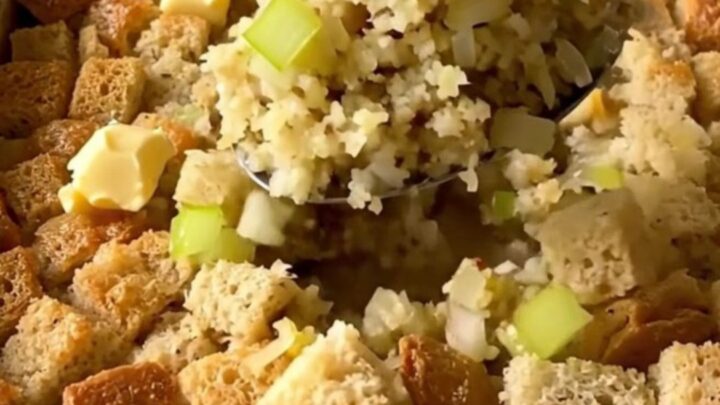
- Assemble the basePreheat the oven to 350°F (175°C). Place the seasoned bread cubes into a large rectangular baking dish. Scatter the diced celery and onion evenly over the bread cubes to ensure every serving gets a bit of crunch and flavor.Look for The bread should be evenly distributed in the pan without being overly packed.Tip Ensure the bread cubes are fully dried out before starting to prevent the stuffing from becoming mushy.
At the end of this phase, the bread cubes should be evenly spread across the baker. The diced celery and onions are distributed throughout, providing a nice visual contrast against the bread.
Ensure the pan is not overfilled, as this can affect how the liquid penetrates the bread during the next step. The mixture should look organized and ready to receive the flavorful liquid base.
Incorporating the Herb Infusion
- Add liquids and butterIn a glass pitcher, whisk together the chicken broth, melted butter, and dried sage until well combined. Slowly pour the liquid mixture over the bread cubes, ensuring it soaks in evenly. Top the stuffing with the small pats of butter for extra richness.Look for The bread should look moist but not swimming in liquid.Tip Pour the liquid slowly to avoid creating soggy pockets at the bottom of the dish.
Once the broth mixture is poured over, the bread will begin to soften as it absorbs the liquid. The butter pats placed on top should be evenly spaced. The dish should look moist but not saturated. If you notice any dry patches, gently nudge the bread around with a spoon to ensure every cube is lightly coated in the savory broth mixture.
Achieving the Golden Crust
- Bake to perfectionPlace the baking dish in the preheated oven and bake for 35 to 40 minutes, or until the top is crisp and golden brown. The edges should be bubbling slightly. Remove from the oven and allow it to rest for 5 minutes before serving.Look for The top should be golden brown and crisp, with a pleasant aroma of toasted bread and herbs.Tip Cover the dish loosely with foil if the top browns too quickly before the center is heated through.
After baking, the stuffing will have transformed into a beautiful, golden-brown dish. The edges will be crisp and slightly browned, while the center remains soft and aromatic. The butter pats will have melted into the bread, creating a rich sheen on the surface. Check that the aromatics are tender and the stuffing is heated throughout before removing it from the oven.
Common mistakes
Avoid over-soaking the bread, as this leads to a soggy, heavy texture that lacks the signature contrast of crisp edges. Another common mistake is cutting the aromatics too large; finely diced celery and onion ensure they soften perfectly within the short baking time.
Finally, do not skip the five-minute resting period, as this allows the moisture to redistribute, giving the stuffing a better consistency for scooping and serving.
How to tell it’s done
The stuffing is done when the top is a deep golden brown and the edges appear crisp and slightly toasted. When you insert a serving spoon into the center, it should feel moist and tender, not wet or mushy.
The aroma of toasted bread and herbs should be fragrant throughout the kitchen. If you are unsure, gently press the center; it should feel set and firm, signaling that the liquid has been fully absorbed.
Up next · Part 3 of 3
2 variations · storage & make-ahead · 3 answers · printable card
Tips, FAQ & printable recipe (Part 3)← Back to the ingredients (Part 1)