Dinner · Part 2 of 3: Instructions
Classic Herb and Garlic Pot Roast for Easy Weeknight Dinners Step-by-step instructions
- Prep
- Cook
- Total
- Serves
- 6
Before you start
Before beginning, ensure the beef is at room temperature for about 30 minutes to ensure even cooking. Peel and chop the carrots and quarter the onions into uniform sizes to ensure they cook evenly. Have your roasting pan and a heavy skillet ready.
Preheat the oven to 325°F (163°C) so it is fully heated by the time the assembly phase is complete. Ensure your rosemary is rinsed and dried, and your garlic is peeled and smashed. Having all ingredients prepped and organized will make the searing and assembly process much smoother and more efficient.
Ingredients at a glance (7)
- 3 lb beef chuck roast
- 1 lb baby potatoes
- 1 lb carrots, peeled and cut into chunks
- 2 medium yellow onions, quartered
- 4 sprigs fresh rosemary
- 6 cloves garlic, smashed
- 2 cups beef broth
Instructions
Searing the Beef
- Sear the beefHeat a large heavy-bottomed skillet over medium-high heat. Once hot, place the seasoned beef chuck roast into the pan. Sear the meat on all sides until a deep, dark brown crust forms, ensuring the moisture is locked in. Remove the beef from the skillet and set it aside on a plate while you prepare the roasting dish.Look for The beef should have a deep mahogany brown color on all sides.Tip Do not crowd the pan, as this prevents proper browning and creates steam instead of a sear.
The beef should be seared until it has a deep, dark brown crust on all sides. This phase is complete when the meat is caramelized and no raw surfaces remain. The pan should be hot, and the meat should sizzle upon contact. The smell should be deeply savory, indicating the start of the flavor development process.
Assembling the Roast
- Assemble the roastPreheat your oven to 325°F (163°C). Place the seared beef into the center of a large roasting dish. Arrange the baby potatoes, carrot chunks, and quartered yellow onions around the meat. Tuck the smashed garlic cloves and fresh rosemary sprigs into the gaps between the vegetables and the roast to infuse the dish with flavor during the long cooking process.Look for The vegetables should be evenly distributed around the meat in the baking dish.Tip Use a heavy roasting pan or a large Dutch oven to ensure even heat distribution.
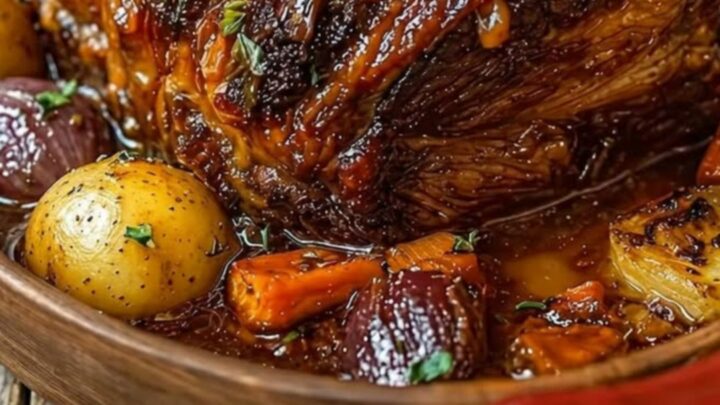
The roasting dish should be arranged with the beef in the center, surrounded by an even layer of potatoes, carrots, and onions.
The garlic and rosemary should be tucked into the gaps to ensure they release their aromatics into the broth. The dish should look colorful and well-balanced, ready to be covered and placed into the preheated oven.
Slow Cooking
- Bake and finishPour the beef broth carefully into the bottom of the roasting dish, avoiding the top of the beef to keep the crust intact. Cover the dish tightly with foil or a lid and bake for 3 hours. The roast is ready when the internal temperature reaches 145°F (63°C). Remove from the oven and let the roast rest for at least 10 minutes before slicing or pulling apart with a fork to serve.Look for The beef is fork-tender and pulls apart easily with minimal resistance.Safe temperature 145°F (63°C) internal temperature (steaks, chops and roasts)Tip Allowing the meat to rest is crucial for retaining the juices and ensuring a succulent texture.
After three hours in the oven, the house should be filled with the rich aroma of roasted meat and herbs. The broth will have darkened, and the vegetables will be tender. Check that the beef is fork-tender and has reached an internal temperature of 145°F (63°C) before removing it from the oven to begin the resting period.
Common mistakes
A common mistake is failing to sear the beef properly. A light-colored surface lacks the deep flavor development that happens when the meat is browned adequately.
Another error is adding too much liquid; the liquid should only come halfway up the meat, not submerge it, to allow the top to stay caramelized. Finally, skipping the resting time will result in a loss of juices, as they will flow out immediately upon slicing.
How to tell it’s done
The roast is considered done when the meat is fork-tender, meaning it yields easily to light pressure from a fork. Use a meat thermometer to check the center of the roast; it should register at least 145°F (63°C).
The vegetables should be soft and easily pierced with a knife, and the broth should have reduced slightly, becoming a rich, flavorful jus that coats the ingredients.
- Steaks, chops and roasts: 145°F (63°C) in the thickest part, then a 3-minute rest
Up next · Part 3 of 3
2 variations · storage & make-ahead · 3 answers · printable card
Tips, FAQ & printable recipe (Part 3)← Back to the ingredients (Part 1)