Dinner · Part 2 of 3: Instructions
Classic Glazed Meatloaf for a Hearty Dinner Step-by-step instructions
- Prep
- Cook
- Total
- Serves
- 6
Before you start
Before you start, ensure all your ingredients are measured and ready. Preheat your oven to 375°F (190°C) so it is hot and steady when the loaf is shaped.
Have your baking sheet lined with parchment paper or foil for easy cleanup, and prepare your glaze with a pastry brush close by. Keeping your workspace clean and organized will make the process much more efficient and enjoyable.
Ingredients at a glance (2)
- 2 lb meatloaf mix
- 1 cup sweet ketchup glaze, divided
Instructions
Forming the loaf
- Shape the meatloafPlace the prepared meatloaf mixture onto a rimmed baking sheet. Gently shape the mixture with hands into an even, compact oval loaf, ensuring the thickness is uniform from end to end so it bakes evenly.Look for The loaf holds a neat, solid rectangular or oval form without large cracks.Tip Shape with a light touch to keep the final texture tender rather than dense.
The meatloaf mixture should be uniform and easy to shape on the flat sheet. It should look moist and hold together well without feeling like a heavy, dense ball. Ensure the edges are smooth and even for consistent baking in every portion.
Baking and glazing
- Apply glaze and bakeUsing a pastry brush, generously coat the top and sides of the shaped meatloaf with the sweet ketchup glaze. Transfer to an oven preheated to 375°F (190°C) and bake until bubbling at the edges and a meat thermometer inserted into the center reads 160°F (71°C).Look for The glaze turns thick and glossy while juices sizzle vigorously around the base.Safe temperature 160°F (71°C) internal temperature (ground meat)Tip Brush an extra layer of glaze during the last 15 minutes for a deeper gloss.
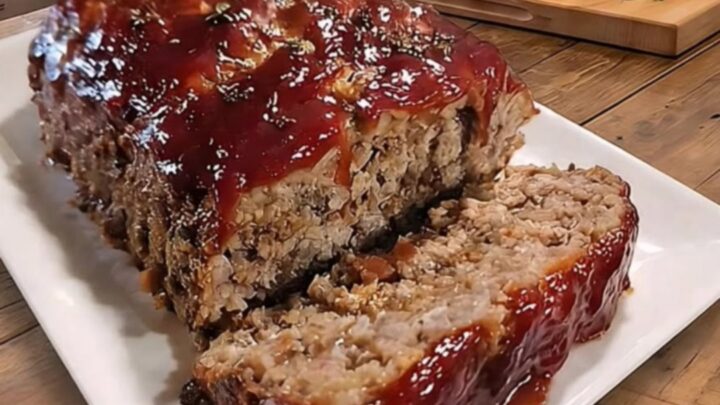
The meatloaf should be bubbling at the edges, and the glaze should look thick, shiny, and deeply colored. The kitchen should smell savory and slightly sweet as the glaze caramelizes and the meat juices begin to sizzle on the baking sheet.
Resting and slicing
- Rest and carveRemove the baking sheet from the oven and let the meatloaf rest undisturbed on the warm tray for 10 minutes. Carve the rested loaf into thick slices using a sharp chef knife and transfer to a serving platter.Look for Steam releases gently upon slicing and the juices stay retained inside the meat.Tip Use a smooth, single slicing stroke to maintain clean edges on each portion.
The loaf should feel firm to the touch and the surface should be slightly set. After resting, the slices should hold their shape perfectly when cut, revealing a tender, uniform interior without any excess liquid pooling on the platter.
Common mistakes
A common mistake is overcompacting the loaf when shaping, which leads to a dense, rubbery texture instead of a tender one. Always shape with a light hand until just uniform.
Another frequent error is skipping the resting period; if you slice into the loaf immediately, the juices will run out, leaving the meat dry.
Finally, avoid using high heat, which can burn the sugar in the glaze before the center of the meatloaf has reached a safe temperature.
How to tell it’s done
The meatloaf is perfectly done when it reaches an internal temperature of 160°F (71°C) on a digital meat thermometer inserted into the center. At this stage, the center will be firm but still juicy, and the glaze will have caramelized into a dark, glossy finish.
Using a meat thermometer is the most reliable way to check, as visual cues can be misleading. Once it hits this temperature, remove it from the oven to prevent the meat from becoming dry or tough.
- Ground meat: 160°F (71°C) in the thickest part
Up next · Part 3 of 3
2 variations · storage & make-ahead · 3 answers · printable card
Tips, FAQ & printable recipe (Part 3)← Back to the ingredients (Part 1)