Desserts · Part 2 of 3: Instructions
Silky French Crème Caramel Flan with Amber Caramel Step-by-step instructions
- Prep
- Cook
- Total
- Serves
- 6
Before you start
Before starting, read through the entire recipe and gather all ingredients. Measure the sugar, milk, and vanilla. Have the ramekins and a roasting pan ready.
Bring the eggs to room temperature by setting them on the counter for 30 minutes, which helps them incorporate more smoothly. Preheat the oven to 325°F (163°C) when you're ready to bake. Prepare a kettle or pot of hot water for the water bath.
Ingredients at a glance (7)
- 150 g granulated sugar
- 2 tbsp water
- 4 large eggs
- 3 large egg yolks
- 120 g granulated sugar
- 600 ml whole milk
- 1 tsp vanilla extract
Instructions
Caramel and Custard
- Make the CaramelPlace the 150 g sugar and water in a small, heavy saucepan over medium heat. Cook without stirring until the sugar melts and turns a deep amber color, swirling the pan occasionally for even browning. Immediately pour the hot caramel into six ramekins, tilting each to coat the bottom and a bit up the sides. Set aside to cool and harden.Look for The caramel is a deep amber color, like dark honey, and smells nutty.Tip Watch carefully; caramel can go from amber to burnt quickly. Swirl, don't stir, to avoid crystallization.
- Infuse the MilkPour the 600 ml whole milk into a medium saucepan. Add the vanilla extract and warm over medium heat until steam rises and small bubbles appear around the edges. Do not let it boil. Remove from heat and set aside for a few minutes to cool slightly.Look for The milk is steaming but not boiling, with a faint vanilla aroma.Tip Cooling the milk prevents it from cooking the eggs too quickly when combined.
- Whisk the Custard BaseIn a large bowl, whisk the 4 whole eggs and 3 egg yolks with the 120 g sugar until well combined and slightly pale. Slowly pour the warm milk into the egg mixture, whisking constantly to avoid scrambling the eggs. Continue whisking until the sugar is fully dissolved and the mixture is smooth.Look for The mixture is smooth, pale yellow, and slightly frothy on top.Tip Whisking continuously is key; a slow stream of milk prevents curdling.
- Strain the CustardPlace a fine-mesh strainer over a large liquid measuring cup or bowl. Pour the custard through the strainer to remove any lumps or bits of cooked egg. This ensures a perfectly silky texture. Let the custard rest for a few minutes so any air bubbles rise to the surface.Look for The strained custard is smooth and free of any solids.Tip Straining is non-negotiable for the silkiest flan; it also removes foam.
At the end of this phase, you'll have a deep amber caramel coating the bottom of each ramekin, and a smooth, pale yellow custard mixture ready to pour. The caramel should smell nutty and look like dark honey.
The custard should be free of lumps and have a uniform color. The milk should be warm but not hot, and the eggs should be fully incorporated without any streaks of egg white.
Water Bath and Bake
- Fill the RamekinsHeat the oven to 325°F (163°C). Carefully pour the custard into the caramel-lined ramekins, dividing evenly. If there are any air bubbles on the surface, pop them with a toothpick or the back of a spoon. Place the ramekins in a deep roasting pan.Look for The ramekins are filled almost to the top, with a thin layer of caramel at the bottom.Tip Fill the ramekins evenly; a ladle helps control the pour.
- Create the Water BathPlace the roasting pan on the oven rack. Carefully pour hot water into the pan until it reaches halfway up the sides of the ramekins. The water should be hot but not boiling. Loosely cover the pan with aluminum foil, ensuring it doesn't touch the custard.Look for The water bath surrounds the ramekins, creating a gentle, even heat.Tip Hot water from the tap is fine; boiling water can cook the edges too fast.
- Bake the CustardsBake for 45 minutes, or until the custards are set but still have a slight wobble in the center when gently shaken. The edges will look firm, and the center will be just barely jiggly. Remove the pan from the oven and carefully lift the foil.Look for The custards are set around the edges, with a gentle wobble in the very center.Safe temperature 160°F (71°C) internal temperature (egg dishes)Tip Check at 40 minutes; ovens vary. The wobble should be like gelatin, not liquid.
- Cool and ChillLet the ramekins cool in the water bath for about 30 minutes. Remove them from the water and let them cool completely on a wire rack. Then cover each ramekin with plastic wrap and refrigerate for at least 6 hours, or overnight, until thoroughly chilled.Look for The custards are completely cool and firm to the touch.Tip Chilling is essential for clean unmolding and the best texture.
The ramekins are nestled in a hot water bath, covered loosely with foil. After 45 minutes, the custards are set around the edges with a gentle wobble in the center. They should not be bubbling or look curdled. The kitchen smells of warm vanilla and caramel. The tops are smooth and lightly golden. Carefully remove the pan from the oven and let the custards cool.
Chill and Unmold
- Unmold the FlansRun a thin knife around the edge of each ramekin, pressing gently against the side to loosen the custard. Place a serving plate over the ramekin and, in one swift motion, invert the ramekin onto the plate. Let it sit for a few seconds, then gently lift the ramekin to release the flan and its caramel sauce.Look for The flan releases cleanly, with a pool of amber caramel surrounding it.Tip If the flan doesn't release, give the ramekin a gentle shake or dip the bottom in warm water for a few seconds.
- Serve and EnjoyServe immediately, with the caramel sauce spooned over the top. The flan should be silky, creamy, and glossy. Slice or spoon directly from the plate.Look for The flan is glossy, trembling slightly, with a rich caramel sauce.Tip For the cleanest slices, use a sharp, thin knife and wipe it between cuts.
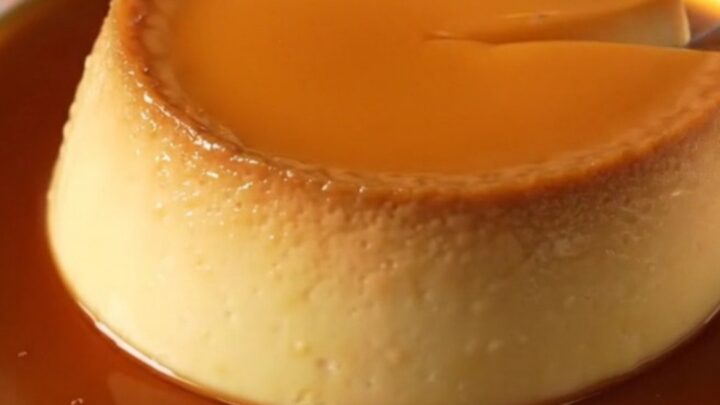
After at least 6 hours in the refrigerator, the flans are fully chilled and firm. When unmolded, they release cleanly, revealing a glossy, golden custard with a pool of dark amber caramel sauce. The texture is silky and smooth, with no bubbles or cracks. The flan should tremble slightly but hold its shape. The caramel sauce is fluid and fragrant.
Common mistakes
One common mistake is overbaking, which makes the custard rubbery and full of holes. Watch the time and check early. Another is curdling the eggs by adding hot milk too quickly; always temper the eggs by adding the warm milk in a slow stream while whisking constantly.
Skipping the strainer can leave lumps in the custard, so never skip it. Finally, unmolding too early can cause the flan to break; make sure it's thoroughly chilled.
How to tell it’s done
The flan is done when the edges are set and the center has a gentle wobble, like gelatin. A knife inserted near the edge should come out clean, while the center should still be slightly soft.
The internal temperature of the custard should reach 160°F (71°C) to ensure the eggs are fully cooked. If the center is still very liquid, bake for a few more minutes and check again. The flan will continue to set as it cools.
- Egg dishes: 160°F (71°C) in the thickest part
Up next · Part 3 of 3
4 variations · storage & make-ahead · 5 answers · printable card
Tips, FAQ & printable recipe (Part 3)← Back to the ingredients (Part 1)