Dinner · Part 2 of 3: Instructions
Tartiflette: Bacon & Reblochon Potato Bake Step-by-step instructions
- Prep
- Cook
- Total
- Serves
- 6
Before you start
Before starting, parboil the potatoes: peel them if you like, then slice into 1/4-inch rounds and simmer in salted water for 5 to 7 minutes, until just tender but still firm. Drain well and set aside. Slice the onions thinly and halve the Reblochon horizontally.
Measure the wine and cream, and have the bacon lardons ready. Heat the oven to 400°F (200°C) before you begin cooking the bacon. This is a one-pan dish, so having everything prepped and within reach makes the process smooth and enjoyable.
Ingredients at a glance (7)
- 200 g thick-cut smoked bacon lardons
- 2 tbsp unsalted butter
- 2 yellow onions, thinly sliced
- 100 ml dry white Savoie wine
- 800 g waxy potatoes, parboiled and sliced
- 50 ml heavy cream
- 450 g Reblochon cheese wheel, halved horizontally
Instructions
Building the Flavor Base
- Cook the Bacon and OnionsHeat a 10-inch cast-iron skillet over medium heat. Add the bacon lardons and cook, stirring occasionally, until crisp and browned, about 6 to 8 minutes. Transfer the lardons to a plate with a slotted spoon, leaving the rendered fat in the skillet. Add the butter to the skillet, then the sliced onions. Cook, stirring often, until the onions are deeply golden and caramelized, about 12 to 15 minutes. Return the bacon to the skillet.Look for The onions should be soft, golden, and sweet-smelling, with the bacon crisp.Tip Don't rush the onions — low and slow brings out their natural sugars.
- Deglaze with White WinePour the dry white wine into the skillet with the onions and bacon. Scrape up any browned bits from the bottom of the pan. Let the wine bubble and reduce by half, about 2 to 3 minutes, until the liquid is almost syrupy and the alcohol has cooked off.Look for The wine should be mostly evaporated, leaving a glossy glaze on the onions.Tip The wine adds acidity that balances the rich cheese and cream.
The bacon should be crisp and browned, with rendered fat in the skillet. The onions will be soft, translucent, and just beginning to take on golden edges, filling the kitchen with a sweet, smoky aroma.
The wine should sizzle as it hits the hot pan, then reduce to a glossy glaze that coats the onions and bacon. The mixture should look moist but not soupy, with the wine's alcohol cooked off and its acidity brightening the whole pan.
Assembling the Gratin
- Fold in Potatoes and CreamAdd the parboiled sliced potatoes to the skillet. Fold gently with a wooden spoon to combine with the bacon and onions. Pour the heavy cream over the potatoes and fold again until every slice is lightly coated. Spread the mixture into an even layer, pressing down lightly.Look for The potatoes should be evenly coated and nestled together in the skillet.Tip Waxy potatoes hold their shape during baking, giving the gratin a nice texture.
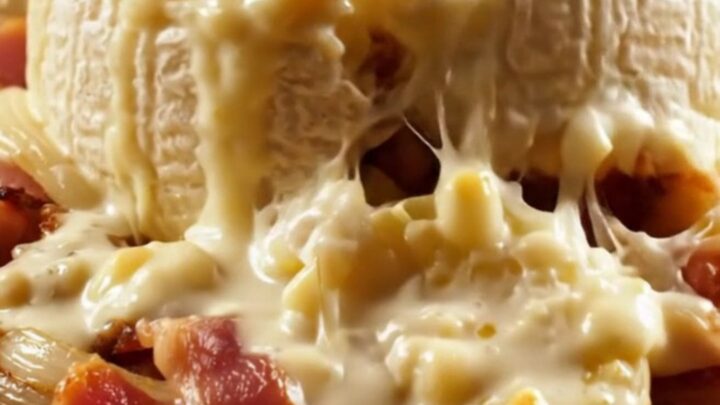
- Top with Reblochon CheesePlace the halved Reblochon cheese wheel over the potato mixture, rind side up. Press it gently so it sits snugly on top. The cheese will melt and spread as it bakes, covering the potatoes completely.Look for The cheese wheel should cover most of the surface, with rind facing up.Tip Leaving the rind on adds a rustic texture and earthy flavor.
The potatoes should be evenly coated with cream, each slice glistening and nestled among the bacon and onions. The Reblochon wheel sits on top like a rustic lid, its rind a soft beige with a creamy interior exposed. The skillet looks inviting, with cheese and potatoes ready to transform in the oven. Pressing the potatoes down slightly ensures a compact, even layer that will bake into a cohesive gratin.
Baking to a Blistered Finish
- Bake Until Blistered and GoldenHeat the oven to 400°F (200°C). Place the skillet in the oven and bake for 25 minutes, until the cheese is melted, bubbling, and the top is blistered and browned in spots. The edges of the potatoes should be crisp and golden.Look for The cheese should be molten and the top crackled with deep brown spots.Tip For extra browning, switch to broil for the last 2 minutes, watching closely.
- Rest and ServeRemove the skillet from the oven and let the tartiflette rest for 5 minutes. This allows the cheese to set slightly so it doesn't run off the spoon. Serve hot, scooping through the blistered cheese rind to lift out the cheesy, wine-scented potatoes.Look for The cheese should be creamy and stretchy, not runny.Tip Serving straight from the skillet keeps it warm and rustic.
After 25 minutes, the cheese should be fully melted and bubbling around the edges, with the top blistered into a golden-brown canopy. The aroma is intensely savory — toasted cheese, smoky bacon, and sweet onions. The edges of the potatoes should be crisped and browned, and the whole skillet should look like it just came from a mountain chalet. Letting it rest for 5 minutes allows the cheese to settle without becoming runny.
Common mistakes
A common mistake is using floury potatoes, which turn to mush and make the gratin gluey. Stick with waxy varieties. Another is not caramelizing the onions enough — they need time to become sweet and golden, so don't rush on high heat.
Overcooking the bacon until it's too hard can make it chewy; cook until crisp but still a little tender. Also, avoid pouring in all the wine at once if the pan is very hot — it can splatter. Add it slowly and scrape up the fond. Finally, don't skip the resting time after baking; it helps the layers set.
How to tell it’s done
The tartiflette is done when the cheese is fully melted and bubbling around the edges, and the top is blistered and browned in spots — a deep mahogany color. The potatoes should be tender when pierced with a knife, and the whole skillet should be fragrant with bacon, wine, and melted cheese.
Let it rest 5 minutes before serving so the cheese sets slightly, making it easier to scoop. If you want a more deeply browned crust, finish under the broiler for 1 to 2 minutes, watching closely to avoid burning.
Up next · Part 3 of 3
4 variations · storage & make-ahead · 5 answers · printable card
Tips, FAQ & printable recipe (Part 3)← Back to the ingredients (Part 1)