Dinner · Part 1 of 3: Ingredients
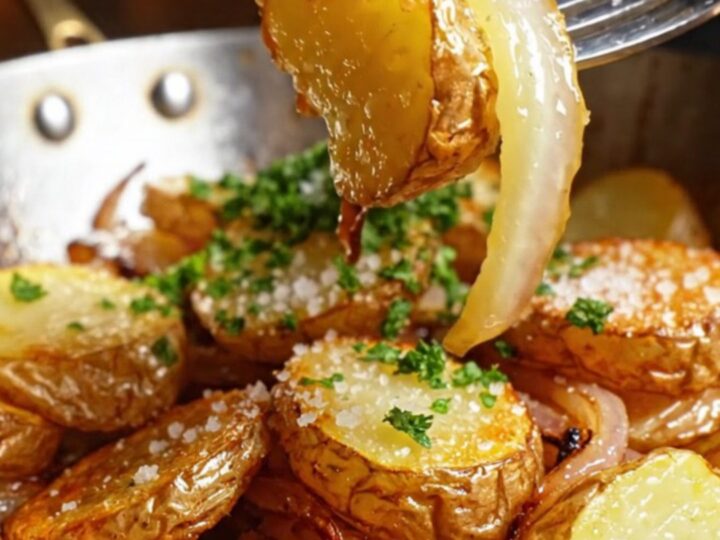
Crispy Pommes Lyonnaise with Caramelized Onions
- Prep
- Cook
- Total
- Serves
- 4
This is the side dish that turns simple potatoes and onions into something golden and unforgettable. Pommes Lyonnaise is a French bistro classic: thin potato coins with crackling crusts, folded through sweet, jammy caramelized onions, finished with fresh parsley and a whisper of salt.
It’s elegant enough for a dinner party but easy enough for a weeknight. The method is straightforward—parboil, slice, caramelize, then crisp—but the result is pure comfort with a touch of finesse.
Pommes Lyonnaise (pronounced pum lee-oh-nez) is a beloved French bistro side that pairs beautifully with roast chicken, steak, or simply on its own. The dish relies on two humble ingredients—potatoes and onions—but the technique transforms them into something special.
Parboiling the potatoes ensures they cook through evenly, while the final sauté in clarified butter creates a golden, shatteringly crisp exterior. The onions are cooked low and slow until they become sticky, sweet, and deeply caramelized, adding a luxurious contrast in texture and flavor. This recipe brings the bistro experience home with clear steps and reliable results.
Ingredients
- 1 1/2 lb waxy Yukon Gold potatoes (about 700 g)
- 2 tbsp unsalted butter (30 g)
- 2 yellow onions, thinly sliced
- 3 1/2 tbsp clarified butter (50 g)
- 2 tbsp fresh flat-leaf parsley, chopped
- fleur de sel, for finishing, to taste
Why this recipe works
The two-step cooking method is the secret to perfect pommes lyonnaise. Parboiling the potatoes in their skins first cooks the interior without browning the exterior.
This means the coins can then be sliced and sautéed at high heat without the risk of undercooked centers or burnt edges. The result is a potato that is creamy and tender on the inside while developing a substantial, crunchy crust on both flat faces.
Clarified butter is another key to success. Because the milk solids have been removed, clarified butter has a higher smoke point than regular butter, allowing the potatoes to sear at a higher temperature without burning.
This produces a cleaner, more even golden-brown crust. The slow caramelization of the onions in regular butter builds a deep, sweet flavor that balances the savory potatoes—a harmony of textures and tastes.
Notes and substitutions
Choose waxy potatoes like Yukon Golds because they hold their shape during parboiling and sautéing. Starchy russets would break apart and become mushy. Slice the potatoes into uniform 1/4-inch (6 mm) coins so they cook evenly. The skins are left on during parboiling, which helps protect the potatoes and makes them easier to peel afterward.
A wide, heavy skillet—preferably copper or cast iron—ensures even heat distribution and enough surface area for the potatoes to crisp without overcrowding. If your skillet is smaller, cook the potatoes in batches to avoid steaming. For the onions, patience is essential: 20 minutes over low heat yields the jammy, caramelized texture that defines this dish. Use yellow or sweet onions for the best flavor.
- Yukon Gold potatoes: Other waxy potatoes like red or fingerling work well; avoid starchy russets as they fall apart.
- Clarified butter: Regular unsalted butter can be used, but it may brown more quickly; watch the heat.
- Fleur de sel: Flaky sea salt or kosher salt can be substituted for finishing.
Equipment
- Large pot for parboiling
- Wide copper or heavy skillet
- Slotted spoon
- Chef's knife
- Cutting board
Up next · Part 2 of 3
5 steps · 42 min of cooking · what to look for at each stage
Step-by-step instructions (Part 2)