Dinner · Part 2 of 3: Instructions
Classic Braised Beef Tips and Egg Noodles Step-by-step instructions
- Prep
- Cook
- Total
- Serves
- 4
Before you start
Before beginning the cooking process, ensure that all ingredients are measured and ready, as the searing phase requires full attention. Take the beef out of the refrigerator about twenty minutes before cooking to take the chill off, which helps in achieving a better sear.
Ensure the cast-iron dish is clean and dry. Prepare the noodles by having a large pot of water ready, and keep a colander nearby for draining the pasta once it reaches the desired tenderness. Having everything organized will lead to a smooth and enjoyable cooking experience.
Ingredients at a glance (3)
- 2 lb beef chuck roast, cut into 1-inch cubes
- 3 cups beef broth
- 12 oz wide egg noodles
Instructions
Searing the Beef
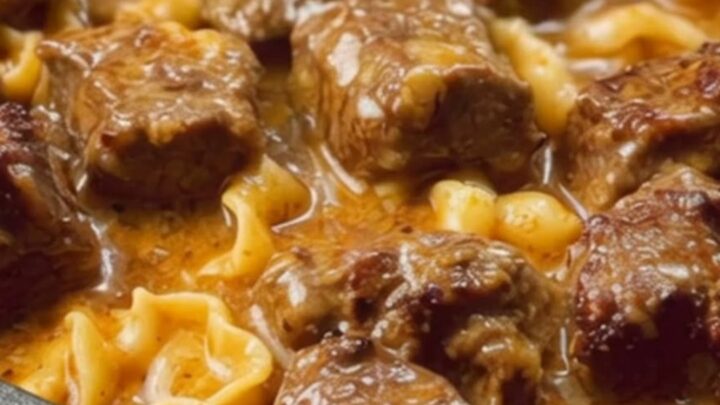
- Sear the BeefHeat a large cast-iron casserole dish over medium-high heat. Add the beef cubes in batches to avoid crowding the pan, searing until browned on all sides. Remove the beef and set aside.Look for The beef should have a deep brown crust on the exterior.Tip Do not overcrowd the pan, as this will steam the meat instead of searing it.
At the end of the searing phase, the beef should be well-browned on all sides, and the bottom of the casserole dish should have a layer of dark, flavorful bits known as fond. This fond is essential for the depth of the gravy. If the beef is not sufficiently browned, the sauce will lack richness. Check that the meat is not sticking excessively before proceeding to the liquid addition.
Braising the Beef
- Braise the BeefReturn the browned beef to the casserole dish. Pour in the beef broth, scraping up any browned bits from the bottom of the pan. Cover and reduce heat to low. Simmer gently until the beef is fork-tender, ensuring the internal temperature reaches 145°F (63°C). Let the meat rest at least 3 minutes before serving.Look for The gravy should be thick, glossy, and reduced, while the meat breaks apart easily with a fork.Safe temperature 145°F (63°C) internal temperature (steaks, chops and roasts)Tip Keep the heat low to ensure the meat remains tender and does not toughen.
During the braising phase, the liquid should be at a very gentle simmer. If the liquid is boiling vigorously, the meat will become tough rather than tender. The beef is ready when it is fork-tender and the broth has thickened into a rich, glossy gravy.
Check the tenderness by inserting a fork into a piece of beef; it should slide in and out with ease. If the meat still feels firm, continue to simmer for another ten to fifteen minutes.
Noodle Preparation and Assembly
- Prepare Noodles and ServeWhile the beef is finishing, bring a large pot of salted water to a boil. Cook the egg noodles according to package instructions until al dente. Drain well. Serve the tender beef tips and rich gravy generously over the warm noodles.Look for Noodles should be tender but still hold their shape.Tip Reserve a splash of pasta water to adjust the consistency of the gravy if it becomes too thick.
The noodles should be cooked to al dente, meaning they still have a slight firmness to the bite. Once drained, they should be tossed immediately with the hot beef and gravy so they absorb the flavor. The final dish should be steaming and aromatic, with the beef evenly distributed throughout the noodles. Ensure the serving temperature is hot, as this is a dish that relies on its comforting, warm qualities to be at its best.
Common mistakes
A common mistake is overcrowding the pan during the searing phase, which causes the beef to release its juices and boil instead of browning. Always sear in batches to ensure each piece develops a golden-brown crust.
Another frequent error is rushing the braising process; the beef needs time to break down slowly at a low temperature. If the heat is too high, the gravy may reduce too quickly before the meat has become tender, or the sauce may scorch on the bottom of the pot.
How to tell it’s done
To determine if the beef is perfectly cooked, test a piece with a fork; it should offer no resistance and pull apart easily. The internal temperature must reach at least 145°F (63°C) to ensure the meat is properly cooked through.
The gravy should have reduced to a glossy, thick consistency that coats the back of a spoon. If the gravy is too thin, it can be reduced further by simmering uncovered for a few extra minutes, but be careful not to overcook the beef during this final stage.
- Steaks, chops and roasts: 145°F (63°C) in the thickest part, then a 3-minute rest
Up next · Part 3 of 3
2 variations · storage & make-ahead · 3 answers · printable card
Tips, FAQ & printable recipe (Part 3)← Back to the ingredients (Part 1)